Interview by Jordannah Elizabeth Graham-Mayer
There is a particular gravity to filmmakers who have not only shaped a field, but insisted on its integrity—across decades, political cycles, and aesthetic shifts that threaten to flatten form into trend.
Stanley Nelson and Marcia Smith have never chased trends.
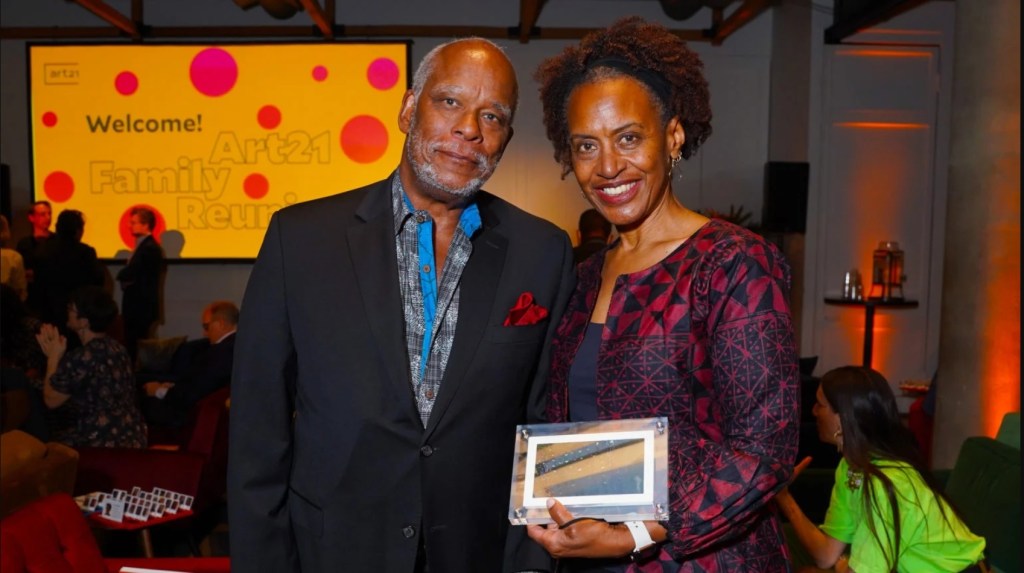
In 2026, the co-founders of Firelight Media were named Black Public Media’s Trailblazers—an honor recognizing not only their films, but the infrastructure they’ve built to sustain others. The award, BPM’s most prestigious, will be presented at the PitchBLACK Awards, part of a broader convening that continues to fund and platform Black filmmakers at a moment when such support is increasingly precarious.
For over two decades, Firelight has functioned as both incubator and intervention: a space where underrepresented filmmakers are resourced, mentored, and, crucially, taken seriously. Through its Documentary Lab alone, the organization has helped launch the careers of more than 100 filmmakers of color.
Nelson, a MacArthur Fellow and recipient of the National Humanities Medal, remains one of the most rigorous visual historians of Black life in America—his films resisting spectacle in favor of depth, refusing compression in an era defined by speed. Smith, a producer and strategist, has helped build the scaffolding that allows those stories—and others—to exist. Their recognition arrives in a moment of contraction. Public funding has thinned, with recent federal rescissions stripping critical resources from organizations like Black Public Media. Streamers have narrowed their appetites. The language of “content” continues to erode distinctions between rigor and volume, truth and approximation.
What remains, as Nelson and Smith articulate with precision, is not optimism—but clarity.
And, perhaps more importantly, resistance.
Documentary Filmmaking in a Time of Contraction
Jordannah Elizabeth Graham-Mayer: Thank you both for being here—and congratulations on being named Black Public Media’s 2026 Trailblazers. I want to begin broadly: how would you describe the current climate of documentary filmmaking, particularly for African American filmmakers seeking funding?
Stanley Nelson: The landscape has shifted. Streamers have narrowed their focus—primarily to true crime and celebrity-driven stories—and they’re open about that. At the same time, public funding has been reduced. We’ve seen institutions like Black Public Media lose critical support. That combination makes it much harder to finance substantive documentary work.
Marcia Smith: There’s still money, but it depends on what you want to do. If you’re trying to tell stories about history, culture, or contemporary issues, those projects are harder to fund. And even when opportunities exist, structural barriers remain.
On Market Demands and Creative Integrity
Graham-Mayer: If you were offered funding for a true crime project, would you take it? And could you make it your own?
Nelson: It depends on the story. Some projects in that space can still explore meaningful ideas—race, justice, power. But filmmakers are rarely given both funding and full creative control.
Smith: More often, you’re deciding whether to spend years developing something that doesn’t fully align with your interests.
Graham-Mayer: There seemed to be a surge of opportunity around 2020. Did that moment lead to lasting change?
Smith: It created a brief opening. There was recognition, and there were more resources—but it didn’t last.
Nelson: We saw it. The calls came in—and then they stopped.
Advice for Emerging Filmmakers
Graham-Mayer: What guidance would you offer younger filmmakers navigating this moment?
Smith: The rules have changed. The institutions that once supported independent documentary have weakened, even as organizations like Black Public Media continue doing critical work through initiatives like PitchBLACK. Overall, streamers have become more restrictive. There’s still a path—but it’s less defined.
Nelson: Technology has lowered barriers. You can shoot and edit your own work now. But that also means you need to be self-sufficient. And you have to love it. If your goal is financial success, filmmaking is a difficult path.
On Research and Truth
Graham-Mayer: How do you maintain depth and rigor with tighter timelines?
Smith: You can’t compromise on research if you want the work to endure. At the same time, we’re in an environment where misinformation is widespread—and often indistinguishable from fact. That makes integrity even more critical.
On Pushback
Graham-Mayer: How should filmmakers navigate pressure—deadlines, budgets, or even unsafe working conditions?
Nelson: You have to push back. Sometimes it’s as simple as asking: do you want it fast, or do you want it good? A documentary is permanent. Once it’s done, it doesn’t change.
Smith: And that extends beyond the work itself. For women and people of color especially, building community is critical. That’s part of what we’ve tried to do with Firelight—creating a space where filmmakers are supported not just creatively, but structurally. Pushback isn’t easy, but it’s necessary.
Graham-Mayer: It sounds like pushback is central—not just creatively, but professionally.
Smith: It is.
Nelson: Absolutely.
Graham-Mayer: Thank you both—and congratulations again on the honor.
Smith: Thank you. It means a great deal, especially coming from our peers.
Nelson: We appreciate it.
 Publik / Private