Still Here: Love That Outlives Childhood

Written by: Jordannah Elizabeth Graham-Mayer

PRELUDE

The thought of a young man singing ‘…the love I give, return to me’. I hope the cyclical and linear movement of the years of quiet moments: a kiss on the forehead in San Francisco, or seeing him ride past on a bike 15 years later in NoHo, with no cameras, with our family, with Aubrey as his friend, and now a past era for me. 30 years, and we’ve all been quiet about it, and yet, as real and present as can be. John’s been here. I was reading cards and got to thinking:

STILL HERE

There are evenings when the world feels too loud for certainty, and too quiet for distraction. Late one Monday, long after the day’s obligations had dissolved into the familiar stillness of home, I found myself reaching for a deck of tarot cards—not because I needed answers, but because I wanted a different way of asking questions. Marriage has a way of teaching you that the most important truths rarely arrive as revelations. They emerge gradually, through symbols, memories, rituals, and conversations that continue unfolding over years. As I shuffled the deck, I wondered less about the future than about time itself: how love begins, how it changes, and what remains when two people have lived enough life to know that devotion is built far more often than it is found.

The cards appeared with unusual clarity. The Six of Cups arrived first, followed by the Ten of Pentacles, as though the reading itself had decided to tell a story stretched across an entire lifetime. Between them came the Two of Cups, the King of Pentacles, and the Six of Pentacles—less like interruptions than milestones along a road I recognized immediately. Together they seemed to describe the whole arc of a marriage: from childhood recognition to mature partnership, from first affection to lasting stewardship, from the innocence of beginnings to the quiet abundance of a life patiently built together. Looking at them spread across the table, I realized they were not predicting anything at all. They were inviting me to consider the remarkable distance between who we are when we first meet someone and who we become after a lifetime of choosing one another.

There is a peculiar kind of love that cannot be measured by anniversaries because it predates the calendar itself. It begins before either person understands what permanence is, before either has language for devotion or the architecture of a shared life. We often speak about marriages by counting years, but there are relationships that ask to be counted differently. They ask us to remember the first conversation, the first recognition, the first inexplicable certainty that another person would somehow continue appearing at the edges of your life long before either of you knew why.

The Six of Cups has always seemed less sentimental to me than people imagine. It is not simply about childhood or innocence. It is about memory refusing to become obsolete. It asks what survives after ambition, after disappointment, after distance has had every opportunity to erase what came before. Children do not love because they have calculated compatibility. They love because recognition precedes explanation. There is a generosity to childhood that adulthood often mistakes for naïveté, when it is, in fact, a remarkable confidence in the future.

I sometimes think the greatest miracle is not that two people remain together after decades. It is that they remember who the other was before either became who the world demanded them to be.

Continue reading

How to Boost Your Sales and Shine at Craft and Vendor Shows 

Written By: Audrey Jackson

Image via Craftguild.org

For working artists and makers who sell at craft shows and pop-up markets, a vendor show can feel like equal parts opportunity and stress. Slow foot traffic, awkward pricing questions, last-minute booth hiccups, and the pressure to “look busy” can leave independent creators wondering whether the work is worth it. Even when the products are strong, vendor show challenges can blur what’s actually happening at the table and make craft fair essentials feel confusing or inconsistent. With the right expectations and a clearer approach, selling at craft shows can feel steadier and more profitable. 

Craft Show Sales Boosters 

  • Plan booth presentations to look inviting and help shoppers understand your products quickly. 
  • Set pricing with clear awareness so customers feel confident buying on the spot. 
  • Engage customers proactively with friendly, helpful conversation that supports easy decision-making. 
  • Focus on practical vendor techniques that improve visibility and help you stand out at shows. 

Build a Logo That Makes Your Booth Instantly Recognizable 

Those quick sales-boosting moves land even better when shoppers can instantly tell it’s your booth. A well-designed logo helps you make a strong first impression, build brand awareness, and stand out from other vendors selling in the same aisle. When your logo is consistent across your booth signage, packaging, and social handles, people remember what they saw, and can find you again later. 

If paying for a designer isn’t in the cards right now, you can create something polished yourself with an online logo generator. Start by picking a style and an icon that fits what you make, then add the text you’ll need (like your business name). You’ll be able to preview a range of logo options and fine-tune the look by adjusting fonts and colors until it feels like a natural match for your brand. Once your logo is set, you’re ready to prep the rest of your show setup and sales flow step-by-step in the next section. 

Continue reading

Still Here: The Life Inside the Photograph

Written By: Jordannah Elizabeth Graham-Mayer

There is a photograph somewhere that neither of us remembers taking. It is not remarkable in the traditional sense—there is no landmark in the background, no occasion being consciously preserved, no obvious indication that the moment would one day become something worth returning to. It is simply the ordinary evidence of a life already underway before either of us understood how much of living would eventually be composed of ordinary evidence: the small gestures, familiar rooms, passing expressions, and quiet exchanges that rarely announce themselves as meaningful while they are happening.

Photographs have a particular way of convincing us that they preserve time, but they do not. They preserve light. They preserve a fraction of a second—the angle of a face, the quality of an afternoon, the atmosphere of a room—but time continues moving long after the shutter closes. The people inside the photograph continue changing. The world around them continues rearranging itself. The image remains still while everything it represents continues forward.

Marriage teaches something similar.

People often ask, in one form or another, what makes a marriage last. The question is usually asked as though longevity must be the result of discovering a particular philosophy, a perfect balance, or a sequence of decisions that can somehow guarantee permanence. But living alongside another person over years has convinced me that permanence is not built from certainty. It is built from revision—the willingness to revisit what we thought we understood, to adjust our expectations, to reconsider our language, and to recognize that the story we believed we were writing together is often transformed by the very act of living it.

You revise expectations.

You revise assumptions.

You revise the version of the future you imagined before you knew what the future would actually require of you.

Eventually, you realize the revisions have not interrupted the story. They have become the story.

Perhaps that is why families rarely resemble the narratives we imagine before they exist. Before children, before shared responsibilities, before the accumulation of years, we tend to think of life as something that will unfold according to a particular design. Then reality arrives with its own intelligence. Families become something stranger, more unpredictable, and, thankfully, far more interesting than any original blueprint could have anticipated.

Children have a way of dismantling every neat theory adults create about life. They interrupt conclusions before they become too comfortable. They expose vanity and impatience. They remind us that attention cannot exist in the past or the future; it belongs to the present tense. A child does not care much about the version of life you imagined. They are concerned with the world directly in front of them: the bird outside the window, the question that cannot wait until later, the story that must be read one more time.

A family is constantly becoming itself.

So is a marriage.

Continue reading

The Art of Looking Again: Namwali Serpell’s On Morrison and the Discipline of Reading a Master

There is a distinct kind of responsibility that arrives when one artist writes seriously about another.

Admiration alone is not enough. Distance can become its own form of misunderstanding, especially when an artist has reached the level of cultural recognition that surrounds Toni Morrison. The larger an artist’s legacy becomes, the easier it can be to discuss the meaning of the work without fully returning to the work itself. The person becomes an icon. The books become landmarks. The conversation begins orbiting around importance rather than returning to the creative decisions that made the work important in the first place.

Namwali Serpell’s On Morrison is a remarkable act of return.

Published by Hogarth, On Morrison is not a biography or a traditional introduction to Morrison’s life. It is a work of literary criticism by Serpell, an award-winning novelist, essayist, and professor of English, that examines Morrison’s fiction, nonfiction, plays, and poetry through sustained close reading and critical engagement. The book approaches Morrison not as a finished monument, but as an artist whose methods, structures, and imaginative decisions continue to demand attention. This distinction is what makes the book so compelling. Serpell is not asking readers only to remember why Morrison matters. She is asking readers to examine how Morrison works. The question becomes one of craft.

How does a writer construct memory? How does a novel hold history without becoming only a historical document? How can language represent experiences that have often been ignored, distorted, or simplified? How does an artist create characters who are shaped by the worlds around them while remaining fully human, contradictory, imaginative, and alive?

These questions have always been central to Morrison’s work, but Serpell’s contribution is the precision with which she examines the artistic mechanisms behind them. Across discussions of Morrison’s novels—including The Bluest Eye, Sula, Song of Solomon, Tar Baby, Beloved, Jazz, Paradise, and others—as well as her short story “Recitatif,” criticism, plays, and poetry, Serpell considers the formal choices that make Morrison’s writing so distinctive. She examines the architecture of Morrison’s narratives: the movement of time, the use of language, the relationship between absence and meaning, and the ways Morrison created new possibilities for the novel. In this sense, On Morrison is also a book about reading itself.

Morrison’s novels have often been discussed through the enormous cultural questions they engage: race, gender, memory, violence, family, history, and identity. Those conversations are necessary, but Serpell reminds us that Morrison’s genius also exists in the ways those ideas are transformed into artistic form. The structure of a novel is not separate from its meaning. The rhythm of a sentence is not separate from its emotional impact. The choices a writer makes about perspective, silence, repetition, and time become part of the story being told. This is one of the greatest gifts criticism can offer: it can return our attention to the decisions.

Continue reading

The Quiet Fire of Diavola: Gabrielle Cavassa & the Italian Soul of Jazz

Gabrielle Cavassa: Roxy Hotel, NYC, 2025. Photo copyright William Ellis

Jazz is a traveler. It crossed the Atlantic almost as quickly as it crossed America, finding unlikely homes in Paris cafés, Sicilian piazzas, Roman cinemas, and Milanese jazz clubs. Italian musicians embraced the music not as imitation but as conversation, hearing in its improvisatory spirit echoes of opera, folk song, and the canzone italiana—a tradition where melody is expected to carry memory as much as beauty. Somewhere between Naples and New Orleans, between Verdi’s dramatic lyricism and the harmonic openness of modern jazz, lies the emotional terrain that Gabrielle Cavassa inhabits.

That landscape gives Diavola its quiet complexity.

The album’s emotional vocabulary owes as much to the Italian canzone as it does to the American jazz standard. Both traditions understand that interpretation is an act of authorship—that every generation must discover a song anew. Cavassa moves effortlessly between those worlds, never announcing where one ends and the other begins. The result is neither crossover nor fusion. It is something more organic: a musical identity in which heritage is not performed but absorbed, where ancestry becomes less a subject than a sensibility.

Co-produced by Joshua Redman and Blue Note president Don Was, Diavola reflects the label at its most discerning, placing its faith in artists who deepen tradition through interpretation rather than reinvention for its own sake. Under Was’s stewardship, Blue Note has increasingly become a home for musicians who understand that jazz evolves not by abandoning its history, but by listening to it differently. Cavassa’s debut belongs naturally within that lineage. Diavola is remarkable for its confidence in understatement. Her voice arrives almost conversationally, often leaning just behind the beat, allowing a phrase to unfurl with the unhurried logic of an improviser. She sings less like a vocalist commanding the room than like another instrumental voice within the ensemble, shaping melody with the patience of a horn player.

Jeff Parker’s original guitar composition, “Heaven Sighs,” opens Diavola on its own. Cavassa doesn’t sing until the second track, a beautifully understated reinterpretation of “Raindrops Keep Falling on My Head.” Parker’s spacious guitar, Brian Blade’s understated pulse, Larry Grenadier’s resonant bass, and Paul Cornish’s luminous piano offer the best risk a musical can project: not surrounding everything with themselves, but being generous with collaboration.

By the time Cavassa enters, she isn’t arriving to lead the band so much as joining a conversation already in progress. That opening sequence reveals the album’s central aesthetic: restraint over display, interplay over spotlight, and the quiet confidence to let the music unfold on its own terms. Her reading of “Raindrops Keep Falling on My Head” uncovers a wistfulness beneath the song’s familiar optimism, while “Prisoner of Love” unfolds with such quiet patience that its well-worn lyric feels newly intimate. Even “Could It Be Magic” is liberated from its theatrical origins, revealing an unexpectedly fragile heart beneath the pop architecture.

Continue reading

Still Here (Part III): Notes From a Marriage in the Middle of the Music & Father’s Day

Written by Jordannah Elizabeth Graham-Mayer

Photo via John Mayer

There are nights when the house settles into a kind of soft intelligence.

Not silence exactly. Something more attentive than silence. The kind of quiet that only arrives after children have finally fallen asleep in positions that look temporary but are never actually temporary, because sleep has its own logic. In those hours, the house stops asking for anything. And that is when love becomes audible again.

Not as a declaration. Not as romance in the public sense of the word. But as something smaller and more enduring—the way two people move around each other without needing to announce intention. The way a glass is placed in the sink without clatter. The way a hand reaches for a light switch that the other person was already walking toward.

Father’s Day is in two days, and it arrives like a reminder that time has been passing in a way that cannot be reversed, only witnessed. There is something about watching someone become a father that rearranges the meaning of strength. Not because it adds something theatrical to it, but because it strips it down. Strength becomes repetition. Strength becomes presence. Strength becomes the decision, made hundreds of times in a single week, to stay inside the demands of love even when those demands are not symmetrical, not elegant, not composed like music.

Fatherhood, in this house, does not feel like a role. It feels like weather. It moves through everything. It changes temperature. It changes tone. It changes the emotional acoustics of the smallest rooms.

Children do not simply live in a marriage. They rewrite its vocabulary:

Words like “tired” stop meaning what they used to mean. Words like “busy” become almost meaningless. Even “together” becomes more complicated, because together no longer means shared time in the abstract. It means coordinated attention in the middle of constant interruption. And still, something remains untouched underneath all of it, something that does not ask to be preserved because it does not believe in preservation as a concept.

There are moments in the middle of chaos—real, ordinary chaos: spilled water, missing shoes, overlapping needs—that feel strangely like grace. Not because they are peaceful, but because they are fully inhabited. Nothing is withheld. Nothing is postponed. Everything is happening at once, and still, love continues to move through it without hesitation.

That is what children reveal. Not nostalgia. But intensity. The absolute refusal to dilute experience.

In that intensity, marriage stops being an idea and becomes a practice again. Not something that is announced or affirmed, but something that is performed daily in small acts of recognition. A look that says I saw that. A silence that says I understand why you are quiet right now. A decision to take over something without making it a conversation first. Not the beauty of spectacle. The beauty of maintenance.

Love, when it is lived inside a family, becomes less like a song and more like rhythm section work. It holds everything else in place without asking to be heard above it. And yet, there are still moments when music returns in its original form. A voice humming something half-remembered. A song playing too softly to be the center of anything, but strong enough to shift the emotional temperature of a room. Those moments do not interrupt the life of the house. They reveal it.

Continue reading

Juneteenth, Improvisation and the Sound of Freedom: Jon Batiste’s Gospel Andante

The most compelling music often carries more than one history at a time. Jon Batiste’s Black Mozart (Batiste Piano Series, Vol. 2) is rooted in that understanding. Conceived as part of Batiste’s ongoing exploration of classical music through Black American musical traditions, the project asks what becomes possible when inherited categories are treated less as boundaries than as points of departure. Throughout the album, Mozart is not approached as a distant monument of European culture but as a musical interlocutor, someone whose work remains open to reinterpretation, improvisation, and dialogue.

Among the album’s most intriguing titles is its closing piece, Gospel Andante. Even before a note is heard, the title suggests the larger concerns animating the project. “Andante,” one of classical music’s most familiar tempo markings, indicates movement at a walking pace. Gospel evokes an entirely different set of associations: the Black church, spiritual endurance, collective memory, testimony, grief, joy, and transcendence. Together, the words create a meeting point between traditions that have often been discussed as separate, despite centuries of overlap and exchange.

That meeting point feels particularly resonant in the context of Juneteenth.

The holiday commemorates June 19, 1865, when enslaved people in Galveston, Texas learned they were free more than two years after the Emancipation Proclamation. It is a celebration of liberation, but it is also a reminder of delay—of the distance between freedom declared and freedom experienced. Juneteenth asks Americans to reckon with the reality that history does not always move at the pace of justice. Information travels unevenly. Rights are often realized long after they are promised. Freedom itself is rarely a singular event. More often, it unfolds through a long process of recognition, struggle, adaptation, and collective remembrance.

The title Gospel Andante captures something of that historical rhythm. A gospel. A walk. A spiritual tradition grounded not only in belief but in movement. The pairing invites reflection on the ways Black communities have carried memory forward through music, creating cultural forms capable of holding contradiction without requiring resolution. Spirituals, blues, jazz, gospel, and countless other Black musical traditions emerged from conditions that demanded both endurance and imagination. These forms preserved history while simultaneously creating space for futures that had not yet arrived.

Batiste’s career has been shaped by a similar commitment to crossing perceived boundaries. Raised within a multigenerational New Orleans musical family and later trained at Juilliard, he has consistently moved between jazz, gospel, classical music, R&B, film scoring, and improvisational performance. Yet what distinguishes his work is not simply stylistic range. It is an insistence that these traditions are already connected. His projects often reveal relationships that institutional histories have obscured, placing Black musical innovation at the center rather than the margins of broader musical conversations.

Continue reading

How Self-Care Spurs Lasting Success for Art Business Entrepreneurs

Written by Audrey Jackson

Entrepreneurs in creative businesses often structure their days around clients, product launches, and the demands of making the work itself, while personal well-being slips to the bottom of the priority list. The tension is straightforward: neglecting self-care can look like dedication until it evolves into creative burnout, leaving focus diminished and decision-making impaired. Stress-management challenges often emerge quietly at first—through irritability, stalled ideas, inconsistent routines, or reduced motivation—before spreading into pricing decisions, client communication, and project follow-through. Recognizing these early warning signs can protect both an entrepreneur’s well-being and the long-term sustainability of the business.

Understanding Self-Care as Business Infrastructure

Self-care is not a reward earned after the work is complete. Rather, it consists of intentional actions that support physical and mental health, prevent illness, and help manage chronic conditions so that both mind and body can continue to show up consistently for the business. In creative professions, self-care functions as a performance system: steadier energy supports clearer thinking, better emotional regulation, and more consistent execution.

This distinction matters because creative businesses often depend heavily on the founder. When personal well-being declines, follow-through becomes less reliable, and minor problems can escalate quickly. Research suggests that mental health concerns are widespread among entrepreneurs, underscoring how common these pressures are even among high performers.

Think of self-care as priming a canvas before painting. Taking a few minutes to eat a nutritious meal, stay hydrated, stretch, or spend time outdoors can prevent hours of reworking projects, second-guessing decisions, or sending tense emails. The goal is not perfection but sustainable capacity. Once that foundation is established, entrepreneurs can choose stress-management tools that fit naturally into studio schedules and business demands.

Exploring Low-Risk Stress-Reduction Practices

When self-care is treated as business infrastructure, small interventions can prevent stress from spilling over into creative work and client relationships. Several low-risk approaches may be worth exploring.

Mindfulness practices, such as a few minutes of focused breathing or meditation, can help improve concentration and emotional regulation. Body-based relaxation techniques, including progressive muscle relaxation, may help signal safety to the nervous system and reduce physiological stress responses.

Some entrepreneurs also explore wellness supplements or hemp-derived products like kava. Anyone considering these options should research legal considerations, consult healthcare professionals when appropriate, and carefully assess dosage, quality, and personal tolerance. What works for one person may not work for another, and individual health circumstances should always be taken into account.

Building a Weekly Self-Care System

A self-care system is often more effective than relying on motivation alone, particularly when running an art business where attention, creativity, and energy serve as primary resources. Establishing a repeatable weekly baseline can provide stability during both routine periods and high-pressure launch cycles.

Continue reading

Saul Williams and the Spiritual Refusal of Numbness: Martyr Loser King Graphic Novel

Some writers describe the future as if it is waiting patiently for us somewhere down the road. Saul Williams has always understood the future differently — as something already leaking through the walls of the present. In his work, prophecy does not arrive polished or distant; it arrives overheated, grief-stricken, ecstatic, carrying the language of revolution in one hand and spiritual hunger in the other. For more than two decades, Williams has occupied a singular space in American art: part poet, part theorist, part musician, part witness to empire’s psychological collapse. His work does not simply critique the world we live in. It interrogates what surviving that world does to the spirit.

With Martyr Loser King, his graphic novel created alongside multidisciplinary artist Morgan Sorne, Williams expands a universe he has been building for years across music, film, poetry, and performance into something tactile, feverish, and deeply immersive. The story shares connective tissue with his 2016 album of the same name and the Afrofuturist musical film Neptune Frost, but the graphic novel feels less like an adaptation than a further excavation of the same emotional and political terrain. Williams has long treated genre as something porous. His ideas migrate across mediums because the questions haunting him are too large to remain fixed in a single form.

I have been following this body of work for years now. I covered Martyr Loser King during the album’s release for LA Weekly, and later wrote about Neptune Frost during Sundance Film Festival for New York Amsterdam News. What struck me then — and what feels even clearer now through the graphic novel — is how consistent Williams has remained in his artistic and political vision. The mediums change, but the central concerns do not: technological colonialism, spiritual displacement, Black futurity, ecological violence, memory, resistance, and transcendence. Few artists build worlds this coherently across decades without reducing themselves to repetition. Williams continues to deepen the mythology rather than merely revisit it.

Set within the violent realities surrounding coltan mining in Burundi, Martyr Loser King examines the hidden human infrastructure beneath modern technology. The book’s world is filled with discarded machines, exploited labor, digital ghosts, borderless networks, spiritual awakenings, and insurgent forms of consciousness. Williams understands that the sleek mythology of technological progress depends upon strategic amnesia — a deliberate forgetting of the bodies and landscapes sacrificed to sustain convenience. In his hands, the smartphone becomes both artifact and accusation.

What makes the book especially powerful is the way it collapses distinctions between technological systems and spiritual systems. Williams refuses the idea that machinery exists separately from memory, ritual, grief, or myth. Throughout the novel, hacked networks resemble prayer circles. Data behaves like ancestral memory. Characters move through digital landscapes as though navigating sacred terrain. Even the book’s structure resists conventional narrative pacing, unfolding instead like a transmission interrupted by chants, visions, coded fragments, and moments of collective mourning.

Continue reading

Listening as Social Imagination: Inside Terri Lyne Carrington’s Trip the Night Fantastic

Written By Jordannah Elizabeth Graham-Mayer
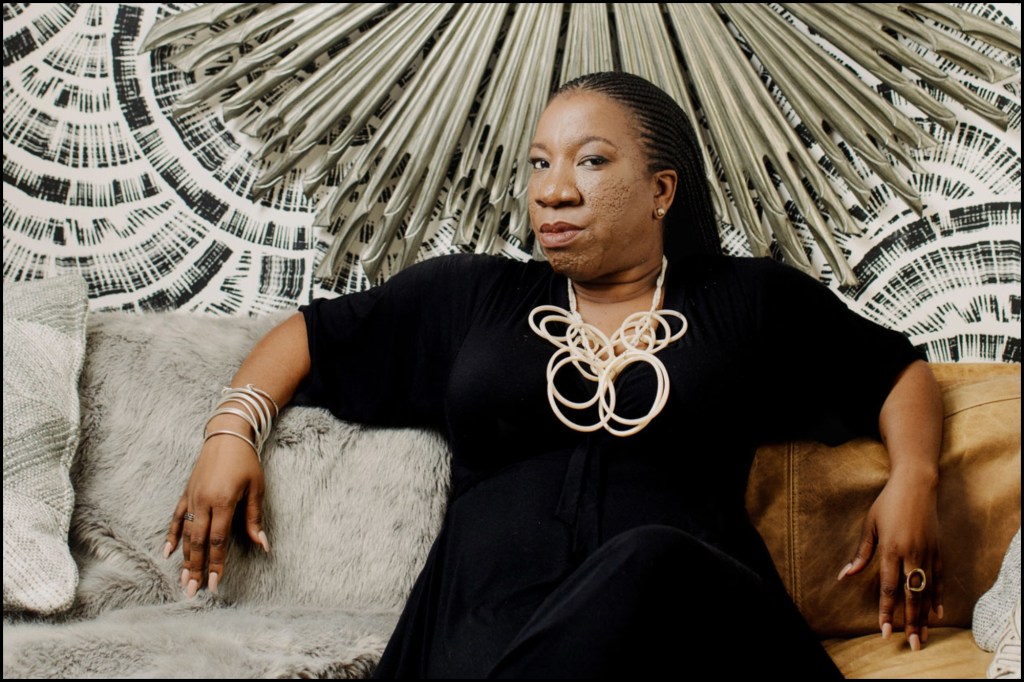
Terri Lyne Carrington – Image by J. Watson

What if listening itself could become a form of social practice? On Trip the Night Fantastic, every groove, improvisation, and collective gesture circles that question. The album does not ask listeners to choose sides so much as it asks them to remain present—to themselves, to one another and to the difficult realities that shape contemporary life.

For much of her career, Terri Lyne Carrington has occupied a rare position in American music. She is celebrated as a virtuoso drummer, revered as a composer and bandleader and respected as one of jazz’s most influential cultural thinkers. Yet to describe her simply as a musician misses something essential. Carrington’s work has increasingly become an exercise in institution-building, historical revision and social imagination.

Whether through The Mosaic Project, the New Standards initiative, or her leadership in advancing gender equity within jazz education, she has consistently challenged the boundaries of who gets heard, who gets remembered and whose stories are permitted to shape the future of the music.

With Trip the Night Fantastic, Carrington and Social Science extend that inquiry beyond the jazz world and into the broader terrain of public life.

Continue reading