Written By Jordannah Elizabeth Graham-Mayer
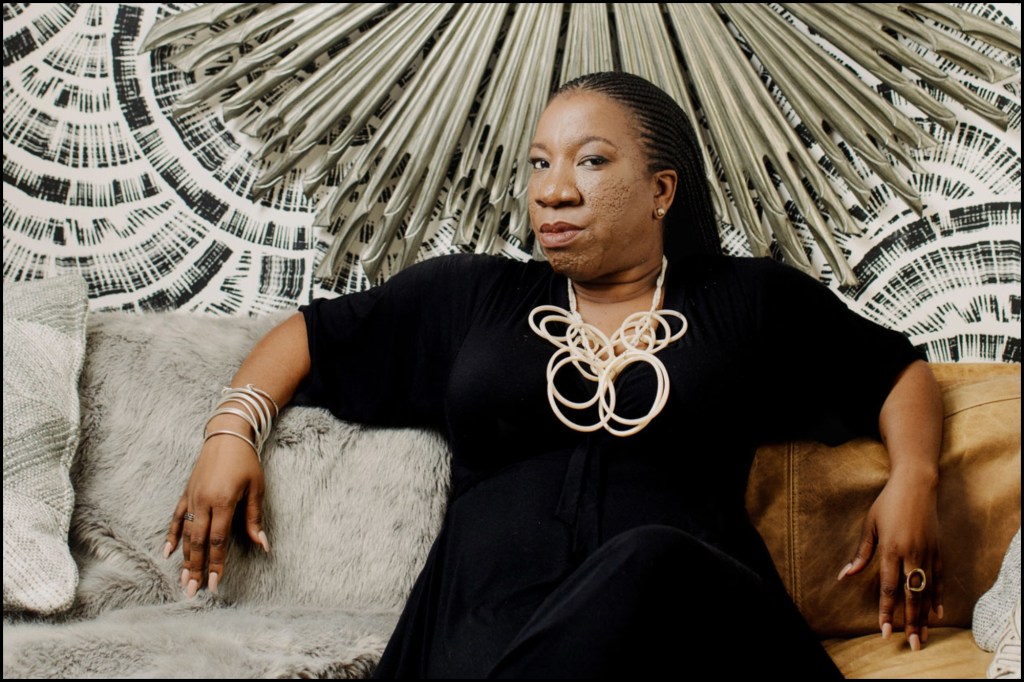
Thank you, Tarana for your courage and work.
Hollywood has a problem it has never adequately investigated: what happens when the person accused of sexual misconduct, stalking, or abuse is a woman whose professional standing, wealth, whiteness, or proximity to celebrity makes her difficult to challenge? The entertainment industry has spent years examining the sexual exploitation of women by powerful men, exposing the professional networks, financial incentives, and institutional silences that allowed misconduct to continue. Yet a corresponding investigation into the experiences of men who report sexual harassment, coercion, stalking, and other forms of abuse by women in positions of influence remains underdeveloped. Actors, musicians, comedians, producers, executives, and other prominent men can occupy positions of extraordinary public power while still having their privacy, bodily autonomy, and personal safety threatened. Their professional success does not make them immune to abuse, and their gender should not determine whether their accounts receive serious consideration. The question this investigation asks is whether Hollywood has developed a consistent standard of accountability—or whether that standard changes when the alleged perpetrator is a powerful woman.
The subject requires precision from the outset. The argument is not that women are responsible for most sexual violence, that women and men experience identical patterns of victimization, or that the evidence establishes a criminal pattern among white women as a group. It does not. The argument is that female-perpetrated misconduct exists, that men experience sexual violence and stalking, and that entertainment institutions should be examined for how they respond when allegations involve women with professional influence, money, social standing, or reputational protection. Race is relevant to this investigation because whiteness can intersect with institutional privilege and cultural assumptions about innocence, desirability, and credibility. But the claim that white women in Hollywood perpetrate these acts at a particular rate would require evidence that is not currently established by the available industry-wide research. A serious investigation should pursue that question through documented cases, interviews, legal records, and comparative analysis rather than present a conclusion before the reporting is complete.
The history of #MeToo provides an essential starting point. Tarana Burke founded the original me too movement in 2006 to support survivors of sexual violence, particularly young women and girls of color. Her work centered on empathy, community support, and helping survivors understand that they were not alone. The movement became a global cultural force in 2017, when the hashtag spread rapidly amid extensive reporting about Harvey Weinstein and other powerful men accused of sexual misconduct. That visibility helped expose the ways professional dependence, intimidation, nondisclosure agreements, and institutional protection could suppress reports of abuse. But the distinction between Burke’s original movement and the mainstream campaign that followed matters. The movement’s roots were in survivor support, not celebrity public relations, and its history raises a legitimate question about what happens when an institution adopts the language of accountability without extending the same seriousness to every person who may need protection.
The concern here is not that women who spoke out during #MeToo were wrong to do so, nor that the movement should have diverted attention from women who experienced sexual violence. It is that a movement organized around bodily autonomy and freedom from sexual exploitation must be able to address misconduct without making gender a prerequisite for recognition. Men who report unwanted sexual contact, coercion, or stalking should not have to prove that their experiences are sufficiently unusual or dramatic to deserve attention. Nor should a woman accused of misconduct be presumed guilty because she is powerful, wealthy, or professionally connected. The same principles must apply in both directions: allegations should be investigated, evidence should be evaluated, and organizations should respond to documented risks. A movement’s credibility depends on whether its core principles can survive beyond the cases that first made them culturally visible.
National data demonstrate why male victimization deserves attention. The Centers for Disease Control and Prevention’s research on sexual violence, intimate-partner violence, and stalking among men reports that approximately one in four men in the United States has experienced some form of contact sexual violence during his lifetime. The CDC also reports that about one in 17 men has experienced stalking. The sex of the perpetrator varies according to the type of violence. In its national survey findings, 79 percent of male victims who reported being made to penetrate someone identified only female perpetrators, as did 82 percent of male victims of sexual coercion. Among men reporting unwanted sexual contact, 53 percent identified only female perpetrators. Among male stalking victims, 46 percent reported only female perpetrators, while 43 percent reported only male perpetrators and 8 percent reported perpetrators of both sexes.
These findings establish that women perpetrate some forms of sexual violence and stalking against men; they do not establish the racial identity of those perpetrators or the prevalence of such conduct in Hollywood. They also should not be misrepresented as evidence that women are responsible for most sexual violence overall. The CDC’s findings distinguish among types of victimization for a reason: rape, sexual coercion, unwanted sexual contact, and stalking are not interchangeable categories. Nevertheless, the data make it untenable to dismiss female-perpetrated abuse as merely hypothetical. If entertainment institutions are serious about consent, they must be prepared to investigate these experiences when they arise, including when the person reporting them is a prominent man and the person accused is a woman. The absence of industry-specific statistics about this particular pattern is a reason to conduct further research, not a reason to presume that the problem does not exist.
The workplace evidence is also significant. A 2020 study by Kathleen C. Basile and colleagues, published in the American Journal of Preventive Medicine, examined sexual violence by workplace-related perpetrators using data from the National Intimate Partner and Sexual Violence Survey. The researchers found that approximately 2.5 percent of men in the United States reported some form of sexual violence by a workplace-related perpetrator during their lifetimes. Male victims reported perpetrators of more than one sex, and the study documented fear and other adverse impacts associated with workplace-related sexual violence. This research was not restricted to entertainment, and it cannot tell us how often a female producer, casting director, comedian, or music executive sexually harasses a male colleague. It does, however, demonstrate that workplace-related sexual victimization of men is measurable and that a gender-neutral investigation of workplace safety is warranted.
Hollywood offers particular reasons to examine how these experiences may be handled. The industry is organized around professional access, reputation, personal relationships, and recurring opportunities to work with the same people. A casting director can influence an actor’s prospects; a producer can affect a project’s future; a manager can shape a musician’s professional relationships; and a comedian with industry connections may influence who receives opportunities on a tour or at a venue. Power in these environments is not exercised solely through formal job titles. It can also operate through introductions, recommendations, financing, publicity, access to influential networks, and the ability to affect someone’s professional standing. These structures can make it difficult for workers to challenge conduct they experience as unwelcome, particularly when the person involved is socially influential. Whether these dynamics affect male survivors of female-perpetrated misconduct in the same ways they affect other survivors is a question that requires direct reporting.
The Hollywood Commission’s research offers a foundation for investigating that question. Its 2022–23 survey gathered responses from 5,259 entertainment workers across television and film, live theater, music, talent representation, public relations, broadcast news, and related settings. The Commission found that workers continued to lack confidence that powerful people would face accountability for misconduct. At major studios, 71 percent of respondents believed it was unlikely that a powerful person would be held accountable. The survey also found differences in perceptions of workplace progress among demographic groups. These findings do not establish that powerful white women routinely abuse men, and they should not be used to imply that they do. They do establish that doubts about accountability persist across the entertainment workplace and provide a compelling basis for examining whether the industry’s systems respond consistently to allegations involving powerful people of different genders.
The issue of whiteness should be investigated as a question about power, representation, and institutional response—not as a substitute for evidence about individual conduct. White women have held prominent positions in Hollywood’s professional and cultural networks, including as performers, producers, casting directors, executives, comedians, and talent representatives. Their influence varies enormously, as does their economic security and institutional authority. It would be inaccurate to assume that all white women possess equivalent power or that whiteness alone determines whether someone is believed. But it is reasonable to investigate whether cultural expectations about white femininity, sexual desirability, innocence, and respectability influence how allegations against certain women are interpreted. The central question is whether institutions apply their standards consistently when the accused person is a woman whose reputation is commercially valuable or whose relationships place her close to the center of an influential network.
That inquiry must also consider the possibility that female-perpetrated misconduct is framed differently from comparable conduct by men. Unwanted sexual attention from a woman may be dismissed as flirtation or humor, particularly when the recipient is a man who is assumed to welcome sexual attention. A persistent attempt to establish contact may be described as romantic determination rather than a boundary violation. A public disclosure about an intimate relationship may be treated as celebrity gossip even when the underlying circumstances raise questions about consent, privacy, or professional retaliation. These are plausible patterns of cultural interpretation, but they should be tested through evidence rather than asserted as universal facts. A rigorous media analysis could compare how journalists, entertainment publications, employers, and audiences describe similar conduct across cases, paying attention to differences in language, sourcing, and the distinction between allegations and established findings.
The music industry provides a particularly important case study because musicians’ public identities are often built around intimacy with audiences. Songs, interviews, concerts, and social media create a sense of personal familiarity that can blur the boundary between public performance and private life. That visibility can make performers vulnerable to unwanted approaches, repeated contact, and intrusion into their personal relationships. In some cases, conduct may escalate beyond unwelcome attention into behavior that warrants a stalking investigation. In April 2026, the Los Angeles Times reported that a woman accused of stalking and attacking former Fleetwood Mac guitarist Lindsey Buckingham had been arrested and faced seven criminal counts. Earlier court filings described Buckingham’s allegations of repeated unwanted contact, threats, appearances near his and his family members’ homes, and a false emergency call that led police to respond to his residence. The case illustrates the seriousness of alleged stalking involving a prominent male musician, although the allegations must be distinguished from a criminal conviction and the available reporting does not establish the accused person’s race.
Buckingham’s case matters because it moves the discussion beyond an abstract debate about whether men can be victims. It demonstrates how allegations of stalking can involve a person’s home, family, reputation, and sense of physical security. It also illustrates why a celebrity’s professional success should not be confused with an absence of vulnerability. A musician may have the resources to seek legal protection, yet still face unwanted contact or alleged threats that require intervention. A case like this cannot establish how prevalent stalking by women is in the music industry, but it can inform questions about threat assessment, security procedures, documentation, and legal remedies. A broader investigation should examine additional cases through court records and independently corroborated reporting, while taking care not to infer a pattern from a single example.
Digital abuse presents another dimension of the problem. Technology can be used to maintain unwanted contact, monitor a person’s location, access private accounts, distribute intimate material without consent, impersonate someone, or contact their friends and family. A 2021 scoping review by Nicola Dragiewicz and colleagues, published in Trauma, Violence, & Abuse, examined technology-facilitated domestic abuse and found that digital devices and online applications could facilitate monitoring, harassment, and abuse while intensifying their consequences. A separate systematic literature review of cyberstalking, published in 2025, examined 80 relevant articles and identified repeated unwanted online contact, account access, location tracking, impersonation, and contact with victims’ friends or relatives among reported methods. Neither review establishes the prevalence of digital abuse by white women in Hollywood. Both provide a research-based framework for investigating how technology can extend unwanted contact beyond physical settings and affect a person’s privacy, safety, and relationships.
For prominent men, the public nature of a career can complicate the boundary between legitimate professional communication and unwanted personal access. An actor’s or musician’s contact information may circulate through professional networks, while personal relationships and schedules attract public interest. But professional availability does not mean unrestricted personal availability, and a public profile does not constitute consent to persistent contact. The same distinction applies to spouses and children, whose private lives should not be treated as extensions of a celebrity’s public identity. If an investigation examines allegations that a person’s family was contacted, monitored, threatened, or targeted through digital means, it should establish exactly what occurred and what evidence supports the account. The relevant questions include whether contact continued after an explicit refusal, whether communications contained threats, whether accounts or devices were accessed without authorization, and whether any conduct met the applicable legal definition of stalking or another offense.
Financial and emotional abuse also deserve careful treatment. In relationships involving unequal wealth or professional influence, money may be used to create dependence, exert pressure, or threaten a person’s livelihood. Professional retaliation can take different forms, including interference with opportunities, the withdrawal of promised work, or threats to damage someone’s reputation. But not every financial dispute is financial abuse, and not every unpleasant or emotionally difficult relationship constitutes coercive control. A reported piece should distinguish documented conduct from interpretation, establish the relevant context, and avoid using legal or clinical terminology without adequate evidence. Interviews with entertainment attorneys, workplace investigators, mental-health researchers, and survivors could help identify the behaviors that recur across documented cases and the circumstances in which those behaviors meet legal or professional standards for intervention. The goal should be to make less-visible forms of harm legible without turning every conflict into an accusation of criminality.
Comedians, casting directors, producers, and executives warrant particular scrutiny because they may exercise influence over both professional access and the social environment in which unwanted behavior occurs. A comedian may use sexual humiliation as a public performance, but offensive material alone does not establish sexual harassment or stalking. A casting director may behave inappropriately, but an investigation must determine what was said or done, the surrounding professional relationship, and whether the conduct violated a relevant standard. A producer’s reputation or commercial importance should not protect them from scrutiny, but neither should a job title substitute for proof of wrongdoing. Reporting should establish whether complaints were made, whether organizations investigated them, whether other witnesses corroborate the accounts, and whether there were documented consequences. This is the difference between an evidence-led investigation into institutional accountability and a generalized indictment of a category of people.
The absence of robust data on female-perpetrated abuse in Hollywood is itself a research problem. The Hollywood Commission surveys workplace culture and misconduct across multiple sectors, while national surveys measure male victimization across the broader population. Neither provides a complete picture of the race, gender, professional position, and relationship between perpetrator and victim in alleged misconduct involving prominent male entertainers. A more focused study could examine court filings, protective-order proceedings, police records where accessible, verified investigative reporting, and interviews with men who report experiencing unwanted sexual attention or stalking by women in entertainment. It could compare cases involving romantic partners, colleagues, supervisors, public figures, and strangers, while examining how institutions responded. Researchers would need to distinguish allegations, charges, civil findings, settlements, and convictions, and document where the available record is incomplete. Only then could the industry begin to answer questions about prevalence, institutional response, and whether race or status influences the way allegations are handled.
Such an investigation should not be framed as a contest between male and female survivors. It should not minimize the extensive evidence that women experience sexual violence and workplace harassment, nor imply that the #MeToo movement caused male victimization to be ignored in every context. The sharper argument is that a movement against sexual misconduct cannot achieve consistent accountability if its principles are applied selectively. Men who experience abuse should be able to report it without being ridiculed, and women accused of misconduct should be subject to fair investigation rather than assumptions about their character or identity. Whiteness and professional prestige are appropriate subjects of scrutiny when investigating how institutions distribute credibility and protection, but neither is proof that a particular person committed misconduct. A serious inquiry must be willing to examine privilege without treating identity as evidence of guilt.
Hollywood’s reckoning with sexual misconduct remains incomplete wherever professional influence can obstruct a fair response to a complaint. The industry’s own surveys document persistent doubts about accountability, while national research confirms that men experience sexual violence and stalking, including forms of misconduct perpetrated by women. Cases involving prominent musicians show why stalking allegations cannot be dismissed simply because the person reporting them is male or successful. Research on technology-facilitated abuse demonstrates how unwanted contact can extend into digital spaces and affect family relationships, privacy, and personal security. What remains insufficiently documented is the precise pattern this investigation seeks to examine: how female-perpetrated misconduct operates in Hollywood and the music industry, how race and professional standing may shape institutional responses, and whether powerful women receive different treatment from other people accused of similar conduct. Those questions deserve a sustained, evidence-led inquiry rather than an assumption that the answer is already known.
The standard should be straightforward. No performer, executive, comedian, musician, or other entertainment worker should be expected to tolerate unwanted sexual contact, repeated unwanted communication, stalking, intimidation, or coercive behavior because of the gender or professional status of the person responsible. No spouse or child should have to accept unwanted intrusion as the cost of being connected to a public figure. And no allegation should be treated as proven simply because it fits a compelling narrative about gender, race, celebrity, or power. The industry must build systems that take reports seriously, preserve evidence, protect privacy, prevent retaliation, and respond proportionately to documented risks. The question is not whether powerful women should be held to a different standard from powerful men. It is whether Hollywood is prepared to hold everyone to the same standard.
Bibliography
Basile, Kathleen C., Sharon G. Smith, Jing Wang, and Norah Friar. “National Prevalence of Sexual Violence by a Workplace-Related Perpetrator.” American Journal of Preventive Medicine, vol. 58, no. 2, 2020, pp. 216–223. Full text via PubMed Central.
Burke, Tarana. me too. International. Official website. Primary source on the movement’s history and survivor-centered mission.
Centers for Disease Control and Prevention. “Intimate Partner Violence, Sexual Violence, and Stalking Among Men.” May 16, 2024. CDC.
Dragiewicz, Nicola, et al. “The Nature, Patterns and Consequences of Technology-Facilitated Domestic Abuse: A Scoping Review.” Trauma, Violence, & Abuse, 2021. https://doi.org/10.1177/15248380211046752.
Hollywood Commission. The 2022–23 Entertainment Industry Survey. 2024. Research and reports.
Hollywood Commission. “Hollywood Commission Releases Results of 2022–23 Entertainment Industry Culture & Climate Survey.” January 11, 2024. Official press release.
Manoussaki, Kallia, Cassandra Jones, and Kate Dawson. “Sexual Harassment in the UK Music Industry.” International Journal of Gender and Women’s Studies, vol. 12, 2024, pp. 9–17. https://doi.org/10.15640/ijgws.v12a2. A survey of 467 music-industry respondents examining reported harassment. The study found high rates among both women and men, with women reporting more harassment; it does not establish the race or gender of perpetrators in the specific

