PAIRINGS: Albums & Singles — How Music Intersects
Publik / Private
Written By Jordannah Elizabeth Graham-Mayer
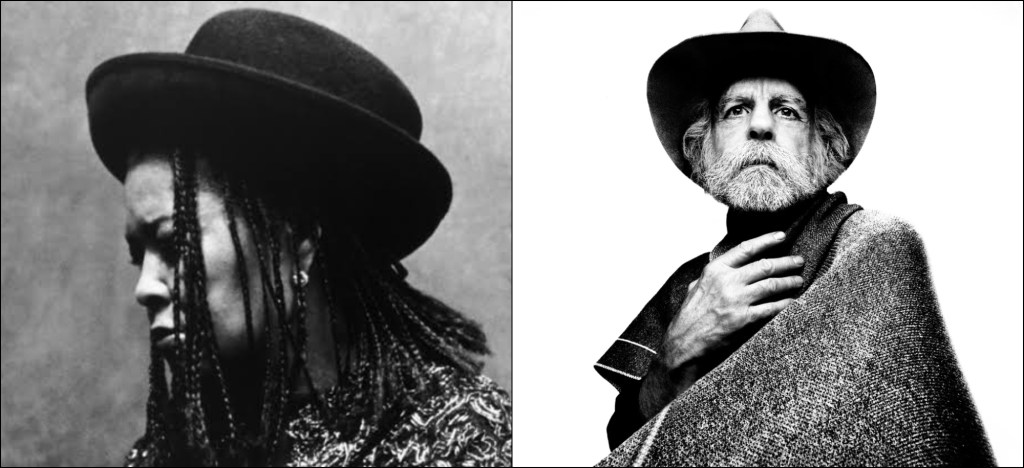
The earth is supposed to take us back. It is where we build our homes, bury our dead, plant our histories, and imagine that something of us will remain. But what happens when the ground beneath us offers no promise of belonging? And what happens when the things we have spent our lives trying to keep become the very things we must learn to release? Bob Weir’s “The Ground Don’t Want Me” and Abbey Lincoln’s “Throw It Away” approach these questions from different directions. Weir’s song evokes the unsettling prospect of a world that offers no guarantee of shelter; Lincoln’s composition considers the freedom that becomes possible when we loosen our grip on what we cannot keep. One confronts the ache of belonging denied, while the other asks us to reconsider the attachments through which we define ourselves. Together, they reveal a tension at the heart of being human: we want the world to hold us, yet we must learn to live without the assurance that it will.
Belonging is something we seek from the world. Freedom, however, may begin with what we are willing to release from ourselves.
Weir’s “The Ground Don’t Want Me” emerged from the sessions for Blue Mountain, his 2016 solo album, before being released as a previously unheard recording in 2026. Written by Josh Ritter, with music by Ritter, Josh Kaufman, and Weir, the song belongs to a musical world shaped by American roots traditions, where the landscape often serves as both setting and state of mind. Its eventual release also introduces a temporal dimension: a recording made years earlier enters a new moment, inviting listeners to consider how music acquires meaning beyond the circumstances of its creation. The title alone unsettles our relationship with the earth. The ground is supposed to be dependable. It receives our footsteps, supports our dwellings, and gives physical form to the idea of home. To imagine that it does not want us reverses this familiar arrangement. The land becomes something other than refuge; it becomes a presence against which we must measure our own vulnerability.
American music is full of travelers. The blues wanderer, the country drifter, the folk singer on the road: each carries a different version of the desire to leave something behind. The open road promises reinvention, suggesting that another life might be waiting beyond the limits of the present one. Movement becomes an expression of possibility, a declaration that our circumstances need not determine our future. Yet the mythology of movement contains a contradiction. Leaving is not the same as arriving. Distance does not necessarily produce freedom, and a person can travel indefinitely without resolving the reasons they felt compelled to depart. The American West intensifies this tension. Its vastness has long served as a metaphor for self-invention, a place where the individual might imagine beginning again. But the landscape does not owe the traveler a happy ending. Its openness can be exhilarating precisely because it is indifferent. The world can offer space without offering welcome.
This is what makes Weir’s song a compelling meditation on belonging. The question is not simply whether we can find a place to settle, but what happens when the places we seek cannot provide the security we expect from them. A landscape may be beautiful without being hospitable. A community may shape us without continuing to accommodate us. A home may remain physically unchanged while becoming emotionally unfamiliar. There is a particular vulnerability in discovering that the things we depend upon do not necessarily depend upon us in return. We may build our identities around a place, a relationship, or a community, only to discover that our attachment cannot guarantee permanence. The resulting disorientation is not merely about losing something external. It can unsettle our understanding of who we are.
Abbey Lincoln’s “Throw It Away,” heard here in its 2007 interpretation on Abbey Sings Abbey, approaches this problem from another direction. Rather than asking whether the world will hold us, Lincoln asks us to examine what we insist on holding ourselves. Lincoln was a composer and vocalist whose work consistently connected artistic expression with self-determination. Across a career that encompassed jazz, film, political engagement, and songwriting, she developed a voice that could be intimate without becoming submissive, confrontational without sacrificing tenderness, and emotionally direct without surrendering complexity. Her music made room for the realities of the world while insisting upon her right to interpret those realities on her own terms. Abbey Sings Abbey, released in 2007, returned to her compositions through an intimate musical setting informed by acoustic folk and country textures as well as jazz. It was the final studio album of her recording career, and its performances carry the perspective of an artist revisiting her own work after decades of experience. The songs do not feel detached from the life that preceded them. They sound newly illuminated by it.
Lincoln’s reflections on songwriting offer a useful lens through which to understand “Throw It Away.” In an interview with All About Jazz, she described the process of expressing what she felt and witnessed through music, then releasing the burden rather than continuing to carry it. Her understanding of creation suggests that expression can transform an experience without erasing it. This distinction is essential to the song’s philosophy. Letting go is not the same as indifference. It does not require us to deny that something mattered, pretend that suffering never occurred, or abandon the lessons that difficult experiences have taught us. It asks us to consider whether the meaning of an experience must remain inseparable from the pain it caused. We hold on for reasons that are not always apparent to us. Sometimes we preserve a relationship because its survival seems to validate the years we invested in it. Sometimes we cling to a place because leaving would mean acknowledging that the person we were there no longer exists. Sometimes we keep carrying an injury because we fear that releasing it will diminish the seriousness of what happened.
But pain is not proof of devotion. We do not have to remain wounded to demonstrate that something mattered. We do not have to keep a person in our lives to honor what they once meant to us. And we do not have to preserve an old version of ourselves simply because we recognize the person we used to be. Lincoln’s wisdom lies in the possibility of transforming experience into understanding. The past remains part of us, but it need not dictate every decision we make. We can remember without remaining confined to memory. We can acknowledge what was lost without making loss the organizing principle of our lives. For Lincoln, songwriting itself offered a model of this process. An experience enters the artist’s consciousness, acquires a form, and becomes available to others. The resulting work can carry the emotional truth of its origins without requiring the artist to remain permanently inside the experience that inspired it. Music becomes both testimony and release.
Heard alongside Weir, this perspective creates a revealing tension. Weir’s song evokes the instability of the world outside us; Lincoln’s composition examines our capacity to respond to that instability without becoming consumed by it. One confronts the limits of external security, while the other considers the possibility of an internal freedom that does not depend upon circumstances remaining unchanged. The songs do not offer identical philosophies, nor should they be made to. Weir’s recording belongs to the collaborative storytelling world of Blue Mountain, while Lincoln’s composition emerges from her distinctive artistic and philosophical history. Their connection is interpretive: a relationship discovered through listening rather than an equivalence imposed upon two different bodies of work. That distinction matters. To place artists in conversation is not to erase their differences, but to discover what those differences make possible.
Lincoln’s legacy is inseparable from her experiences as a Black woman working within American culture, her political consciousness, and her insistence on artistic autonomy. Weir’s musical identity developed through the collaborative experimentation and roots traditions associated with the Grateful Dead, alongside his continuing exploration of American folk and country forms. Their histories are distinct, and their songs retain the particularities of those histories. Yet both artists demonstrate how music can become a means of examining the individual’s relationship with a world that cannot be entirely controlled. The question of freedom runs through both recordings, although it takes different forms. In Weir’s song, freedom is complicated by the absence of a secure place to stand. In Lincoln’s, freedom emerges through a reconsideration of what we believe we must retain. One draws our attention to the limits of the world’s promises; the other asks us to examine the expectations we carry into our encounters with it.
Neither offers an uncomplicated resolution. A person who has been displaced cannot simply choose to feel at home. A person who has suffered cannot be expected to release that suffering on command. The material realities of belonging, exclusion, memory, and loss matter. Sometimes the ground really does give way beneath us, and sometimes the burdens we carry are not burdens we chose. Still, the songs make room for another question: what remains within our power when circumstances refuse to cooperate? We may not be able to determine where we are welcomed, how long a relationship will last, or whether the future will resemble the life we imagined. We can, however, reconsider the meanings we attach to those experiences. Rejection does not establish our worth. The end of a relationship does not invalidate its history. Changing our relationship to the past does not require us to deny what happened.
This is not an argument for emotional invulnerability. It is an argument for remaining responsive to life. Lincoln’s approach to songwriting offers one model of that responsiveness. She took what she observed, transformed it into music, and allowed the work to exist beyond the private experience that inspired it. Weir’s recording offers another point of entry: a traveler confronting a landscape that permits movement without guaranteeing resolution. One turns experience into expression; the other evokes the uncertainty of moving through a world that offers no final assurance of arrival. Both remind us that meaning does not always emerge from resolution. Sometimes it develops through our willingness to remain with a question long enough to understand what it asks of us.
The passage of time deepens this relationship. Lincoln revisited her compositions late in her recording career, bringing the perspective of lived experience to songs she had written earlier. Weir’s previously unreleased performance entered public life a decade after the sessions that produced it. Each recording demonstrates how music can outlast its original circumstances, acquiring new significance as the world and its listeners change. We hear songs differently as our lives change. A piece that once seemed to describe escape may later reveal the exhaustion of never staying. A song about release may initially sound like an impossible demand, only to become meaningful after years spent trying to preserve something that has already ended. The music remains, but we acquire new ways of hearing it.
This is the particular value of listening across time and tradition. We are reminded that meaning does not belong exclusively to the moment of creation. It continues to develop through encounters between recordings, histories, and listeners. The relationship between Weir and Lincoln is not a definitive interpretation of either artist. It is an opportunity to hear the questions each raises with greater clarity. What does it mean to seek a home in a world that cannot promise permanence? What do we owe the experiences that have shaped us? And when does holding on become a way of preventing ourselves from living beyond them?
Perhaps the hardest lesson is that belonging and possession are not the same thing. We can belong to a place without owning it. We can love a person without determining their future. We can honor our history without remaining confined to its most painful chapters. We can allow an experience to change us without making it the only thing we are. The ground beneath us may shift. The places we cherish may become unfamiliar. The future may refuse to follow the plans we made for it. None of this makes the search for belonging meaningless, nor does it make letting go easy. It reminds us, instead, that a meaningful life cannot depend entirely upon things remaining as they are.
Weir and Lincoln leave us with different ways of confronting that uncertainty. One brings us to the edge of a landscape that cannot promise shelter. The other asks us to consider what happens when we release the burden of expecting permanence from everything we love. Between them is neither a guarantee of peace nor a formula for moving on. There is something more honest: the recognition that we must learn to live with what cannot be secured, to remember without being imprisoned by memory, and to remain open to what life may yet become. The ground does not have to promise us forever. The past does not have to surrender its meaning. We do not have to abandon the search for belonging simply because we understand its uncertainty.
We must learn, instead, to distinguish between what gives us life and what keeps us from living it. Sometimes, that means finding the courage to leave. Sometimes, it means finding the courage to stay. And sometimes, as Lincoln’s songwriting suggests, it means transforming what we have witnessed into something we can share, then allowing ourselves to put the burden down. The world may never offer us the permanence we desire. But we can still make something meaningful from our time in it. Perhaps belonging begins not with the promise that the ground will always hold us, but with the knowledge that even when it does not, we are still capable of becoming more than the things we have lost.

