PAIRINGS: Bob Weir, “The Ground Don’t Want Me” & Abbey Lincoln, “Throw It Away”

PAIRINGS: Albums & Singles — How Music Intersects
Publik / Private

Written By Jordannah Elizabeth Graham-Mayer
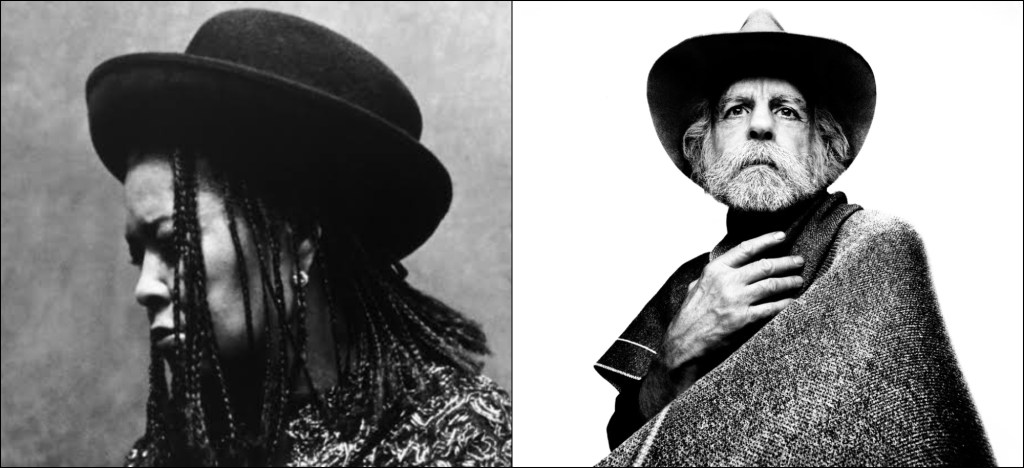
The earth is supposed to take us back. It is where we build our homes, bury our dead, plant our histories, and imagine that something of us will remain. But what happens when the ground beneath us offers no promise of belonging? And what happens when the things we have spent our lives trying to keep become the very things we must learn to release? Bob Weir’s “The Ground Don’t Want Me” and Abbey Lincoln’s “Throw It Away” approach these questions from different directions. Weir’s song evokes the unsettling prospect of a world that offers no guarantee of shelter; Lincoln’s composition considers the freedom that becomes possible when we loosen our grip on what we cannot keep. One confronts the ache of belonging denied, while the other asks us to reconsider the attachments through which we define ourselves. Together, they reveal a tension at the heart of being human: we want the world to hold us, yet we must learn to live without the assurance that it will.

Belonging is something we seek from the world. Freedom, however, may begin with what we are willing to release from ourselves.

Weir’s “The Ground Don’t Want Me” emerged from the sessions for Blue Mountain, his 2016 solo album, before being released as a previously unheard recording in 2026. Written by Josh Ritter, with music by Ritter, Josh Kaufman, and Weir, the song belongs to a musical world shaped by American roots traditions, where the landscape often serves as both setting and state of mind. Its eventual release also introduces a temporal dimension: a recording made years earlier enters a new moment, inviting listeners to consider how music acquires meaning beyond the circumstances of its creation. The title alone unsettles our relationship with the earth. The ground is supposed to be dependable. It receives our footsteps, supports our dwellings, and gives physical form to the idea of home. To imagine that it does not want us reverses this familiar arrangement. The land becomes something other than refuge; it becomes a presence against which we must measure our own vulnerability.

American music is full of travelers. The blues wanderer, the country drifter, the folk singer on the road: each carries a different version of the desire to leave something behind. The open road promises reinvention, suggesting that another life might be waiting beyond the limits of the present one. Movement becomes an expression of possibility, a declaration that our circumstances need not determine our future. Yet the mythology of movement contains a contradiction. Leaving is not the same as arriving. Distance does not necessarily produce freedom, and a person can travel indefinitely without resolving the reasons they felt compelled to depart. The American West intensifies this tension. Its vastness has long served as a metaphor for self-invention, a place where the individual might imagine beginning again. But the landscape does not owe the traveler a happy ending. Its openness can be exhilarating precisely because it is indifferent. The world can offer space without offering welcome.

This is what makes Weir’s song a compelling meditation on belonging. The question is not simply whether we can find a place to settle, but what happens when the places we seek cannot provide the security we expect from them. A landscape may be beautiful without being hospitable. A community may shape us without continuing to accommodate us. A home may remain physically unchanged while becoming emotionally unfamiliar. There is a particular vulnerability in discovering that the things we depend upon do not necessarily depend upon us in return. We may build our identities around a place, a relationship, or a community, only to discover that our attachment cannot guarantee permanence. The resulting disorientation is not merely about losing something external. It can unsettle our understanding of who we are.

Abbey Lincoln’s “Throw It Away,” heard here in its 2007 interpretation on Abbey Sings Abbey, approaches this problem from another direction. Rather than asking whether the world will hold us, Lincoln asks us to examine what we insist on holding ourselves. Lincoln was a composer and vocalist whose work consistently connected artistic expression with self-determination. Across a career that encompassed jazz, film, political engagement, and songwriting, she developed a voice that could be intimate without becoming submissive, confrontational without sacrificing tenderness, and emotionally direct without surrendering complexity. Her music made room for the realities of the world while insisting upon her right to interpret those realities on her own terms. Abbey Sings Abbey, released in 2007, returned to her compositions through an intimate musical setting informed by acoustic folk and country textures as well as jazz. It was the final studio album of her recording career, and its performances carry the perspective of an artist revisiting her own work after decades of experience. The songs do not feel detached from the life that preceded them. They sound newly illuminated by it.

Lincoln’s reflections on songwriting offer a useful lens through which to understand “Throw It Away.” In an interview with All About Jazz, she described the process of expressing what she felt and witnessed through music, then releasing the burden rather than continuing to carry it. Her understanding of creation suggests that expression can transform an experience without erasing it. This distinction is essential to the song’s philosophy. Letting go is not the same as indifference. It does not require us to deny that something mattered, pretend that suffering never occurred, or abandon the lessons that difficult experiences have taught us. It asks us to consider whether the meaning of an experience must remain inseparable from the pain it caused. We hold on for reasons that are not always apparent to us. Sometimes we preserve a relationship because its survival seems to validate the years we invested in it. Sometimes we cling to a place because leaving would mean acknowledging that the person we were there no longer exists. Sometimes we keep carrying an injury because we fear that releasing it will diminish the seriousness of what happened.

But pain is not proof of devotion. We do not have to remain wounded to demonstrate that something mattered. We do not have to keep a person in our lives to honor what they once meant to us. And we do not have to preserve an old version of ourselves simply because we recognize the person we used to be. Lincoln’s wisdom lies in the possibility of transforming experience into understanding. The past remains part of us, but it need not dictate every decision we make. We can remember without remaining confined to memory. We can acknowledge what was lost without making loss the organizing principle of our lives. For Lincoln, songwriting itself offered a model of this process. An experience enters the artist’s consciousness, acquires a form, and becomes available to others. The resulting work can carry the emotional truth of its origins without requiring the artist to remain permanently inside the experience that inspired it. Music becomes both testimony and release.

Continue reading →
Discover Fun Hobbies That Boost Wellness, Growth, and Connections

By: Alyssa Strickland

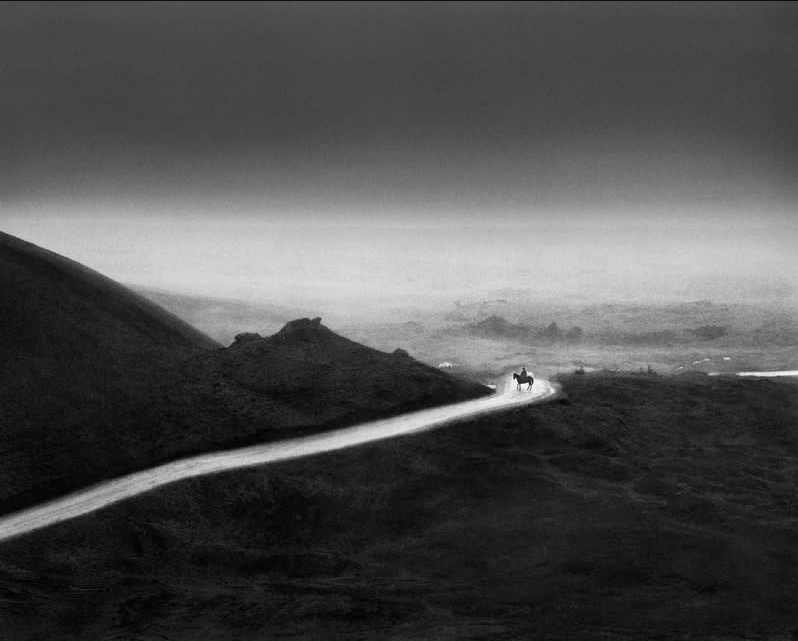
Photo by: Ragnar Axelsson

Busy adults juggling work, home responsibilities, and a social life that’s gotten quieter often want something enjoyable again, but the options can feel intimidating or oddly lonely. The core challenge is finding accessible hobbies that actually stick, ones that fit real schedules, feel welcoming for a general audience, and don’t turn into another self-improvement chore. When a hobby doubles as a wellness activity, it can bring steady mental health benefits like a calmer mind and a clearer sense of momentum. Even better, the right pastime makes social connection feel natural instead of forced. 

Why Hobbies Build Growth, Calm, and Community 

Hobbies are more than “something to do.” Personal growth through hobbies comes from learning small skills over time, which boosts confidence, steadies your mood, and gives your week a clear thread of meaning. That sense of progress makes it easier to show up consistently, even when life is packed.  This matters because a lot of adults are running on autopilot and craving real connection. 

When 41 percent of adults feel lonely, a shared activity offers a low-pressure way to be around people with a built-in topic. 

Think of a beginner pottery class: you focus on shaping clay, your mind quiets, and you leave with a tangible “I made this.” Over a few sessions, names become familiar, and conversations happen naturally while hands stay busy. With your “why” clear, it’s easier to turn curiosity into a skill plan that fits your goals. 

Build Tech Skills on Your Schedule With a Flexible Online Track 

When you want the confidence and connection that hobbies bring, having a clear path can make it easier to keep showing up. Going back to school online is one practical way to turn curiosity into real, usable skills, especially if you’re aiming to learn something you can build on over time. It helps to choose a track that feels fulfilling or supports your career goals; for example, if you aspire to work in tech, you may be the perfect candidate for a degree in information technology, and exploring accredited online technology degrees can help you see what that path could look like. Online programs can also be a strong fit for busy professionals, since they’re designed to be flexible around work and life responsibilities. 

Beginner-Friendly Hobbies You Can Start Online or With Friends 

Pick one hobby that fits your energy, schedule, and social comfort level, then make it easy to show up consistently. A simple weekly plan (and a clear “why”) turns curiosity into a routine you can actually keep.

  1. Learn one instrument with a micro-practice plan: Choose a “starter instrument” you can play quietly at home (keyboard, ukulele, or a practice pad for drums). Set a 20-minute block three times a week: 5 minutes warm-up, 10 minutes on one skill (chords, a scale, or rhythm), and 5 minutes playing a simple song. If you like company, schedule one virtual jam or in-person meet-up each month so you have something to practice toward. 
Continue reading →

Still Here: The Trouble With Having Nowhere to Go

Written By: Jordannah Elizabeth Graham-Mayer

We have become very good at being between houses.  The Colorado house has become my mother’s house, at least for the moment, which is one of those sentences that sounds temporary until you start counting the boxes. Some of the children are further south, and that arrangement has its own logic, including the small but necessary reminder that children eventually become people with houses, one mine and John’s  who can kick us out when they want to “redesign”, (and not keep the house “dry” of mini-kegs when their father is over a decade sober). Another one is in Cape Cod, where independence has become less of an abstract virtue and more of a practical requirement, particularly where John is concerned. Our daughter can’t quite sleep without him, so she’s got a cottage, and an old Silverado to drive until she forgets about him. 

So here we are, two married people with several homes between us and nowhere to sleep. I have to admit there is something almost comic about it, although I am not laughing at all.

Money has a way of making philosophy less interesting. John’s accounts are blocked, my part-time teaching work has dried up, and suddenly the difference between having bills and having money feels like a distinction invented by someone who has never paid a bill. The bills themselves are managed, which is important, but there is no mysterious person waiting behind a curtain with a checkbook when something unexpected happens. We have reached that peculiar adult territory where everything is technically handled and everything still feels precarious. I have always thought of security as something you build slowly, but lately it feels more like something you carry carefully from room to room. You put it down for a second and discover that the floor has moved.

Marriage is interesting under these conditions because romance becomes very difficult to perform. Nobody looks particularly cinematic while trying to solve logistics. John can be funny in the middle of it, which is one of the reasons I married him, although sometimes his humor arrives at precisely the moment I am trying to remain serious. I can become organizationally tedious to the point of irritation, which is another way of saying that I sometimes confuse his anxiety within his organization.

Between the two of us, we have developed a small economy of glances that usually means, Are you seeing this? followed by, Yes, unfortunately. There’s also, “You’re good looking” and “No divorce”.

Then, because life has a sense of humor, I received one of John’s rare texts. It was not about money or houses or children or anything that could be entered into a spreadsheet. It was a message about avoiding boring conversation, about confidence and quick wit, about being playful and keeping him curious, about a little tension and perhaps a little trouble. The funny thing about receiving something like that from your husband when your life is already full of trouble is that you suddenly have to consider the distinction between the kind you chose and the kind you did not. I read it and thought, “The person I married still knows how to interrupt my thinking.”

Continue reading →

The Void

Written by Jordannah Elizabeth Graham-Mayer

Last night, I sat alone at the bar in Tagliata, a high-end Italian restaurant in a wealthy downtown waterside district in Baltimore, Maryland called Harbor East. I had everything and nothing on my mind. 

Twenty minutes before I settled on where I would eat dinner, I had a drink and caught a few minutes of the Orioles game at Bar One, an expensive Black creole-inspired restaurant a few blocks away Tagliata. From there, I walked down a paradisial pier, clearing my mind long enough to gaze at the stunning orange and pink sunset that gleamed magnificently above me while well-to-do patrons of all backgrounds sat at tables outside of the strip of various portals of culinary decadence.  

To me, the people looked like cardboard characters in the diorama of my reality. I had gone to the pier emotionally condensed, wanting to decompress and relieve the tightness of my Third Eye and fill an inner Void that sat deep within me. The Void sits in anticipation, waiting for me to fill it with moments of self-reflection and inward adoration. The Void is patient. It has no awareness of external forces: the stresses, pressures, and the complexities of the material world. It simply waits for me. I just become more aware of it on certain days, as it softly nudges me like a drowsy elderly Saint Barnard who hopes to rest its large chin and snout on your lap. 

The Void waits for the days when I become lost in the plotlines that take place on the theatrical stage of existential life and serves as a reminder, quietly telling me, “I’ll wait for you.”

When I settled in at the bar in Tagliata, I felt some relief. I was somehow able to look normal, showing no signs of grief, sadness, or distraction. I could see it in the body language and lack of disturbance in the interactions of the patrons around me. I ordered my food and a glass of Reisling and allowed the tamed liveliness of the room to calm my overwhelm. 

I kept it together until the in-house pianist and lounge singer, who was out of my view, began to play Pink Floyd’s “Comfortably Numb”. The melodic playing and soft emotion in his voice caused my eyes to well up. 

The feeling of loneliness washed over me, a feeling that I had been denying for a long time as I had many people in my life. But at that bar, with Pink Floyd’s penetrating lyrics playing softly in the corner of the room, I released. I dabbed the bottom lids of my eyes and covertly checked my knuckles to make sure my eyeliner had not been smudged.  

A friend of mine passed away a couple of days earlier and everyone in my life had been so wrapped up in what I was and wasn’t doing, how I was affecting them, I had no room to tell anyone what was going on with me.

I was maintaining an extremely demanding career, my mother had just survived breast cancer, and I was also still grieving my father, who died two years before. I had no room to talk about anything. Everyone had been behaving so selfishly that all I could do was feed myself an expensive dinner alone, knowing that no one had any idea that I had a life. I had needs and emotions that had nothing to do with what was going on with the immediacy of those who were in close proximity to me. 

And I felt like one wanted to know. 

If it didn’t have anything to do with me doing some form of labor or how I was behaving, who I was offending, or being constantly reminded that I was not in a relationship, there was no room for me to just be.

The feeling of loneliness proceeded to haunt me during my Uber ride home and on into bedtime. 

This morning, I woke up and played “Comfortably Numb” while I was in the shower and sang along, feeling back to myself. It doesn’t take much.  Nonetheless, the Void is always waiting, anticipating me. 

Sundial

From the new column: Kingdoms and Diamonds about love, marriage, traversals, emotional health and healing.

Had I not learned from him—well, I don’t know who or where I’d be. Probably living in the mountains or near a body of water, becoming more obscure by the moment. Maybe I’d keep writing; maybe I’d finally have time to pick up the guitar. But I can’t avoid the presence of hearts and thoughts, of evil and the destitution of the world. I would have stayed in a safe womb where Charlie, Bobbi, Rolli, and now Button sit.

By the time Button came along, I knew not to drink milk or Pepsi—but kids like what they like. Most of them are picky.

Their father and I are, too.

I sat down to get my life in order—reordered, I guess—a couple of summers ago, and realized I love about fifteen things in the entire world. One of them is travel. But I like what I like, and so do they. Branches of the same tree—his and mine—simple and larger-than-life auras. I want nothing to do with any of it, but he had to become the biggest and the best. I’d have loved him either way, but I love that he encourages me, inspires me to be the very best I can be. Otherwise, I’d have spent my days frequenting farmers’ markets, volunteering, shopping for this and that; staring at a first edition of The Catcher in the Rye, studying whatever intrigued me, walking around with nothing in particular on my mind.

Of course, I always wanted a family.

He had to make sure everyone was themselves, and I guess I seemed—

It doesn’t matter now. We’ve got everything we wanted and a lot of complexities that are truly simple drama—cut-and-dry anxiety from people who are privileged, safe, wealthy, and sometimes find their homes, cars, and daily lives are just enough.

No one is starving. No one is suffering from the love he and I have cultivated—at first sight, at first heartbeat, at first cry.

They think power is supposed to feel like something—that it changes us, or makes us want to hurt or dominate each other.

They don’t understand the healthy balance of love and power.

One of us has something up our sleeve—or both—and no one knows how it will play out. But we are parents, and we love each other.

I didn’t know milk made him sick until our son gave me nausea and sweats. I feel guilty because he has bad bones, and I realized he can’t just take calcium. Me prescribing milk baths—it was all probably vomit-inducing.