Written by: Jordannah Elizabeth Graham-Mayer
There is something almost ceremonial about the words “Review of Books.” The phrase suggests a publication concerned with books, but its real territory is much larger: literature, history, politics, philosophy, art, culture, identity, memory and the arguments that emerge when people take ideas seriously. A review can tell us what a book contains, but criticism at its best asks what the book reveals about the world that produced it. That distinction has allowed the Review of Books to survive dramatic changes in publishing, from the decline of newspaper book sections to the rise of digital media and the fragmentation of contemporary audiences. Today, the form exists in many versions, from major international magazines to regional journals, identity-based publications and specialist academic periodicals. What unites them is not a particular political position or literary taste, but a belief that books remain worthy of sustained attention.
There is no single “Review of Books,” and there never has been. Instead, the name describes a living family of publications that have developed different editorial personalities according to their locations, readerships and intellectual communities. Some are among the most established cultural magazines in the English-speaking world, while others were created specifically to fill spaces left by shrinking newspapers and disappearing literary supplements. Some publish primarily in print, some exist principally online, and others deliberately combine both forms. Their subjects can range from novels and poetry to political theory, history, science, religion, visual art and current affairs. Taken together, they form a remarkably useful map of contemporary intellectual life. To follow them is to see not only what people are reading, but what different communities believe is worth discussing.
THE NEW YORK MODEL
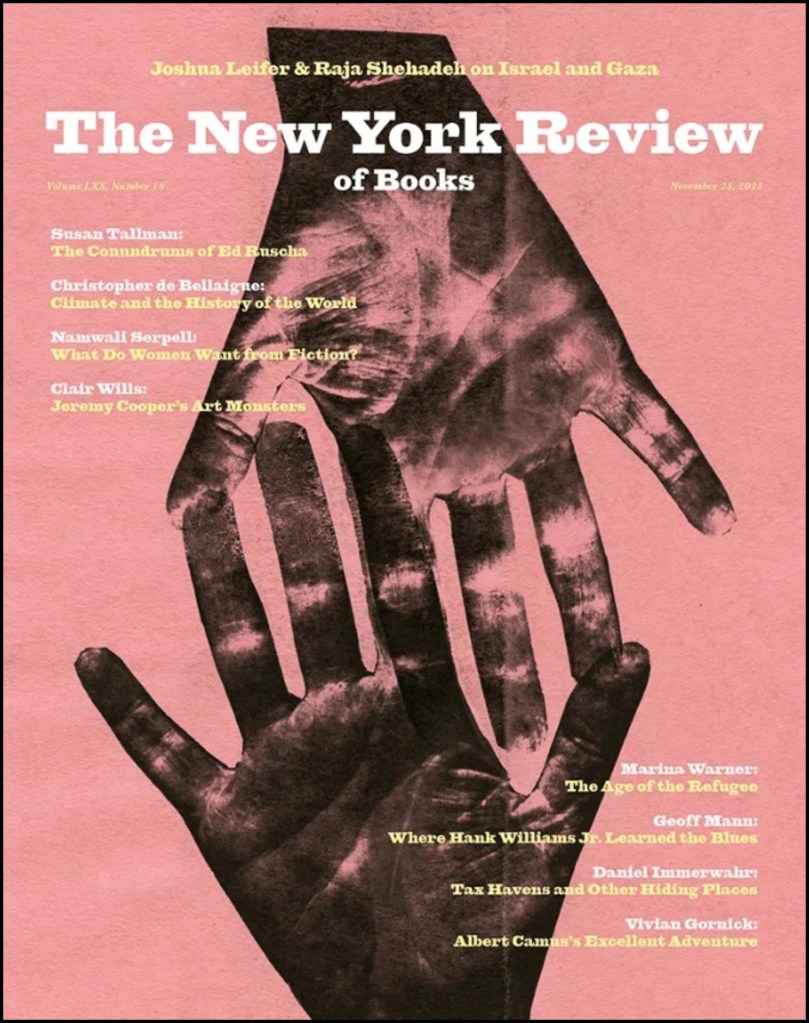
Any serious consideration of the contemporary Review of Books tradition begins with The New York Review of Books. The Review was launched in 1963 during the New York City newspaper strike by Robert B. Silvers and Barbara Epstein, working with Jason Epstein, Robert Lowell and Elizabeth Hardwick. Its founding purpose was ambitious: to create a publication in which distinguished writers could discuss books and current issues at length, rather than treating reviews simply as consumer guidance. The experiment succeeded almost immediately, and the publication became an independent voice in American intellectual and literary life. Today, The New York Review of Books publishes twenty issues each year and continues to combine discussion of books with politics, history, science, literature and the arts. Its longevity is partly explained by a simple editorial principle: the book is often the beginning of the conversation, not its conclusion.
The importance of that model is difficult to separate from the history of modern literary criticism. The New York Review helped establish a recognizable form in which a review could become an essay, an essay could become an argument, and an argument could move well beyond the book under discussion. A biography could become a meditation on political power; a history book could provoke a reconsideration of national memory; a novel could become a lens through which an entire society is examined. This approach made the serious review something closer to a literary genre of its own. It also created a publication in which readers could encounter writers and thinkers across disciplines without being confined to a single academic field. More than six decades after its founding, that remains central to the Review’s identity. [1]
THE LONDON REVIEW
The London Review of Books emerged sixteen years later under very different circumstances. It was founded in 1979 during the management lockout at The Times, after Frank Kermode proposed in The Observer that a new magazine could occupy the space created by the temporary disappearance of the Times Literary Supplement. The first issue appeared four months later under founding editor Karl Miller. The publication subsequently developed its own independent identity and became one of Europe’s most influential magazines of culture and ideas. Today, the LRB is published twice a month and ranges across literature, politics, history, philosophy, science, technology, art, fiction, poetry, memoir and reportage. Its continued emphasis on long-form intellectual writing demonstrates how expansive the idea of a book review can become.
The relationship between The New York Review of Books and the London Review of Books is useful because neither publication treats criticism as a simple exercise in ranking new titles. Their reviews can be lengthy, argumentative and highly contextual, asking readers to consider books alongside the historical and political circumstances in which they appear. The LRB has also built a broader cultural ecosystem around its magazine, including a bookshop, podcasts, events and a substantial digital archive. This matters because the modern review is no longer simply a printed object arriving at a reader’s home. It can be a magazine, archive, conversation, event series and intellectual community at once. The review survives, in part, by becoming more than a review.
DUBLIN, SYDNEY AND THE REGIONAL REVIEW
The regional Review of Books demonstrates another important truth: literary culture does not have to be organized from the largest international capitals. The Dublin Review of Books was founded in 2007 as an online journal offering a space for reflection on literature, history, arts, society, politics and culture. Its essays and shorter pieces are generally connected to recently published books, while its editorial interests extend particularly toward Ireland, Europe and their cultural and political histories. The publication describes itself as a journal of ideas, and its purpose is not simply to catalogue Irish publishing but to create a forum in which Irish and international questions can be examined together. Its continued activity illustrates how a regional publication can develop an international readership without surrendering its particular point of view.
Australia’s Sydney Review of Books offers another version of the regional model. Founded in 2013 in response to the diminishing opportunities for critics in the mainstream press, it has become a significant Australian venue for long-form reviews and literary essays. The publication publishes new work weekly and supplements its digital presence with print anthologies, podcasts and public programs developed in partnership with cultural institutions across Australia. Based at the Writing and Society Research Centre at Western Sydney University, the SRB explicitly treats criticism as a cultural practice rather than simply as consumer advice. Its stated mission emphasizes intellectual rigor, diversity, participation and the importance of disagreement within a healthy literary culture. In that sense, the regional review becomes more than a publication: it becomes infrastructure for criticism itself.
The Montreal Review of Books offers an especially clear example of how geography can determine editorial purpose. The publication is a free, nationally distributed journal devoted to reviews, features and essays about English-language books by Quebec writers and publishers. Its coverage includes literature, nonfiction, poetry, memoir, history, graphic novels and children’s books, giving it a broad mandate within a clearly defined cultural territory. Published three times a year in print by the Association of English-language Publishers of Quebec, the mRb also maintains an active digital presence. Its existence is a reminder that a literary community can require its own critical forum even when its publishing market is part of a larger national system. The Review of Books, in this form, becomes a means of making a particular literary culture visible to itself and to the outside world.
THE REVIEW AS CULTURAL IDENTITY
The boundaries of the Review of Books become even more interesting when community is defined by culture or identity rather than geography alone. The Jewish Review of Books, first published in spring 2010, is a quarterly print publication with an active online presence devoted to serious discussion of Jewish literature, religion, culture, politics, fiction, poetry and the arts. Its contributors include writers and scholars working across contemporary Jewish intellectual life, while its editorial approach is intended to be serious without becoming inaccessible. The publication is issued by the Jewish Review of Books Foundation and has developed a substantial readership since its founding. Its model demonstrates that a review can become a cultural meeting place, where books are considered not in isolation but in relation to history, memory, religion and identity.
This is one of the most important characteristics of the modern review: it creates context. A novel may be reviewed as literature, but it may also prompt discussion about migration, language or memory. A history may lead to an examination of how a community remembers itself. A work of religious scholarship may become part of a conversation about contemporary politics. The review creates the space in which those connections can be made without forcing every subject into a single category. In that sense, the strongest publications do not merely tell readers what books to buy. They teach readers how books participate in larger cultural conversations.
LOS ANGELES AND THE DIGITAL TURN
The Los Angeles Review of Books belongs to a newer generation of the tradition. Founded in 2011 at a moment when newspapers and magazines were closing book-review sections, LARB began as a volunteer-run online publication and developed into a nonprofit literary and cultural organization. It now publishes reviews, essays and interviews online every day, alongside a quarterly print journal featuring fiction, poetry and art. Its subject matter extends across literature, culture, politics and the arts, while its programs include publishing education, writing workshops, public events and other efforts to support literary culture. LARB’s own history describes its mission as an effort to rethink the literary review by bringing together academic and popular writing, expertise and accessibility.
That transformation matters because the internet did not simply replace print; it changed what a review could be. Digital publishing allowed criticism to appear more frequently, reach readers across geographic boundaries and develop alongside podcasts, newsletters, events and social media. It also allowed publications to cultivate communities without depending entirely on the economics of a traditional magazine. The Chicago Review of Books is another important example, operating as a publication of StoryStudio Chicago and emphasizing diverse genres, presses, voices and mediums while maintaining a strong connection to Chicago and the Midwest. Its identity demonstrates that digital criticism can be simultaneously local and expansive. The city becomes an editorial perspective rather than merely an address.
BEYOND THE ATLANTIC
The contemporary Review of Books landscape is much broader than the familiar Anglo-American story. Mekong Review, a quarterly English-language magazine, describes its subject as arts, literature, culture, politics, the environment and society in Asia, written by people from the region or those who know it well. Although the publication takes its name from the river running through mainland Southeast Asia, its scope extends throughout Southeast Asia, South Asia, East Asia and Asian diaspora communities around the world. Its editorial purpose is closely connected to creating space for distinctly Asian perspectives at a time when freedom of expression and media freedom face pressure in parts of the region. This makes the publication significant not simply as a review journal but as an intervention in how Asia is represented and discussed.
Aotearoa New Zealand Review of Books offers another contemporary example of a publication using the review to strengthen a national literary ecosystem. Launched in 2023 with seed funding from the Faculty of Arts at the University of Auckland, it publishes long-form reviews of new fiction, nonfiction and poetry from Aotearoa New Zealand. Its remit includes books in both te reo Māori and English, for children, young people and adults, and across genres including speculative fiction, political essays, memoir, art criticism and historical scholarship. The publication states that it publishes approximately ten reviews of new releases each month and maintains an archive that also includes reviews originally published by the Academy of New Zealand Literature. Its existence demonstrates that the Review of Books is not an obsolete form inherited from the twentieth century; it remains capable of being built anew for contemporary literary communities.
THE REVIEW AS APPRENTICESHIP
The Oxford Review of Books introduces another dimension: the review as apprenticeship. Founded in spring 2017, the ORB is a cultural magazine based at Oxford University and published in association with Stanford University. It produces one printed issue each Oxford term, three times a year, while also publishing online on a rolling basis. Its contributors and subjects are international, and its contents extend beyond reviews and essays to interviews, diary pieces, poetry and fiction. Because the publication is created by current undergraduate and postgraduate students at Oxford, it also provides a practical environment in which emerging editors and writers can learn the work of criticism.
That educational function is easy to underestimate. Criticism requires more than having an opinion about a book; it requires close reading, research, context, argument and the ability to make a judgment without reducing a work to a star rating. The review teaches writers how to distinguish reaction from analysis. It also teaches readers to recognize that disagreement does not necessarily weaken criticism; sometimes it is what makes criticism valuable. The Oxford model makes this apprenticeship visible by placing students inside the editorial process itself. The Review of Books, in this sense, can be a school as much as a publication.
THE SCHOLARLY REVIEW
Not every active Review of Books publication is intended primarily for a general literary audience. The AAG Review of Books, published on behalf of the American Association of Geographers, began publication in 2013 as a quarterly online journal. It publishes scholarly reviews, review essays and book-review forums across the breadth of geographic scholarship and allied disciplines. Its definition of relevant books is deliberately broad, including works that are geographic in their concerns as well as fiction, poetry and visual material that can be interpreted through the lenses geography provides. The publication explicitly states that it is not a peer-reviewed journal, distinguishing its critical function from the formal scholarly review process.
The scholarly review demonstrates how flexible the form can be. A discipline can use the review to examine its own literature, debate its methods and engage with ideas arriving from outside its traditional boundaries. In this setting, the book is not simply a cultural object but part of a continuing intellectual conversation. The reviewer becomes a participant in that conversation rather than a detached consumer adviser. The same principle appears across many specialist review journals, even when their titles and disciplines differ. What changes is the audience; the underlying desire to think through books remains remarkably consistent.
THE REVIEW AS INTELLECTUAL POSITION
The words “Review of Books” do not themselves indicate a political philosophy. The Claremont Review of Books provides a clear example: it is a current quarterly publication associated with the Claremont Institute and explicitly presents itself as part of American conservative intellectual life. Its pages include essays, correspondence, political commentary and book reviews, and its current issues continue to position books within broader arguments about American politics, history and culture. It therefore occupies a very different ideological space from many of the literary publications discussed elsewhere in this essay. Yet it belongs to the same broad tradition of using books as the starting point for intellectual argument.
That diversity is important because it prevents “Review of Books” from becoming shorthand for a single editorial worldview. A review publication can be literary, regional, religious, academic, national, digital, conservative or broadly cultural. It can privilege fiction, political theory, history, poetry or scholarship. What gives these publications their family resemblance is the structure of the conversation: a book provides the occasion, and criticism determines how far the conversation travels. The range of political and intellectual positions represented within the contemporary field is therefore evidence of the form’s durability rather than a contradiction of it. “Review” is an editorial architecture, not an ideology.
WHY THE REVIEW STILL MATTERS
The temptation in the digital age is to assume that criticism has been democratized simply because anyone can publish an opinion. But accessibility and criticism are not the same thing. A serious review requires the writer to read carefully, understand context, make an argument and remain engaged with a work long enough to discover what lies beyond an immediate reaction. That work can be slow, especially in a culture organized around speed, algorithms and constant cultural turnover. The Review of Books offers an alternative rhythm: read, consider, contextualize, argue.
That slower rhythm is increasingly valuable. Books are announced before they are read, opinions often arrive before arguments have been developed, and cultural discussion can collapse into rankings, clips and declarations of whether something is “good” or “bad.” Serious criticism resists that compression by creating room for ambiguity and disagreement. It allows a writer to admire a book while challenging it or dislike a book while acknowledging its significance. It gives readers permission to encounter an idea without immediately reducing it to a position. In an age of accelerated reaction, that may be one of criticism’s most necessary functions.
The living Review of Books tradition is therefore more than a collection of magazines carrying similar names. It is an international network of editorial experiments that continually renegotiate the relationship between books and public life. New York and London established influential models, while Dublin, Sydney and Montreal demonstrate the power of regional criticism; Jewish Review of Books shows how identity can shape intellectual community; Los Angeles and Chicago illustrate the possibilities of digital publishing; Mekong Review and Aotearoa New Zealand Review of Books expand the geography of the form; and Oxford and AAG demonstrate its educational and scholarly possibilities. The publications differ in politics, readership, format and purpose, but each treats books as occasions for sustained thought. Together they show that literary criticism is not disappearing so much as changing its habitats. The Review of Books survives because people still want places in which ideas can be examined at length.
Perhaps that is the deepest meaning of the phrase “Review of Books.” It sounds as though the subject is books, but the larger subject is always the culture reading them. A review can tell us whether a book succeeds, but a great review can tell us why the book matters and what its existence reveals about its moment. It can preserve an argument, introduce a writer, challenge a consensus or make a neglected subject newly visible. It can also remind readers that disagreement is not the enemy of culture; indifference is. Follow the books, certainly, but pay attention to the arguments happening around them. That is where the real review begins.
BIBLIOGRAPHY
The New York Review of Books. “About.” The New York Review of Books. Accessed October 2026.
London Review of Books. “About the LRB.” London Review of Books. Accessed October 2026.
Dublin Review of Books. “About Dublin Review of Books.” Dublin Review of Books. Accessed October 2026.
Sydney Review of Books. “About SRB.” Sydney Review of Books. Accessed October 2026.
Montreal Review of Books. “About.” Montreal Review of Books. Accessed October 2026.
Jewish Review of Books. “About.” Jewish Review of Books. Accessed October 2026.
Los Angeles Review of Books. “About.” Los Angeles Review of Books. Accessed October 2026.
Chicago Review of Books. “Who We Are.” Chicago Review of Books. Accessed October 2026.
Aotearoa New Zealand Review of Books. “What We’re All About.” Aotearoa New Zealand Review of Books. Accessed October 2026.
Oxford Review of Books. “About Us.” Oxford Review of Books. Accessed October 2026.
American Association of Geographers. “The AAG Review of Books.” Taylor & Francis Online. Accessed October 2026.
Claremont Review of Books. “Claremont Review of Books.” Claremont Institute. Accessed October 2026.

