Discover Enjoyable Hobbies and Start Your Journey to New Skills Today

Written By: Alyssa Strickland

There is a peculiar irony to adulthood: just as we gain the freedom to pursue almost anything, we often feel we have the least amount of time to do it.

Work expands. Families grow. Responsibilities accumulate almost invisibly until the hours once reserved for curiosity are quietly consumed by obligations. For many people, hobbies begin to feel indulgent rather than essential—a luxury reserved for some imagined future when life finally slows down.

It rarely does.

The challenge isn’t a lack of interest. It’s finding something that fits into the life you already have while giving something meaningful in return. A good hobby doesn’t simply occupy free time; it changes your relationship to it. Even twenty minutes spent learning, creating, or moving can interrupt the rhythm of a day otherwise dictated by schedules and responsibilities.

More importantly, hobbies remind us that not everything worthwhile has to be productive. Sometimes the greatest return on an hour is simply feeling more connected to yourself when it’s over.

Find the Kind of Hobby You Actually Need

One reason people struggle to choose a hobby is that they approach the question as though there’s a single right answer. In reality, different hobbies serve different purposes.

Think about what your life is missing right now, rather than what hobby seems most impressive.

  • Creative hobbies—photography, music, sewing, painting, woodworking, or writing—offer the satisfaction of making something that didn’t exist before. They encourage experimentation and build confidence through practice rather than perfection.
  • Physical hobbies—hiking, cycling, yoga, dance, climbing, or swimming—reconnect the body with the mind. Research continues to suggest that movement supports cognitive function alongside physical health, making these activities valuable for both resilience and emotional well-being.
  • Lifestyle hobbies—gardening, cooking, baking, or caring for plants—become woven into everyday routines. They often begin as practical skills but gradually evolve into rituals that make ordinary days feel more intentional.

Rather than asking, What’s the best hobby?, ask a different question: What am I missing? If your work is highly analytical, perhaps you need something tactile. If your days are physically demanding, quiet creativity may feel restorative. Choosing a hobby is less about finding a new identity than restoring balance.

When a Hobby Becomes Something More

Continue reading

Dionne Warwick’s Last Recording Is About Listening

Written By: Jordannah Elizabeth Graham-Mayer

The legendary vocalist reflects on collaborations, storytelling and her new album of duets with Cynthia Erivo, Kehlani, John Legend and more.

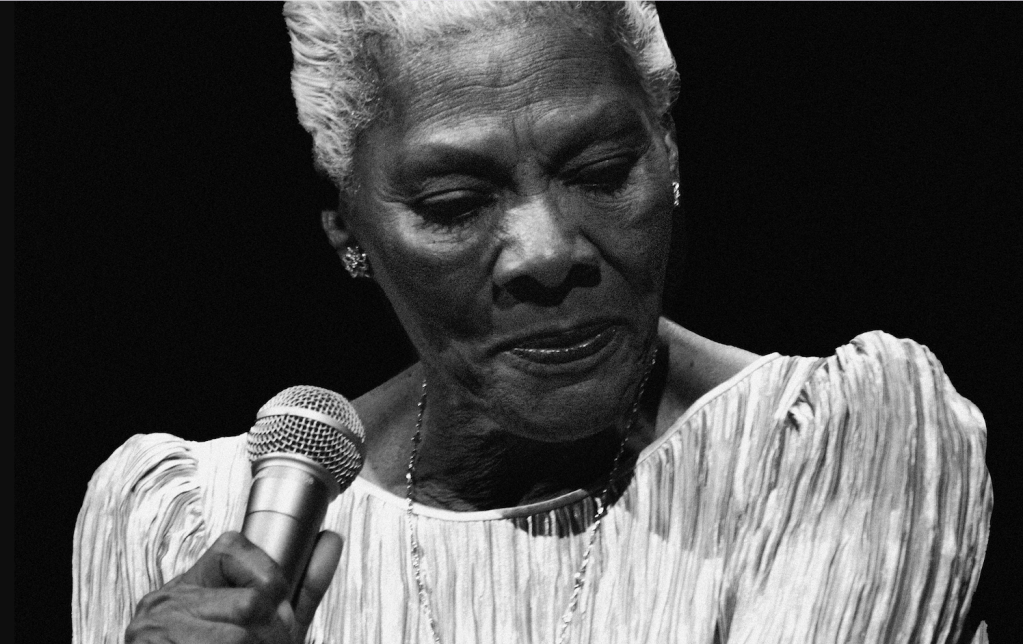
Above: Ms. Dionne Warwick

I’ve gotten to speak to many people, and with continued luck and blessings in life, I will speak to many more. Ms. Warwick is a musician that brought me inspiration with her calm wisdom, and insight into her ability, which is doused in longevity, to always focus on her listeners. She knows what her grandchildren are listening to, and she’s in touch with her alignment to this present-day reality. The honor will always be mine.jeg-m

There are artists who spend a lifetime chasing reinvention, and then there are artists like Dionne Warwick, whose evolution has come not from abandoning herself but from listening more deeply. Over six decades, Warwick has interpreted some of the most enduring songs in American popular music with a voice distinguished less by spectacle than by remarkable clarity of purpose. 

She has never confused technical mastery with emotional honesty. Instead, she has consistently treated songs as stories first, allowing listeners to enter them rather than simply admire them. As our conversation unfolds, it becomes clear that this philosophy continues to guide what Warwick says will be her final recording project, DWuets released on August 7th.

Before discussing the new album, I ask whether any of her many celebrated collaborations stand above the others ie: Elton John, Gladys Knight, Luther Vandross and Stevie Wonder. Warwick laughs softly at the impossibility of the question. “There are simply too many to single out,” she says. “They were all friends of mine, and each collaboration meant something different. I’ve been fortunate to work with many legendary artists, and every one of those experiences was special.” It is an answer that reveals something fundamental about her career. Even after decades of extraordinary accomplishments, Warwick remembers the relationships before the accolades.

That sense of generosity extends naturally into DWuets Rather than constructing a farewell around nostalgia, Warwick has assembled what she describes as a reflection of everything listeners have embraced throughout her career. “First of all, this will be my final recording project,” she says. “I wanted to make a record that reflects everything I believe listeners have enjoyed throughout my career. There’s pop, rock, rap, R&B, gospel — there’s something here for everybody.”

Representing the closing chapter of an extraordinary recording career, DWuets finds Warwick embracing collaboration not as a retrospective exercise but as an artistic continuation. Produced by Damon Elliott and centered on a collection of newly written songs by Diane Warren, the album brings Warwick together with artists from multiple generations and musical traditions, including Cynthia Erivo, John Legend, Mýa, Kehlani, and Saweetie. Rather than revisiting the classics that established her legacy, the project introduces entirely new material, positioning Warwick’s unmistakable interpretive voice alongside some of today’s most recognizable performers. The result is a record that reflects the breadth of her influence while emphasizing her enduring commitment to thoughtful songwriting, lyrical interpretation, and musical dialogue across genres.

Serving as the album’s opening statement, “Ocean in the Desert,” featuring Cynthia Erivo, introduces DWuets with an emphasis on emotional nuance rather than vocal spectacle. The performance unfolds as a measured exchange between two accomplished interpreters, allowing each singer to inhabit the lyric without overshadowing the other. Warwick’s characteristically poised phrasing anchors the recording, while Erivo’s expressive vocal presence adds contemporary depth and texture. Instead of functioning as a showcase of vocal power, the duet demonstrates the enduring value of musical conversation—an approach that aligns with Warwick’s decades-long commitment to storytelling through song. As the first glimpse of DWuets, the recording establishes the album’s broader intention: pairing Warwick’s timeless interpretive style with artists whose own musical identities reflect the evolving landscape of contemporary popular music.

Continue reading

The Strange Pleasure of Being Bad at Something

Written By: John Mayer

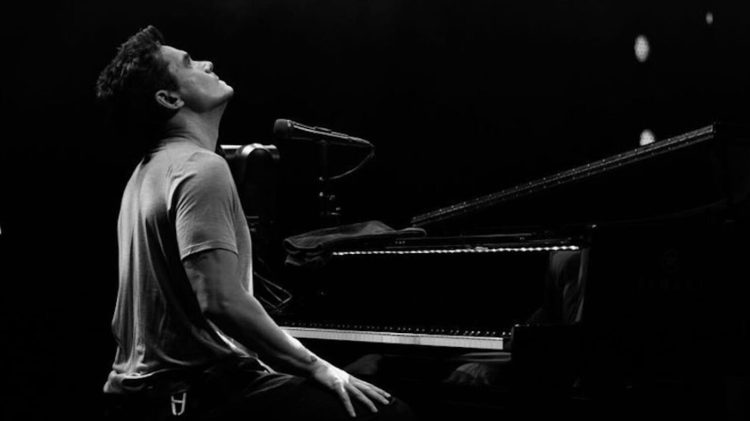
One of my favorite things that came out of Current Mood wasn’t a joke—it was a question I couldn’t quite stop asking myself: At what point did I become so allergic to looking like I didn’t know what I was doing? I have this theory that adulthood is mostly just finding increasingly sophisticated ways to avoid being bad at things. We spend years building an identity around competence, until one day we pick up a camera, a guitar, or a chef’s knife and discover we’ve somehow forgotten how to be beginners.

I’ve noticed that the older versions of myself I’m most grateful for showed up right after I was spectacularly average at something. That’s the price of admission. Being bad at something  isn’t a warning sign. It’s usually an invitation, and I think accepting it is one of the few genuinely new experiences adulthood still has to offer. – JM

The Strange Pleasure of Being Bad at Something

You can almost tell how long you’ve been an adult by how quickly you put something down after realizing you’re not immediately good at it. It’s almost automatic.

You pick up a camera you’ve never really learned to use. You sit at a piano convinced your hands are somehow missing important fingers. You read a recipe that casually tells you to “fold gently,” as though that’s a sentence every human being is born understanding. Somewhere between the first mistake and the second, a quiet negotiation begins, “Maybe this just isn’t my thing.” It’s remarkable how persuasive that voice can be after less than five minutes.

When we’re kids, being terrible at something barely registers. It’s expected. You draw the lopsided tree. You miss catching the baseball. You play three notes that sound like an argument instead of a melody, and then you come back tomorrow because that’s just what kids do. Nobody mistakes the first attempt for the final verdict. Adults are different.

Somewhere along the way, we start treating competence like a personality trait. We build entire identities around being the person who knows what they’re doing. We have careers that reward efficiency, routines that eliminate surprises, and enough experience to avoid looking confused in public. We become incredibly good at operating within the boundaries of what we already know.

Then something new comes along and politely ignores all of that. For a minute, your brain keeps looking for the version of you that already knows what it’s doing, and it never shows up.

Continue reading

The Quiet Revolution of Dogs

Written By: Jordannah Elziabeth Graham-Mayer

I’ve always believed there are stories we inherit—not written down, exactly, but encoded in the rhythms of our bodies, in the sigh of a turning page, in the halo of evening light across a coat of fur. Dogs, those quiet upenders of solitude, teach us this inheritance anew. They teach us that even the most ordinary household can be a crucible of belonging.

My first dog didn’t arrive with the flourish of a golden retriever commercial. No, she was a slightly-too-large pit bull mix, rescued from the haze of a cramped shelter. And yet, in her gentle insistence—first in greeting, then in midday sprawls across the floor—she whispered to me that home isn’t address or book or framed photograph, but a sense of return. My heart, in her presence, found its echo.

Dogs are, in so many ways, political. Not because they sign laws or protest in the streets, but because they insist on full presence—on our care, on our questioning of how we apportion our time and our love. The city’s neglect of stray populations, the legislation that frames “dangerous breeds,” the economics of veterinary care—each of these threads binds into a larger social tapestry. And dogs, with their beseeching eyes, call us to see when systems fail: when affordability becomes elitism, when fear becomes legislation, when bodies—that of the dog, of the human caregiver—don’t get the love they deserve.

I remember a time I watched an old boxer trot down a sidewalk in Detroit. She moved slower now, hips echoing years of neighborhood patrols and sun-washed summers. A neighbor reached out to scratch behind her ear, and the boxer’s tail wiggled like letters crossing lines. It was a small moment—one of many small moments—where civic tenderness was lived in a wagging tail, where empathy flipped us all back upright.

Writing and pondering the existential state of dogs, then, is acutely similar to writing about the human condition. They’re anchors in temporality, teaching us to mark days by rhythms: the clink of their food bowl, the jangle of collar tag, their warm weight on a cold floor. They remind us that loss is also part of love—that grief can be a love that lasts beyond absence. I’ve wrapped my face into the fur of a dying friend’s old pup, grounding heartbreak in soft breathing and slowed pulse.

In literary terms, dogs are symbols—yes—but not flat. They are paradox, positioned at once as muse, as mirror, as caretaker. They are the soft margins of our prose, those spaces that coax us from abstraction into vulnerable clarity.

Dogs are not just companions, they’re maps. They trace our histories—of belonging and displacement, of joy and grief. They press us to live in bodies that remember walking together, sleeping together, waking beside each other. In their quiet devotion, they teach us that love doesn’t need grand gestures; it just needs consistency, devotion—one tender stare, one shared sunrise, one scrape on the pavement.

Let us listen to the stories they carry in fur and muscle. Let us honor the politics of their presence. And let us—and by “us,” I mean every human fortunate enough to share space with a wagging tail—be better readers of the language of vulnerability, the dialect of devotion.

Still Here: Love That Outlives Childhood

Written by: Jordannah Elizabeth Graham-Mayer

PRELUDE

The thought of a young man singing ‘…the love I give, return to me’. I hope the cyclical and linear movement of the years of quiet moments: a kiss on the forehead in San Francisco, or seeing him ride past on a bike 15 years later in NoHo, with no cameras, with our family, with Aubrey as his friend, and now a past era for me. 30 years, and we’ve all been quiet about it, and yet, as real and present as can be. John’s been here. I was reading cards and got to thinking:

STILL HERE

There are evenings when the world feels too loud for certainty, and too quiet for distraction. Late one Monday, long after the day’s obligations had dissolved into the familiar stillness of home, I found myself reaching for a deck of tarot cards—not because I needed answers, but because I wanted a different way of asking questions. Marriage has a way of teaching you that the most important truths rarely arrive as revelations. They emerge gradually, through symbols, memories, rituals, and conversations that continue unfolding over years. As I shuffled the deck, I wondered less about the future than about time itself: how love begins, how it changes, and what remains when two people have lived enough life to know that devotion is built far more often than it is found.

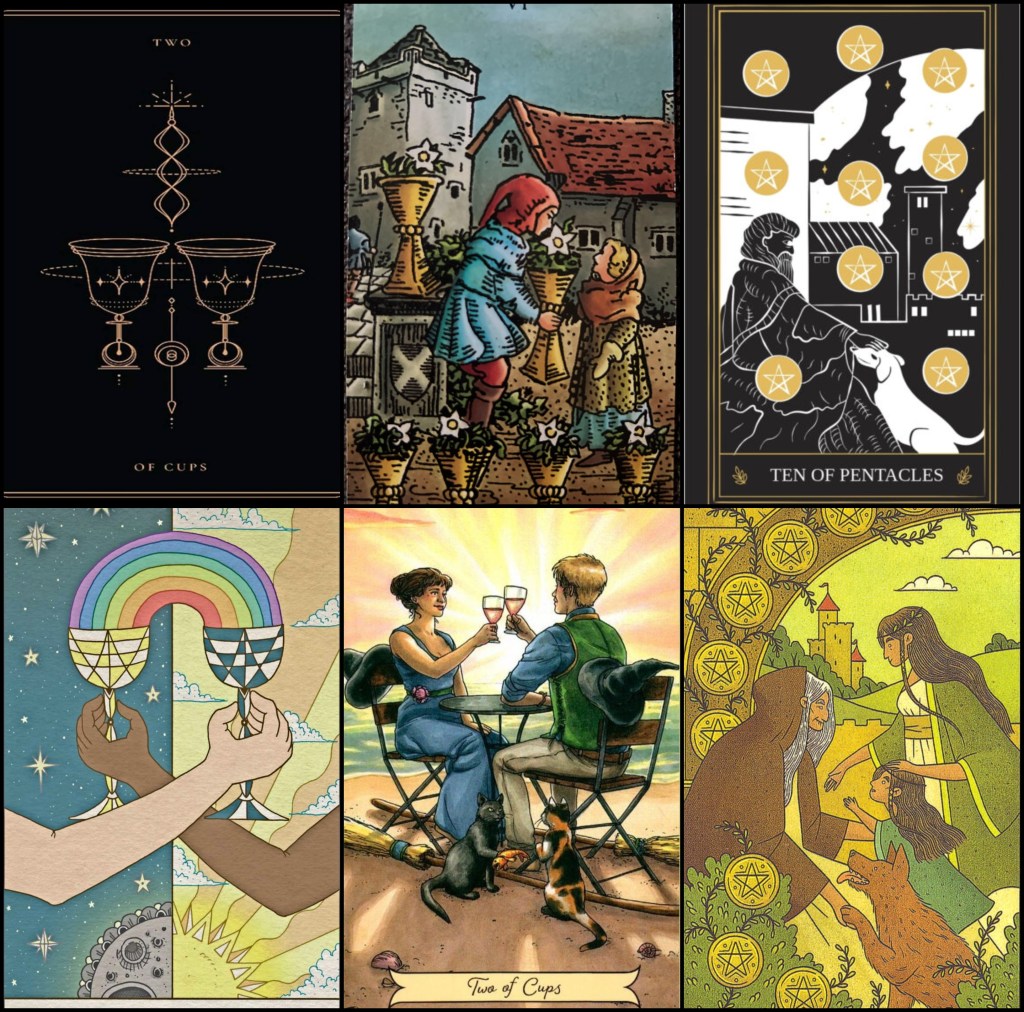
The cards appeared with unusual clarity. The Six of Cups arrived first, followed by the Ten of Pentacles, as though the reading itself had decided to tell a story stretched across an entire lifetime. Between them came the Two of Cups, the King of Pentacles, and the Six of Pentacles—less like interruptions than milestones along a road I recognized immediately. Together they seemed to describe the whole arc of a marriage: from childhood recognition to mature partnership, from first affection to lasting stewardship, from the innocence of beginnings to the quiet abundance of a life patiently built together. Looking at them spread across the table, I realized they were not predicting anything at all. They were inviting me to consider the remarkable distance between who we are when we first meet someone and who we become after a lifetime of choosing one another.

There is a peculiar kind of love that cannot be measured by anniversaries because it predates the calendar itself. It begins before either person understands what permanence is, before either has language for devotion or the architecture of a shared life. We often speak about marriages by counting years, but there are relationships that ask to be counted differently. They ask us to remember the first conversation, the first recognition, the first inexplicable certainty that another person would somehow continue appearing at the edges of your life long before either of you knew why.

The Six of Cups has always seemed less sentimental to me than people imagine. It is not simply about childhood or innocence. It is about memory refusing to become obsolete. It asks what survives after ambition, after disappointment, after distance has had every opportunity to erase what came before. Children do not love because they have calculated compatibility. They love because recognition precedes explanation. There is a generosity to childhood that adulthood often mistakes for naïveté, when it is, in fact, a remarkable confidence in the future.

I sometimes think the greatest miracle is not that two people remain together after decades. It is that they remember who the other was before either became who the world demanded them to be.

Continue reading

How to Boost Your Sales and Shine at Craft and Vendor Shows 

Written By: Audrey Jackson

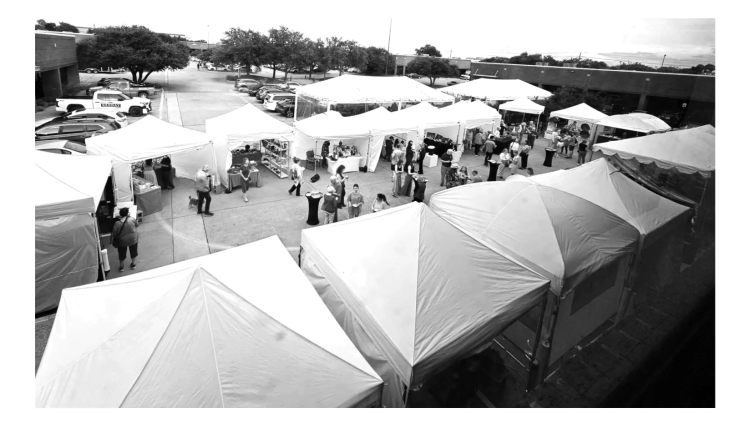
Image via Craftguild.org

For working artists and makers who sell at craft shows and pop-up markets, a vendor show can feel like equal parts opportunity and stress. Slow foot traffic, awkward pricing questions, last-minute booth hiccups, and the pressure to “look busy” can leave independent creators wondering whether the work is worth it. Even when the products are strong, vendor show challenges can blur what’s actually happening at the table and make craft fair essentials feel confusing or inconsistent. With the right expectations and a clearer approach, selling at craft shows can feel steadier and more profitable. 

Craft Show Sales Boosters 

  • Plan booth presentations to look inviting and help shoppers understand your products quickly. 
  • Set pricing with clear awareness so customers feel confident buying on the spot. 
  • Engage customers proactively with friendly, helpful conversation that supports easy decision-making. 
  • Focus on practical vendor techniques that improve visibility and help you stand out at shows. 

Build a Logo That Makes Your Booth Instantly Recognizable 

Those quick sales-boosting moves land even better when shoppers can instantly tell it’s your booth. A well-designed logo helps you make a strong first impression, build brand awareness, and stand out from other vendors selling in the same aisle. When your logo is consistent across your booth signage, packaging, and social handles, people remember what they saw, and can find you again later. 

If paying for a designer isn’t in the cards right now, you can create something polished yourself with an online logo generator. Start by picking a style and an icon that fits what you make, then add the text you’ll need (like your business name). You’ll be able to preview a range of logo options and fine-tune the look by adjusting fonts and colors until it feels like a natural match for your brand. Once your logo is set, you’re ready to prep the rest of your show setup and sales flow step-by-step in the next section. 

Continue reading

Still Here: The Life Inside the Photograph

Written By: Jordannah Elizabeth Graham-Mayer

There is a photograph somewhere that neither of us remembers taking. It is not remarkable in the traditional sense—there is no landmark in the background, no occasion being consciously preserved, no obvious indication that the moment would one day become something worth returning to. It is simply the ordinary evidence of a life already underway before either of us understood how much of living would eventually be composed of ordinary evidence: the small gestures, familiar rooms, passing expressions, and quiet exchanges that rarely announce themselves as meaningful while they are happening.

Photographs have a particular way of convincing us that they preserve time, but they do not. They preserve light. They preserve a fraction of a second—the angle of a face, the quality of an afternoon, the atmosphere of a room—but time continues moving long after the shutter closes. The people inside the photograph continue changing. The world around them continues rearranging itself. The image remains still while everything it represents continues forward.

Marriage teaches something similar.

People often ask, in one form or another, what makes a marriage last. The question is usually asked as though longevity must be the result of discovering a particular philosophy, a perfect balance, or a sequence of decisions that can somehow guarantee permanence. But living alongside another person over years has convinced me that permanence is not built from certainty. It is built from revision—the willingness to revisit what we thought we understood, to adjust our expectations, to reconsider our language, and to recognize that the story we believed we were writing together is often transformed by the very act of living it.

You revise expectations.

You revise assumptions.

You revise the version of the future you imagined before you knew what the future would actually require of you.

Eventually, you realize the revisions have not interrupted the story. They have become the story.

Perhaps that is why families rarely resemble the narratives we imagine before they exist. Before children, before shared responsibilities, before the accumulation of years, we tend to think of life as something that will unfold according to a particular design. Then reality arrives with its own intelligence. Families become something stranger, more unpredictable, and, thankfully, far more interesting than any original blueprint could have anticipated.

Children have a way of dismantling every neat theory adults create about life. They interrupt conclusions before they become too comfortable. They expose vanity and impatience. They remind us that attention cannot exist in the past or the future; it belongs to the present tense. A child does not care much about the version of life you imagined. They are concerned with the world directly in front of them: the bird outside the window, the question that cannot wait until later, the story that must be read one more time.

A family is constantly becoming itself.

So is a marriage.

Continue reading

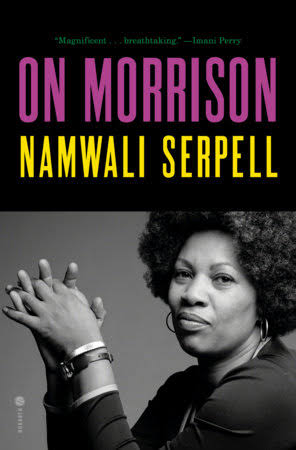
The Art of Looking Again: Namwali Serpell’s On Morrison and the Discipline of Reading a Master

There is a distinct kind of responsibility that arrives when one artist writes seriously about another.

Admiration alone is not enough. Distance can become its own form of misunderstanding, especially when an artist has reached the level of cultural recognition that surrounds Toni Morrison. The larger an artist’s legacy becomes, the easier it can be to discuss the meaning of the work without fully returning to the work itself. The person becomes an icon. The books become landmarks. The conversation begins orbiting around importance rather than returning to the creative decisions that made the work important in the first place.

Namwali Serpell’s On Morrison is a remarkable act of return.

Published by Hogarth, On Morrison is not a biography or a traditional introduction to Morrison’s life. It is a work of literary criticism by Serpell, an award-winning novelist, essayist, and professor of English, that examines Morrison’s fiction, nonfiction, plays, and poetry through sustained close reading and critical engagement. The book approaches Morrison not as a finished monument, but as an artist whose methods, structures, and imaginative decisions continue to demand attention. This distinction is what makes the book so compelling. Serpell is not asking readers only to remember why Morrison matters. She is asking readers to examine how Morrison works. The question becomes one of craft.

How does a writer construct memory? How does a novel hold history without becoming only a historical document? How can language represent experiences that have often been ignored, distorted, or simplified? How does an artist create characters who are shaped by the worlds around them while remaining fully human, contradictory, imaginative, and alive?

These questions have always been central to Morrison’s work, but Serpell’s contribution is the precision with which she examines the artistic mechanisms behind them. Across discussions of Morrison’s novels—including The Bluest Eye, Sula, Song of Solomon, Tar Baby, Beloved, Jazz, Paradise, and others—as well as her short story “Recitatif,” criticism, plays, and poetry, Serpell considers the formal choices that make Morrison’s writing so distinctive. She examines the architecture of Morrison’s narratives: the movement of time, the use of language, the relationship between absence and meaning, and the ways Morrison created new possibilities for the novel. In this sense, On Morrison is also a book about reading itself.

Morrison’s novels have often been discussed through the enormous cultural questions they engage: race, gender, memory, violence, family, history, and identity. Those conversations are necessary, but Serpell reminds us that Morrison’s genius also exists in the ways those ideas are transformed into artistic form. The structure of a novel is not separate from its meaning. The rhythm of a sentence is not separate from its emotional impact. The choices a writer makes about perspective, silence, repetition, and time become part of the story being told. This is one of the greatest gifts criticism can offer: it can return our attention to the decisions.

Continue reading

The Quiet Fire of Diavola: Gabrielle Cavassa & the Italian Soul of Jazz

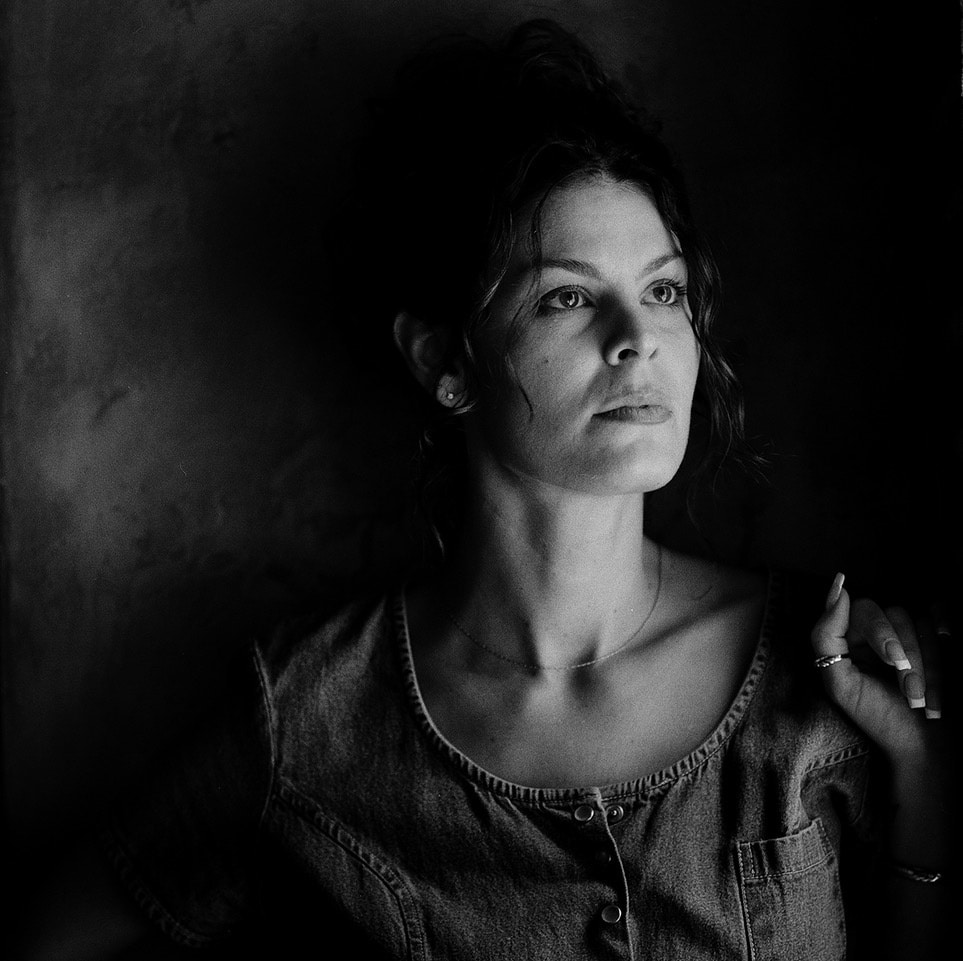
Gabrielle Cavassa: Roxy Hotel, NYC, 2025. Photo copyright William Ellis

Jazz is a traveler. It crossed the Atlantic almost as quickly as it crossed America, finding unlikely homes in Paris cafés, Sicilian piazzas, Roman cinemas, and Milanese jazz clubs. Italian musicians embraced the music not as imitation but as conversation, hearing in its improvisatory spirit echoes of opera, folk song, and the canzone italiana—a tradition where melody is expected to carry memory as much as beauty. Somewhere between Naples and New Orleans, between Verdi’s dramatic lyricism and the harmonic openness of modern jazz, lies the emotional terrain that Gabrielle Cavassa inhabits.

That landscape gives Diavola its quiet complexity.

The album’s emotional vocabulary owes as much to the Italian canzone as it does to the American jazz standard. Both traditions understand that interpretation is an act of authorship—that every generation must discover a song anew. Cavassa moves effortlessly between those worlds, never announcing where one ends and the other begins. The result is neither crossover nor fusion. It is something more organic: a musical identity in which heritage is not performed but absorbed, where ancestry becomes less a subject than a sensibility.

Co-produced by Joshua Redman and Blue Note president Don Was, Diavola reflects the label at its most discerning, placing its faith in artists who deepen tradition through interpretation rather than reinvention for its own sake. Under Was’s stewardship, Blue Note has increasingly become a home for musicians who understand that jazz evolves not by abandoning its history, but by listening to it differently. Cavassa’s debut belongs naturally within that lineage. Diavola is remarkable for its confidence in understatement. Her voice arrives almost conversationally, often leaning just behind the beat, allowing a phrase to unfurl with the unhurried logic of an improviser. She sings less like a vocalist commanding the room than like another instrumental voice within the ensemble, shaping melody with the patience of a horn player.

Jeff Parker’s original guitar composition, “Heaven Sighs,” opens Diavola on its own. Cavassa doesn’t sing until the second track, a beautifully understated reinterpretation of “Raindrops Keep Falling on My Head.” Parker’s spacious guitar, Brian Blade’s understated pulse, Larry Grenadier’s resonant bass, and Paul Cornish’s luminous piano offer the best risk a musical can project: not surrounding everything with themselves, but being generous with collaboration.

By the time Cavassa enters, she isn’t arriving to lead the band so much as joining a conversation already in progress. That opening sequence reveals the album’s central aesthetic: restraint over display, interplay over spotlight, and the quiet confidence to let the music unfold on its own terms. Her reading of “Raindrops Keep Falling on My Head” uncovers a wistfulness beneath the song’s familiar optimism, while “Prisoner of Love” unfolds with such quiet patience that its well-worn lyric feels newly intimate. Even “Could It Be Magic” is liberated from its theatrical origins, revealing an unexpectedly fragile heart beneath the pop architecture.

Continue reading

Still Here (Part III): Notes From a Marriage in the Middle of the Music & Father’s Day

Written by Jordannah Elizabeth Graham-Mayer

Photo via John Mayer

There are nights when the house settles into a kind of soft intelligence.

Not silence exactly. Something more attentive than silence. The kind of quiet that only arrives after children have finally fallen asleep in positions that look temporary but are never actually temporary, because sleep has its own logic. In those hours, the house stops asking for anything. And that is when love becomes audible again.

Not as a declaration. Not as romance in the public sense of the word. But as something smaller and more enduring—the way two people move around each other without needing to announce intention. The way a glass is placed in the sink without clatter. The way a hand reaches for a light switch that the other person was already walking toward.

Father’s Day is in two days, and it arrives like a reminder that time has been passing in a way that cannot be reversed, only witnessed. There is something about watching someone become a father that rearranges the meaning of strength. Not because it adds something theatrical to it, but because it strips it down. Strength becomes repetition. Strength becomes presence. Strength becomes the decision, made hundreds of times in a single week, to stay inside the demands of love even when those demands are not symmetrical, not elegant, not composed like music.

Fatherhood, in this house, does not feel like a role. It feels like weather. It moves through everything. It changes temperature. It changes tone. It changes the emotional acoustics of the smallest rooms.

Children do not simply live in a marriage. They rewrite its vocabulary:

Words like “tired” stop meaning what they used to mean. Words like “busy” become almost meaningless. Even “together” becomes more complicated, because together no longer means shared time in the abstract. It means coordinated attention in the middle of constant interruption. And still, something remains untouched underneath all of it, something that does not ask to be preserved because it does not believe in preservation as a concept.

There are moments in the middle of chaos—real, ordinary chaos: spilled water, missing shoes, overlapping needs—that feel strangely like grace. Not because they are peaceful, but because they are fully inhabited. Nothing is withheld. Nothing is postponed. Everything is happening at once, and still, love continues to move through it without hesitation.

That is what children reveal. Not nostalgia. But intensity. The absolute refusal to dilute experience.

In that intensity, marriage stops being an idea and becomes a practice again. Not something that is announced or affirmed, but something that is performed daily in small acts of recognition. A look that says I saw that. A silence that says I understand why you are quiet right now. A decision to take over something without making it a conversation first. Not the beauty of spectacle. The beauty of maintenance.

Love, when it is lived inside a family, becomes less like a song and more like rhythm section work. It holds everything else in place without asking to be heard above it. And yet, there are still moments when music returns in its original form. A voice humming something half-remembered. A song playing too softly to be the center of anything, but strong enough to shift the emotional temperature of a room. Those moments do not interrupt the life of the house. They reveal it.

Continue reading