Written by Alyssa Strickland
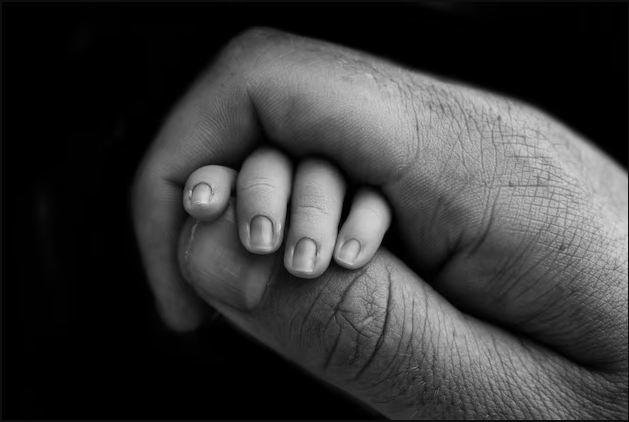
Somewhere before the child arrives, most of us create a parent in our imagination. The figure is patient, present, curious about everything, and somehow capable of listening carefully to stories that have no beginning or end. This parent knows when to intervene and when to let the moment unfold, and remains composed through the ordinary chaos of family life. We imagine this person before we know what it means to become them, carrying the idea of this future self almost like a promise. Then the child arrives, and the imagined parent has to make room for the actual one: tired, distracted, occasionally impatient, sometimes bored by the repetition of the very life they love. The distance between those two people can feel like failure, but it may be something else entirely—the beginning of understanding what parenting actually asks of us.
The Parent You Pictured
The imagined parent is a kind of performance written in advance. There is an audience, although no one has bought a ticket yet: perhaps the child we have not met, perhaps our own parents, our friends, or the younger version of ourselves who once decided what kind of mother or father we would become. We carry these ideas into parenthood as if they were instructions, expecting that love and preparation will somehow make the transition recognizable. But actual parenting is not performed in advance. It happens in real time, under conditions no one can completely prepare for, in kitchens and bedrooms, in cars and pediatrician’s offices, during arguments and celebrations, in the middle of the night and at six in the morning. It is repetitive, physical, emotional work performed with incomplete information, and there is no rehearsal for the particular child who eventually stands in front of you.
Much of the culture surrounding parenting is devoted to closing the distance between the parent we imagined and the parent we became. It offers systems, routines, philosophies and, often, reassurance. There is value in reassurance, particularly when someone is frightened by how unfamiliar their own life suddenly feels, but there is also value in looking directly at the distance itself. Sometimes the more honest question is not, How do I become the parent I thought I would be? but Who am I becoming now? That question leaves room for the strange, unfinished quality of parenthood—the possibility that becoming a parent is not the fulfillment of an identity but the beginning of another kind of transformation.
A Name for the Shift
Part of what makes early parenthood so destabilizing is that the change is deeper than behavior. It can feel like an alteration of identity itself, as though the architecture of a person’s inner life has been rearranged while they are still expected to perform all of its ordinary functions. There is a word for this: matrescence. The term was coined in 1973 by medical anthropologist Dana Raphael and later developed into a broader clinical framework by Columbia University researcher Aurélie Athan. The reproductive psychiatrist Alexandra Sacks has written about the concept in Psychology Today, describing matrescence as a developmental transition involving the body, mind and hormones, with a scale comparable in some ways to adolescence.
That comparison matters because adolescence is understood as a period in which a person changes physically, psychologically and socially, often without knowing exactly who they will be on the other side. We have language for that transformation, even when we do not always experience it gracefully. Parenthood deserves some of the same generosity. Sacks has also pointed to the number of people who arrive in clinical settings wondering whether what they are experiencing is postpartum depression when, in some cases, they may be experiencing the enormous psychological reorganization that accompanies becoming a parent. These experiences are not interchangeable, and serious symptoms should not be dismissed, but neither should every difficult emotion be understood automatically as evidence that something has gone wrong. Sometimes a person is simply becoming someone new, and the unfamiliarity of that process can be frightening without necessarily being pathological.
Naming that possibility does not make the experience less difficult. It changes the location of the shame. Instead of asking what is wrong with me, a person can begin asking what is happening to me, what has changed, and what kind of support might allow me to move through it. There is something quietly liberating about having a word for an experience that previously existed only as a collection of contradictory feelings. The name does not solve the transition; it simply gives the person moving through it somewhere to stand.
The Exhaustion Beneath the Love
The most socially acceptable version of parental exhaustion is tiredness. We understand the jokes about sleepless nights and interrupted meals, the parent who says they haven’t slept properly in years, the sense that exhaustion is simply the admission price for loving someone this much. What is harder to discuss is what prolonged exhaustion can do to a person’s relationship with the role itself. There is a difference between being tired because you have been awake all night and becoming so depleted that the emotional experience of parenting begins to change. The latter can be difficult to admit because it can feel dangerously close to admitting that love itself has become complicated.
A large multi-country study led by Isabelle Roskam, published in Affective Science, describes parental burnout through several dimensions: overwhelming parenting-related exhaustion, emotional distancing from one’s children, and a loss of pleasure and effectiveness in the role, accompanied by a sense that the parent has become different from the person they once were. The distinction between parental burnout and ordinary occupational burnout is particularly important. A person can leave a job, take a vacation, change careers, take medical leave or simply close the laptop at the end of the day. Parenthood does not offer the same clean boundary. There is no clocking out of the role, and the inability to step away can make exhaustion feel less like an episode and more like a condition of existence.
The research is difficult precisely because it asks us to consider feelings that parents are often taught to keep private. Some parents experience profound ambivalence. Some become emotionally numb. Some wonder what their lives would look like if they had made different choices. A study of Polish parents, published in PLoS ONE, found a meaningful minority who reported that, if given the choice again, they would not choose to have children. That finding does not invalidate parenthood; it complicates our understanding of it. Love and regret can occupy the same human life, as can devotion and boredom, gratitude and resentment, tenderness and the desire to be alone. None of those feelings automatically determines the quality of a parent or the depth of a parent’s love. They are part of the emotional territory created when one person’s life becomes permanently entangled with another’s, and perhaps parents need less instruction in how to eliminate those contradictions than permission to understand them.
Rupture, and Repair
One of the most useful ideas in developmental psychology may also be one of the simplest: relationships do not require perfect attunement. Ed Tronick’s Still Face experiment, first presented in 1975 and subsequently replicated extensively, demonstrated what happens when an infant suddenly encounters a parent who becomes emotionally unresponsive. As described by Scientific American, the infant initially attempts to restore the familiar exchange by looking, gesturing, vocalizing and reaching. When those attempts fail, the child eventually becomes withdrawn. The experiment is often remembered as evidence of how deeply children depend upon emotional connection, but there is another lesson inside it that seems especially important for parents who have become frightened by their own imperfections: children are not passive participants in relationships. Even very young children attempt to repair them.
That distinction becomes important in ordinary family life because a parent will inevitably miss a cue. A child will become frustrated. Someone will answer too sharply. Someone will be too distracted to listen. There will be mornings when everyone is late, evenings when nobody has enough patience left, and conversations that end badly. The goal cannot be perfect attunement because no human relationship could survive that standard. Tronick’s later work on interactive repair suggests something more forgiving and, perhaps, more useful: relationships are made not only through moments of connection but through the process of finding one another again after connection has been disrupted. The apology matters. The return matters. The hand on the shoulder after an argument matters. Saying, I didn’t handle that well. Can we try again? matters. A mistake is not necessarily evidence of a damaged relationship; sometimes the repair is the relationship being built in real time.
A Self Kept Somewhere
There is another loss that can happen quietly in parenthood: the disappearance of the self outside the role. A mother interviewed by the 4th Trimester Project described the experience simply: “I am not Ashley anymore, I’m Aiden’s mom.” There is something almost startling about the sentence because it captures a transformation that can be difficult to articulate. A person’s name, interests, ambitions, friendships and private interior life can begin to feel secondary to the needs of the child. The role is so important that it can gradually become total, until the person underneath it begins to wonder whether there is still a recognizable self waiting somewhere beneath the demands of the day.
But becoming a parent does not require becoming only a parent. The work of preserving a self outside motherhood or fatherhood is rarely glamorous. It may be ten minutes with an instrument, a weekly phone call with a friend, a manuscript worked on one page at a time, a class taken after bedtime, or a professional ambition that returns quietly after years of dormancy. For someone trying to imagine a new professional chapter, a good resource can be one practical starting point, but the larger point is not about any particular program. It is about remembering that intellectual and creative life does not have to end when family life begins. The things that belonged to you before parenthood may not always be possible in their original form, but they can sometimes survive through smaller gestures of continuity.
These gestures do not reverse the transformation of parenthood. They acknowledge that the person who existed before the child is not necessarily someone who needs to disappear. There is a difference between changing and vanishing, and parenthood can ask us to understand that difference with unusual precision. The self you were before becoming a parent may not return in exactly the same form. It may become more complicated, less certain, less interested in proving itself. Some ambitions will become smaller; others may become more urgent. Some identities will fall away, while others will arrive unexpectedly. The point is not to preserve the past intact, but to maintain a relationship with the person you are still becoming.
The Parent You Become
None of this adds up to a method, and perhaps that is the point. Parenthood resists the kind of certainty that makes for good instruction manuals. You can prepare for a child and still be surprised by who you become when the child arrives. You can know what you believe and discover that exhaustion makes belief harder to practice. You can love someone completely and still need a room for yourself. You can make a mistake and still be a good parent. The work is less about reaching some final version of yourself than it is about remaining present enough to recognize the person you are becoming while someone else is growing beside you.
The imagined parent is useful only until life begins. After that, the work is revised. You revise your expectations, your patience, your understanding of your own parents and, sometimes, your understanding of yourself. You discover that the parent you thought you would be was built from ideas, while the parent you actually become is built from accumulated moments: the difficult morning, the unexpected laugh, the apology, the bedtime story, the argument, the repair, the ordinary Tuesday that nobody else will remember. Over time, these moments become something like a private archive of family life, evidence not of perfection but of participation.
Perhaps the measure of parenthood was never whether we became the people we imagined. Perhaps it is whether, after all the ways we fail to resemble that imagined person, we can still turn toward the child and recognize that the relationship is still there, waiting for us to enter it again. The parent you meant to be may remain an idea, polished by memory and expectation, while the parent you become is messier and more interesting: a person learning, sometimes reluctantly, that love is not a state of perfection but an ongoing act of attention. In the end, the most meaningful measure may not be how often we got it right, but whether we kept finding our way back to one another.
 Publik / Private