Written by Al Shipley
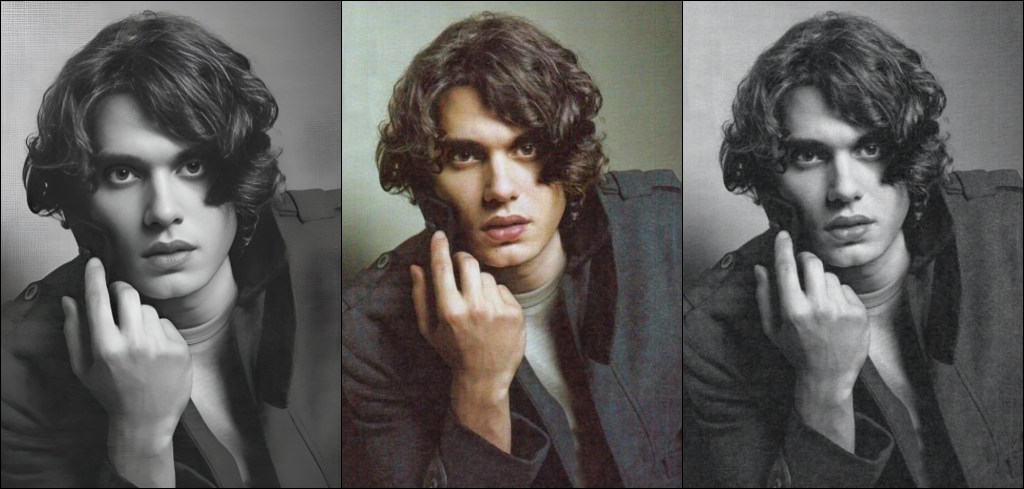
John Mayer Continuum Era
John Mayer’s third major label studio album, Continuum, came out 20 years ago this week during a fertile period for the Connecticut-born singer/guitarist. Though he was at that point fully established as a multi-platinum star and arena headliner, he formed the John Mayer Trio in 2005 to go off the beaten path and play smaller venues. Backed by the seasoned rhythm section of bassist Pino Palladino (The Who, D’Angelo) and drummer Steve Jordan (Keith Richards, Aretha Franklin), Mayer workshopped new material, played covers, and burnished his budding reputation as a serious blues guitarist.
The John Mayer Trio’s 2005 live album Try! came out 10 months before Continuum, and only two songs, “Gravity” and “Vultures,” appeared on both albums. In a sense it felt like Mayer, a fan and collaborator of several major hip-hop stars, used Try! much as a rapper would use a mixtape to burn off less radio-friendly material on a release that wasn’t subject to lofty commercial expectations. Perhaps it also sharpened his focus on what he did and didn’t want to do on Continuum, which would ultimately become one of his most popular and beloved albums.
Each of the two albums featured one Jimi Hendrix cover: “Wait Until Tomorrow” on Try! and “Bold as Love” on Continuum. Both songs originated on 1967’s Axis: Bold as Love, the awkward middle child of the Jimi Hendrix Experience’s three albums, which didn’t generate as many hits as Are You Experienced and Electric Ladyland, but is cherished by any true Hendrix fan. Stevie Ray Vaughan was Mayer’s formative blues guitar influence, but Hendrix was Vaughan’s idol, and it seems clear that Mayer was exploring his family tree of guitar heroes. In an album defined by some of Mayer’s most grounded, plainspoken songwriting, though, it’s jarring when he suddenly begins singing Hendrix’s more surreal, imagistic lyrics: “Anger, he smiles / Towering in shiny metallic purple armor / Queen jealousy awaits behind him.”
Continuum is, technically, also a John Mayer Trio album; Palladino played on every track, and Jordan played on all but one track and co-produced the album with Mayer. It’s arguably more of a guitar/bass/drums record than Mayer’s two previous major label releases – there are just horns on two tracks and keyboards on three – but it doesn’t necessarily sound like it, in part because the guitars don’t always sound like guitars. Mayer bends his instrument into almost unrecognizable, synthesizer-like textures on “I Don’t Trust Myself (With Loving You)” with the Roger Linn Design AdrenaLinn III pedal, which he also experimented with on his 2003 hit “Bigger Than My Body.”
The highest charting song on Continuum, opening track and lead single “Waiting on the World to Change,” was Mayer’s first attempt at wading into politics in his music, although one might say he was still testing the waters cautiously. Like the Marvin Gaye classic “What’s Going On” that it briefly resembles during the bridge, “Waiting on the World to Change” is less a call to action than a lament that our modern world is plagued with so many problems and so few obvious solutions. More specifically, it represents the perspective of a left-leaning twentysomething who just watched President George W. Bush win a second term despite presiding over a disastrous and illegal war on Iraq and FEMA’s incompetence in the aftermath of Hurricane Katrina.
Mayer’s ubiquitous single was not an anthem of apathy, as some have interpreted the song, but it does reflect a feeling of helplessness that younger Americans had at a time when Baby Boomers were still deciding the outcome of most elections. The operative word “waiting” does belie a certain passivity to the song’s message, but there’s also a measure of determination and optimism.
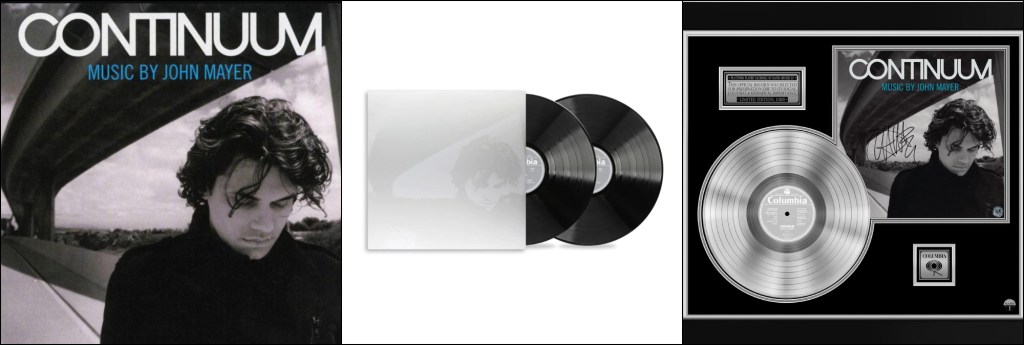
“One day our generation is gonna rule the population” is the closest thing the song has to a rallying cry, and Mayer’s lyric has been vindicated by time in some ways, and negated in others. In the first ten years after the release of “Waiting,” America elected President Barack Obama, and the Supreme Court ruled that same-sex marriage was legal nationwide. But in the ten years that followed, two much older presidents were elected, and Donald J. Trump has aggressively sought to reverse any trace of progressive legislation that was passed under Obama while starting multiple new wars.
The world certainly changed, but nobody could’ve predicted exactly how, least of all John Mayer. Perhaps that’s why the last time Mayer embarked on a prolonged solo tour in 2023, he didn’t play “Waiting” once, despite it being one of his most famous songs. Instead, it was the deep cuts “Slow Dancing in a Burning Room” and “Stop This Train” that most frequently represented Continuum in his setlists, with Mayer frequently opening his sets with the former. “Slow Dancing” has even surged ahead of “Waiting” as Continuum’s top streaming track. It’s currently more popular on Spotify than any John Mayer song except 2018’s “New Light,” and recently surpassed even Mayer’s crossover smash “Your Body is a Wonderland” in overall streams.
Continuum’s third track, “Belief,” has aged better than “Waiting on the World to Change” as a more nuanced take on how global geopolitics can never be separated from human nature, and the way individuals stubbornly cling to ideas and allegiances. “Belief is a beautiful armor, but it makes for the heaviest sword,” Mayer sings on the track, a Top Ten hit on Triple A (Adult Album Alternative) radio despite not being promoted heavily with a video. “We’re never gonna stop the war/ We’re never gonna beat this/ If belief is what we’re fighting for.” In both songs, Mayer strikes a more distanced, ambivalent tone than any of his musical heroes from the Woodstock generation did in their political material.
Continuum’s second single “Gravity” initially underperformed, becoming the first Mayer single to miss the Top 40 of the Hot 100. But it quickly emerged as a fan favorite and one of Mayer’s most revered songs, placing 84th on Rolling Stone’s 2008 list of the 100 Greatest Guitar Songs of All Time. It even has something of a pop culture footprint, with actress Amber Riley singing “Gravity” in costume on a 2022 episode of the bizarre Fox reality hit “The Masked Singer.”
When conversations on social media turn to perfect albums and classics, I only occasionally see Continuum mentioned, but when I do, it’s often alongside R&B and hip-hop albums. Mayer is in many ways a rock star, but his music has rarely been played on rock radio, and his run of adult contemporary hits has given him a more diverse fanbase of R&B and even country fans.
Continuum was a “desert island” album for Canadian country singer-guitarist Lindsay Ell, who was challenged by her producer to record covers of every song from the Mayer album as she prepared for her 2017 debut The Project. Her loving recreation was eventually released as The Continuum Project in 2018. After Mayer played guitar on country superstar Lainey Wilson’s 2026 single “Phone, Keys, Wallet,” she tipped her hat to Mayer further by posting an acoustic cover of “I Don’t Trust Myself (With Loving You)” on Instagram, calling it one of her favorite songs.
At the 49th annual Grammy Awards, Continuum became the only John Mayer album to be nominated for Album of the Year. Mayer did, however, also receive a nomination in that category six years later for his work on Frank Ocean’s Channel Orange, a collaboration that reflected how admired Mayer is in even the most forward-thinking corners of R&B.
2001’s quintuple platinum Room for Squares remains Mayer’s best-selling album, but the quadruple platinum Continuum isn’t far behind. Dutch singer/songwriter Ed Struijlaart is celebrating the album’s 20th anniversary with a series of concerts this fall, but it’s unclear if Mayer himself has any plans to mark the milestone. Looking back on the last 20 years, as he’s branched out, celebrating the Grateful Dead songbook with Dead & Company while recording five more solo albums, Continuum remains a cornerstone of his legacy.
________________________________
Al Shipley is an award-winning music journalist, editor, and author whose work has chronicled music and culture for more than two decades. A longtime authority on Baltimore’s music scene, Shipley has written extensively about hip-hop, R&B, club music, rock, and pop for publications including Stereogum, SPIN, Rolling Stone, Pitchfork, Billboard, Vulture, VICE, Complex, and the Baltimore City Paper. His journalism combines detailed cultural reporting with a particular interest in the histories and communities surrounding music.
Shipley is also the author of Tough Breaks: The Story of Baltimore Club Music, published in 2025, and was commissioned by Publik / Private founder, Jordannah Elizabeth Graham-Mayer and Repeater Books. Drawing on 18 years of interviews with DJs, producers, vocalists, promoters, party hosts, and other figures from Baltimore’s club-music community, the book documents the development and cultural history of a distinctive regional sound.

