Written By: Kaila Philo
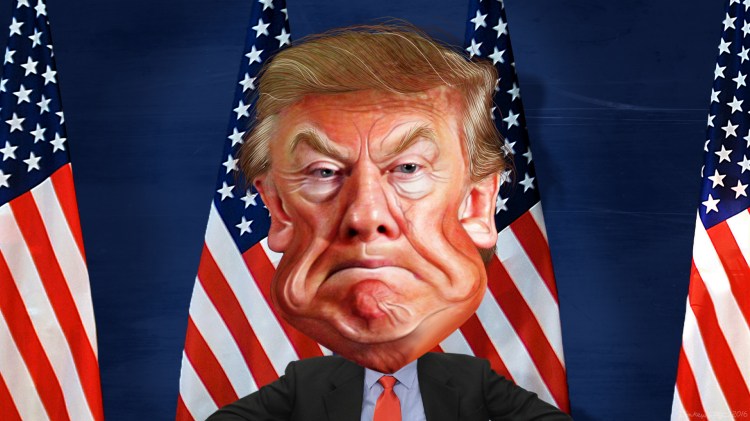
Photo Credit: Max Goldberg
What a year for mental health, eh?
This year trigger warnings have come under fire for, for lack of better phrasing, shielding university students from troubling topics and, thus, hindering their education.
Triggers are subjects, themes, pictures, videos, etc, that may elicit panic attacks or other terrible mental/physical consequences that are direct results of past traumas. Trigger warnings are defined by dictionary.com as “stated warnings that the content of a text, video, etc., may upset or offend some people, especially those who have previously experienced a related trauma”. Trigger warnings began as a tool for Tumblr users to feel more comfortable navigating discourse around the Internet. The purpose of these warnings is to give trauma survivors some sort of choice in what they’re exposed to; they allow them the space and time to brace themselves for the impact of what’s to come or avoid them altogether.
There have been a cavalcade of thinkpieces about trigger warnings in the past few years—including Jonathan Chait’s highly-circulated “Not a Very P.C. Thing to Say” for New York Magazine and the University of Chicago publicly denouncing trigger warnings in a letter to incoming freshmen—and most pundits have taken one of two sides: Yes, trigger warnings are necessary for students with traumatic pasts or no, trigger warnings are an insult to their intelligence. Somehow.
Sexual assault has also been a widely and oft debated topic lately, from the Nate Parker’s accusation (and subsequent foolish ramblings excusing himself for it) to the seemingly neverending Brock Turner mishandling. 2016 has become a year rife with discourse surrounding rape culture, for better or for worse considering this discourse has been spotty at best. So, it wouldn’t be far-fetched to assume that sexual assault survivors are going through a difficult time seeing as they’re forced to relive their own violent experiences in order to address current events or even turn on the news these days.
This wasn’t helped by the deplorable Donald Trump, who’s dominated headlines since he announced his presidential candidacy. This week the #TrumpTapes hit the internet and began circulating at rapid speed due to one reason: He talks about how easy it is for him to sexually harass and assault women. He infamously describes how he gets to grab women “by the p***y”, among other things, and later describes this discussion with Today Show host Billy Bush as “locker-room talk”.
Ironically, this isn’t the first, nor the most offensive, statement from Trump that’s surfaced during his bid for the presidency. He’s had a history of bigotry, spanning all the way back to the ‘80s and ‘90s when he declared that “Laziness is a trait in blacks”. He even incorporated that bigotry into his political campaign by proposing that he will build a wall between the U.S. and Mexico, blaming “illegal aliens” for most of America’s woes in the process and calling them “rapists and murderers” in the process, and calling for a “total and complete shutdown” of Muslim immigration, which racializes Islam whether he understands it or not. This all came to an absurd head right before the October 9th debate in St. Louis when Trump attempted to counter the #TrumpTapes by holding a press conference with the women who accused Bill Clinton of sexual assault. Continue reading






 Publik / Private