Publik / Private Essay: on Gisèle Pelicot’s call to survivors

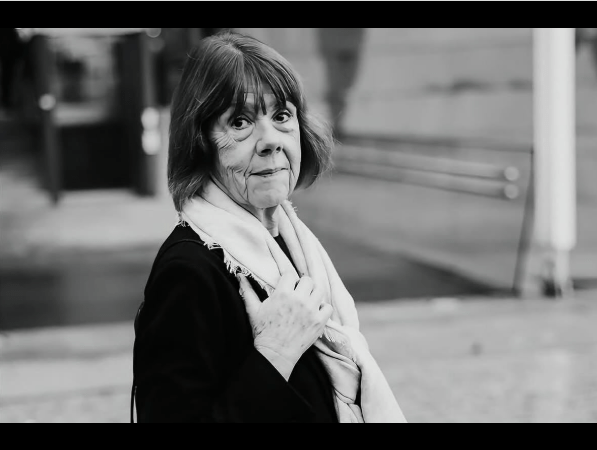
Gisèle Pelicot in 2024 – Publik / Private does not own this photo.

There are moments in public life that do more than interrupt the news cycle; they rupture the very architecture of shame itself. Gisèle Pelicot’s emergence into collective consciousness is one such rupture. What she has invited the world to witness, to feel, and to reconsider is not simply her own story—harrowing as it is—but the deeper social lie that murder, theft, and assault leave stains on the victim’s soul, and that humiliation is a cost to be absorbed quietly, in private.

This lie is ancient, pernicious, and coded deeply into the way society talks about sexual violence. It insists that the violated should cover their wounds, carry their pain behind closed doors, and perform discreet silence as if harm is a private blemish. Gisèle Pelicot refused this inheritance. In the mass rape trial that unfolded in Avignon, she did something extraordinary: she waived her right to anonymity and demanded the trial be public. She said she wanted “all women victims of rape … to say: Madame Pelicot did it, we can do it too.” And she declared with quiet gravity that “when you’re raped there is shame, and it’s not for us to have shame – it’s for them.”

To say “never have shame” in a world that reflexively trains victims to internalize blame is to challenge the very grammar of violence. Shame doesn’t spring from the wound itself; it is a social product, a mechanism that protects power by making the vulnerable feel small, isolated, and unworthy of witness. Pelicot stood against that mechanism, insisting that the weight of disgrace belongs not with the one attacked, but with those who inflicted the harm. 

This shift—simple in phrase but seismic in effect—is a reallocation of moral responsibility. Pelicot’s experience was nearly unimaginable in its scope: over many years, while drugged unconscious by her husband, she was raped repeatedly by dozens of men he invited into their home. The revelations emerged only after police investigating unrelated voyeurism found disturbing footage on her husband’s computer, revealing the systematic nature of the abuse. 

The instinct of the criminal justice system in many societies is to protect the privacy of victims, to sequester their experiences in sealed rooms and sealed pages. But Pelicot refused this protection precisely because that privacy historically serves perpetrators far more than survivors. By opening the courtroom to the public gaze, she made the crime visible on her terms. She turned the spotlight from hidden shame to exposed accountability. The shame was no longer something lodged in her voice or bowed shoulders; it was something placed squarely on the acts of her husband and the men who participated with him. 

Her words—it’s not for us to have shame, it’s for them—are not a palliative or a slogan. They are a methodological shift in how we think about collective responsibility. When Pelicot articulated this during her testimony, she was not issuing a comforting platitude; she was proposing a restructuring of who bears the emotional and moral cost of violence. Victims are too often taught to apologize for surviving. Her stance interrupts that conditioning. 

And yet, there is humility in her refusal of the language of heroism. When observers called her brave, she deflected—not because she was unheroic, but because courage abstracted from consequence is a story we tell to feel comfortable again. Pelicot described her persistence as “will and determination to change society,” not simply personal endurance. Courage for her was not a static trait but a sustained commitment to truth-telling in the face of denial, minimization, and cultural avoidance.

In insisting that victims should “never have shame,” Pelicot forces us to examine the structures that scaffold shame in the first place. What does it mean that we accept a culture where consent is poorly understood, where “I didn’t think it was rape” is offered as a defense? What does it mean that survivors must navigate not only the trauma of assault but the expectation of self-silencing? These questions are not rhetorical. They point toward the very conditions that allow violence to become normative rather than aberrant. 

There is no quick fix here, no singular legislative moment that will instantly dissolve centuries of conditioning. But there is a shift that begins in language and extends into empathy. When we stop locating shame in the body of the victim and start locating it in the conduct of the perpetrator, we begin the work of dismantling stigmas that function as social glue, holding in place systems that protect the powerful and isolate the vulnerable.

Pelicot’s call is, at once, an invitation and a demand. She invites survivors to reject the internalization of shame. She demands that society change the terms of its moral imagination. To reject shame is to reclaim narrative authority over one’s own life. It is to declare that harm is not a mark of dishonor but a testament to an injustice that must be addressed, not hidden.

In a cultural moment saturated with testimonies—some celebratory, others mournful—Pelicot’s voice resonates because it refuses to locate dignity in silence. Her message matters because it disassembles a foundational assumption: that victims should be quiet. Instead, she insists that silence belongs to the perpetrators who hide their acts behind euphemism and denial.

This is not merely about visibility. It’s about truth. To say “never have shame” is to assert that survivors deserve a world where their stories are not obstacles to justice but bridges to change.

And if we are listening—truly listening—we might begin to understand that the redistribution of shame is not an act of forgiveness, but an act of radical accountability.

The Void

Written by Jordannah Elizabeth Graham

Last night, I sat alone at the bar in Tagliata, a high-end Italian restaurant in a wealthy downtown waterside district in Baltimore, Maryland called Harbor East. I had everything and nothing on my mind. 

Twenty minutes before I settled on where I would eat dinner, I had a drink and caught a few minutes of the Orioles game at Bar One, an expensive Black creole-inspired restaurant a few blocks away Tagliata. From there, I walked down a paradisial pier, clearing my mind long enough to gaze at the stunning orange and pink sunset that gleamed magnificently above me while well-to-do patrons of all backgrounds sat at tables outside of the strip of various portals of culinary decadence.  

To me, the people looked like cardboard characters in the diorama of my reality. I had gone to the pier emotionally condensed, wanting to decompress and relieve the tightness of my Third Eye and fill an inner Void that sat deep within me. The Void sits in anticipation, waiting for me to fill it with moments of self-reflection and inward adoration. The Void is patient. It has no awareness of external forces: the stresses, pressures, and the complexities of the material world. It simply waits for me. I just become more aware of it on certain days, as it softly nudges me like a drowsy elderly Saint Barnard who hopes to rest its large chin and snout on your lap. 

The Void waits for the days when I become lost in the plotlines that take place on the theatrical stage of existential life and serves as a reminder, quietly telling me, “I’ll wait for you.”

When I settled in at the bar in Tagliata, I felt some relief. I was somehow able to look normal, showing no signs of grief, sadness, or distraction. I could see it in the body language and lack of disturbance in the interactions of the patrons around me. I ordered my food and a glass of Reisling and allowed the tamed liveliness of the room to calm my overwhelm. 

I kept it together until the in-house pianist and lounge singer, who was out of my view, began to play Pink Floyd’s “Comfortably Numb”. The melodic playing and soft emotion in his voice caused my eyes to well up. 

The feeling of loneliness washed over me, a feeling that I had been denying for a long time as I had many people in my life. But at that bar, with Pink Floyd’s penetrating lyrics playing softly in the corner of the room, I released. I dabbed the bottom lids of my eyes and covertly checked my knuckles to make sure my eyeliner had not been smudged.  

A friend of mine passed away a couple of days earlier and everyone in my life had been so wrapped up in what I was and wasn’t doing, how I was affecting them, I had no room to tell anyone what was going on with me.

I was maintaining an extremely demanding career, my mother had just survived breast cancer, and I was also still grieving my father, who died two years before. I had no room to talk about anything. Everyone had been behaving so selfishly that all I could do was feed myself an expensive dinner alone, knowing that no one had any idea that I had a life. I had needs and emotions that had nothing to do with what was going on with the immediacy of those who were in close proximity to me. 

And I felt like one wanted to know. 

If it didn’t have anything to do with me doing some form of labor or how I was behaving, who I was offending, or being constantly reminded that I was not in a relationship, there was no room for me to just be.

The feeling of loneliness proceeded to haunt me during my Uber ride home and on into bedtime. 

This morning, I woke up and played “Comfortably Numb” while I was in the shower and sang along, feeling back to myself. It doesn’t take much.  Nonetheless, the Void is always waiting, anticipating me. 

Sundial

From the new column: Kingdoms and Diamonds about love, marriage, traversals, emotional health and healing.

Had I not learned from him—well, I don’t know who or where I’d be. Probably living in the mountains or near a body of water, becoming more obscure by the moment. Maybe I’d keep writing; maybe I’d finally have time to pick up the guitar. But I can’t avoid the presence of hearts and thoughts, of evil and the destitution of the world. I would have stayed in a safe womb where Charlie, Bobbi, Rolli, and now Button sit.

By the time Button came along, I knew not to drink milk or Pepsi—but kids like what they like. Most of them are picky.

Their father and I are, too.

I sat down to get my life in order—reordered, I guess—a couple of summers ago, and realized I love about fifteen things in the entire world. One of them is travel. But I like what I like, and so do they. Branches of the same tree—his and mine—simple and larger-than-life auras. I want nothing to do with any of it, but he had to become the biggest and the best. I’d have loved him either way, but I love that he encourages me, inspires me to be the very best I can be. Otherwise, I’d have spent my days frequenting farmers’ markets, volunteering, shopping for this and that; staring at a first edition of The Catcher in the Rye, studying whatever intrigued me, walking around with nothing in particular on my mind.

Of course, I always wanted a family.

He had to make sure everyone was themselves, and I guess I seemed—

It doesn’t matter now. We’ve got everything we wanted and a lot of complexities that are truly simple drama—cut-and-dry anxiety from people who are privileged, safe, wealthy, and sometimes find their homes, cars, and daily lives are just enough.

No one is starving. No one is suffering from the love he and I have cultivated—at first sight, at first heartbeat, at first cry.

They think power is supposed to feel like something—that it changes us, or makes us want to hurt or dominate each other.

They don’t understand the healthy balance of love and power.

One of us has something up our sleeve—or both—and no one knows how it will play out. But we are parents, and we love each other.

I didn’t know milk made him sick until our son gave me nausea and sweats. I feel guilty because he has bad bones, and I realized he can’t just take calcium. Me prescribing milk baths—it was all probably vomit-inducing.