Ellen Johnson Sirleaf and Netumbo Nandi-Ndaitwah offer a stark reminder of the vital role women play in shaping the continent’s future. Both of these leaders—one from Liberia, the other from Namibia—have not only defined their nations’ political histories but have also become symbols of strength, resilience, and the importance of female leadership in the broader African context. Their careers, while shaped by different historical and cultural forces, speak to the transformative power of leadership that transcends gender.
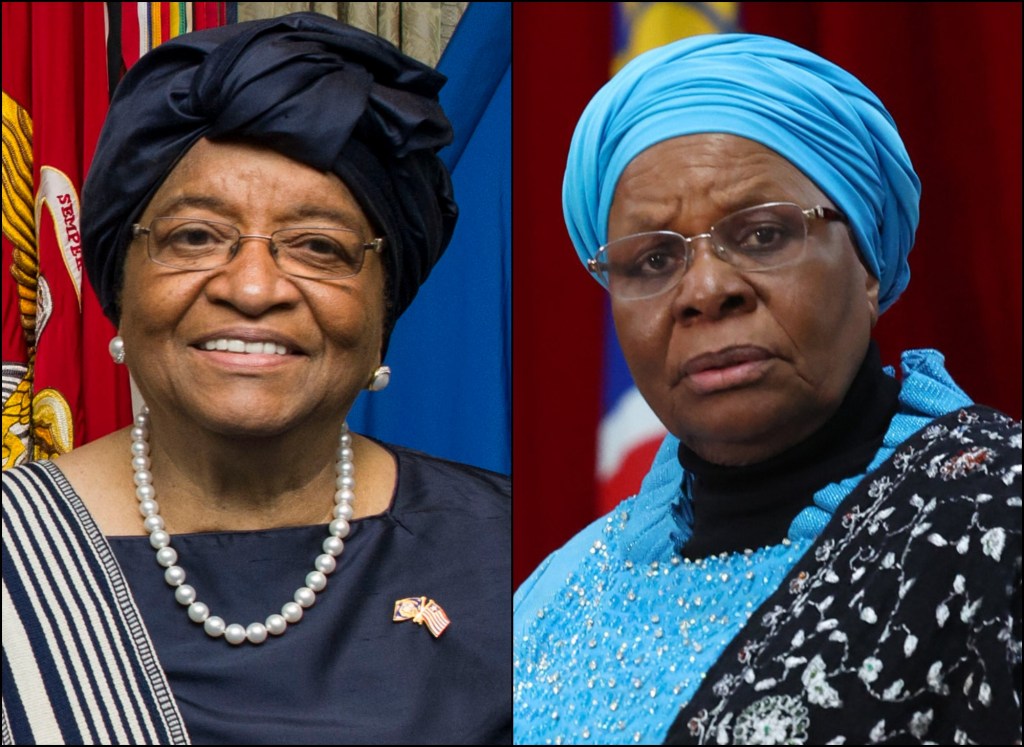
Photos available via Creative Commons
Ellen Johnson Sirleaf’s place in history is firmly anchored in her role as Liberia’s first female president, a position she held from 2006 to 2018. Her rise to power came after years of struggle—political exile, imprisonment, and the devastating aftermath of Liberia’s civil war. Sirleaf’s journey to the presidency was a testament to her unwavering commitment to national recovery, resilience, and reform. Her leadership during Liberia’s post-conflict era was instrumental in stabilizing a nation that had been torn apart by violence and rebuilding its institutions from the ground up.
Sirleaf’s tenure was defined by a pragmatic approach to governance. She focused on restoring international relations, securing debt relief for Liberia, and laying the groundwork for economic recovery. Under her leadership, Liberia’s economy began to stabilize, foreign investments flowed in, and peace began to take hold. Her achievements were not without challenges, but Sirleaf’s diplomacy and economic strategies helped Liberia secure its place on the world stage. Perhaps her most lasting legacy is her advocacy for women’s rights. Sirleaf’s presidency marked a turning point for women’s political participation in Liberia. She implemented policies aimed at addressing gender-based violence, expanded educational opportunities for girls, and created pathways for women to take active roles in the workforce. Her leadership demonstrated the tangible difference a woman in power could make—not just in terms of policy, but in shaping societal attitudes about the capabilities of women to lead.
While Sirleaf’s leadership was focused on rebuilding a post-war Liberia, Netumbo Nandi-Ndaitwah’s influence has been felt on the diplomatic stage of Southern Africa and beyond. As Namibia’s Deputy Prime Minister and Minister of International Relations and Cooperation, Nandi-Ndaitwah has been a prominent advocate for regional unity and African solidarity. Her career is deeply intertwined with Namibia’s liberation struggle, where she fought against apartheid and colonial oppression. This experience laid the foundation for her role as a political figure who is committed to both domestic growth and regional collaboration.
Nandi-Ndaitwah’s work in diplomacy has placed Namibia at the center of conversations about Africa’s future. She has worked to strengthen Namibia’s relationships with its neighbors, while also representing the nation on the global stage. As a respected voice in the African Union (AU), she has championed the idea of a united Africa, working tirelessly to foster Pan-African cooperation. Nandi-Ndaitwah’s leadership is characterized by her ability to balance national interests with the broader goals of continental unity. At the heart of Nandi-Ndaitwah’s leadership is a commitment to gender equality. Throughout her political career, she has advocated for policies that promote the economic and political empowerment of women, ensuring that women are not only beneficiaries of national development but also active participants in shaping that development. Her contributions to advancing gender parity are a testament to her belief that women must be present at every level of decision-making, both in Namibia and throughout Africa.
Despite the differences in their political contexts, Ellen Johnson Sirleaf and Netumbo Nandi-Ndaitwah share a number of defining qualities that have shaped their leadership. Both women’s careers reflect a commitment to women’s rights and the importance of female representation in governance. They have each shown that women, even in the most challenging political environments, can lead with vision and integrity.
Both Sirleaf and Nandi-Ndaitwah understand that leadership is not simply about holding power—it is about using that power to effect real change for people. Sirleaf’s efforts to rebuild Liberia were focused on stabilizing a nation fractured by war, while Nandi-Ndaitwah’s work has been dedicated to strengthening Namibia’s place in a broader African context. Each has focused on ensuring that women are not just beneficiaries of the systems they create but that they are key architects of those systems. Their leadership has also been marked by resilience in the face of adversity. Sirleaf, who faced exile and imprisonment for her opposition to Liberia’s previous military regimes, returned to her home country to lead it through one of its most challenging periods in history. Similarly, Nandi-Ndaitwah’s involvement in Namibia’s independence struggle gave her the foundation to serve as a diplomatic force in the post-independence government. Their paths have been shaped by trials and setbacks, yet both women have emerged as exemplars of what it means to overcome obstacles in pursuit of justice and equity.
While Sirleaf and Nandi-Ndaitwah share common values and goals, their leadership styles and areas of influence differ, reflecting the unique political environments in which they have worked. Ellen Johnson Sirleaf’s leadership was largely focused on Liberia’s recovery in the aftermath of civil war. Her presidency required practical, hands-on approaches to nation-building, focusing on economic reform, infrastructure, and establishing a secure environment for growth. Sirleaf’s legacy in Liberia is one of stabilization and recovery—a model for how nations can rebuild after conflict through diplomacy, international cooperation, and a focused commitment to peace.
Netumbo Nandi-Ndaitwah’s work has been more outward-facing, focused on regional and continental diplomacy. Her role in Namibia’s government has extended beyond the borders of her own country to the broader African continent. As Deputy Prime Minister, Nandi-Ndaitwah’s work on behalf of African unity and development has made her a respected figure in the African Union. She has advocated for a stronger, more integrated Africa, where countries collaborate to address shared challenges and ensure the continent’s global competitiveness. While Sirleaf’s work was centered on national reconstruction, Nandi-Ndaitwah’s focus has been on positioning Namibia—and Africa as a whole—as influential players in the global arena.
Ellen Johnson Sirleaf and Netumbo Nandi-Ndaitwah are two of Africa’s most prominent women leaders, and their legacies underscore the importance of female representation in governance. Their careers have shown that women can lead not only in times of crisis but also in times of stability, shaping the future of their nations and the continent at large. Their leadership reminds us that true progress cannot be achieved without inclusive representation and that the power of women’s voices in politics is indispensable.
Both women have paved the way for future generations of African women to engage in political life, not as exceptions but as integral figures. Their stories demonstrate the profound impact of women in leadership roles, offering models of governance that center on integrity, resilience, and empowerment. Sirleaf and Nandi-Ndaitwah have demonstrated, through their respective leadership journeys, that when women lead, the entire nation benefits, and the continent moves closer to the ideals of justice, equality, and sustainable development. In looking to the future, it is clear that the work of Ellen Johnson Sirleaf and Netumbo Nandi-Ndaitwah is far from over. Their leadership has laid a foundation for African women to continue breaking barriers, advocating for justice, and building the world they wish to see. As we reflect on their legacies, we are reminded that leadership—true leadership—is about vision, resilience, and the unwavering belief in the potential of people, particularly those who have historically been excluded.
Their stories serve as both inspiration and challenge: to women everywhere, and especially to African women, to step into their power and continue the work of building a more inclusive, equitable future.
 Publik / Private