Publik / Private Essay: on Gisèle Pelicot’s call to survivors

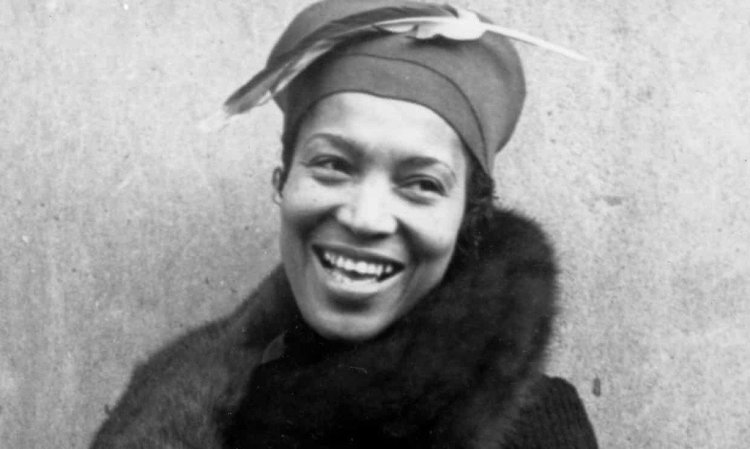
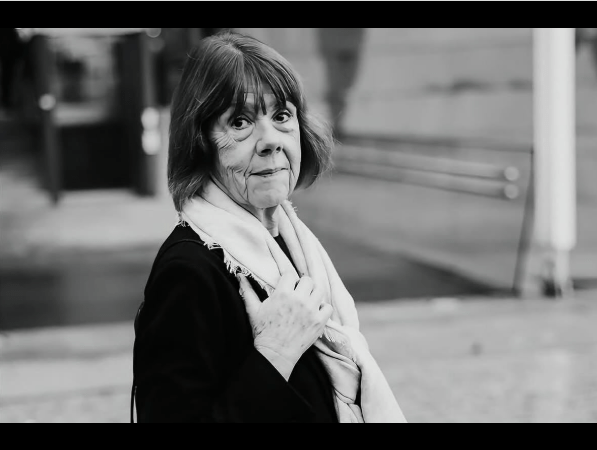
Gisèle Pelicot in 2024 – Publik / Private does not own this photo.

There are moments in public life that do more than interrupt the news cycle; they rupture the very architecture of shame itself. Gisèle Pelicot’s emergence into collective consciousness is one such rupture. What she has invited the world to witness, to feel, and to reconsider is not simply her own story—harrowing as it is—but the deeper social lie that murder, theft, and assault leave stains on the victim’s soul, and that humiliation is a cost to be absorbed quietly, in private.

This lie is ancient, pernicious, and coded deeply into the way society talks about sexual violence. It insists that the violated should cover their wounds, carry their pain behind closed doors, and perform discreet silence as if harm is a private blemish. Gisèle Pelicot refused this inheritance. In the mass rape trial that unfolded in Avignon, she did something extraordinary: she waived her right to anonymity and demanded the trial be public. She said she wanted “all women victims of rape … to say: Madame Pelicot did it, we can do it too.” And she declared with quiet gravity that “when you’re raped there is shame, and it’s not for us to have shame – it’s for them.”

To say “never have shame” in a world that reflexively trains victims to internalize blame is to challenge the very grammar of violence. Shame doesn’t spring from the wound itself; it is a social product, a mechanism that protects power by making the vulnerable feel small, isolated, and unworthy of witness. Pelicot stood against that mechanism, insisting that the weight of disgrace belongs not with the one attacked, but with those who inflicted the harm. 

This shift—simple in phrase but seismic in effect—is a reallocation of moral responsibility. Pelicot’s experience was nearly unimaginable in its scope: over many years, while drugged unconscious by her husband, she was raped repeatedly by dozens of men he invited into their home. The revelations emerged only after police investigating unrelated voyeurism found disturbing footage on her husband’s computer, revealing the systematic nature of the abuse. 

The instinct of the criminal justice system in many societies is to protect the privacy of victims, to sequester their experiences in sealed rooms and sealed pages. But Pelicot refused this protection precisely because that privacy historically serves perpetrators far more than survivors. By opening the courtroom to the public gaze, she made the crime visible on her terms. She turned the spotlight from hidden shame to exposed accountability. The shame was no longer something lodged in her voice or bowed shoulders; it was something placed squarely on the acts of her husband and the men who participated with him. 

Her words—it’s not for us to have shame, it’s for them—are not a palliative or a slogan. They are a methodological shift in how we think about collective responsibility. When Pelicot articulated this during her testimony, she was not issuing a comforting platitude; she was proposing a restructuring of who bears the emotional and moral cost of violence. Victims are too often taught to apologize for surviving. Her stance interrupts that conditioning. 

And yet, there is humility in her refusal of the language of heroism. When observers called her brave, she deflected—not because she was unheroic, but because courage abstracted from consequence is a story we tell to feel comfortable again. Pelicot described her persistence as “will and determination to change society,” not simply personal endurance. Courage for her was not a static trait but a sustained commitment to truth-telling in the face of denial, minimization, and cultural avoidance.

In insisting that victims should “never have shame,” Pelicot forces us to examine the structures that scaffold shame in the first place. What does it mean that we accept a culture where consent is poorly understood, where “I didn’t think it was rape” is offered as a defense? What does it mean that survivors must navigate not only the trauma of assault but the expectation of self-silencing? These questions are not rhetorical. They point toward the very conditions that allow violence to become normative rather than aberrant. 

There is no quick fix here, no singular legislative moment that will instantly dissolve centuries of conditioning. But there is a shift that begins in language and extends into empathy. When we stop locating shame in the body of the victim and start locating it in the conduct of the perpetrator, we begin the work of dismantling stigmas that function as social glue, holding in place systems that protect the powerful and isolate the vulnerable.

Pelicot’s call is, at once, an invitation and a demand. She invites survivors to reject the internalization of shame. She demands that society change the terms of its moral imagination. To reject shame is to reclaim narrative authority over one’s own life. It is to declare that harm is not a mark of dishonor but a testament to an injustice that must be addressed, not hidden.

In a cultural moment saturated with testimonies—some celebratory, others mournful—Pelicot’s voice resonates because it refuses to locate dignity in silence. Her message matters because it disassembles a foundational assumption: that victims should be quiet. Instead, she insists that silence belongs to the perpetrators who hide their acts behind euphemism and denial.

This is not merely about visibility. It’s about truth. To say “never have shame” is to assert that survivors deserve a world where their stories are not obstacles to justice but bridges to change.

And if we are listening—truly listening—we might begin to understand that the redistribution of shame is not an act of forgiveness, but an act of radical accountability.
P / P Essay: The Dark Side of the Moon (exploring danger)

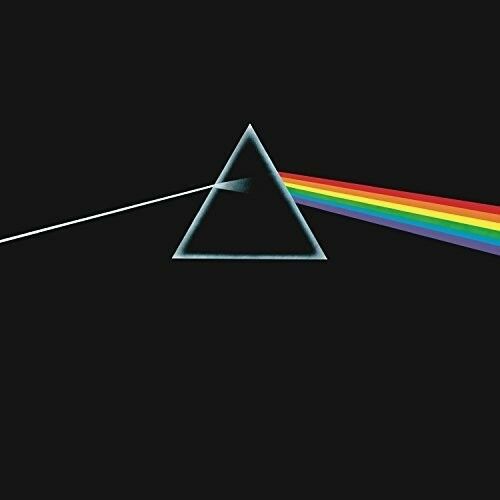
Album Art: The Dark Side of the Moon by Pink Floyd

Editor’s Note: I was thinking last night and this morning about what I wanted to share with the world. My personal fear is that my writing is getting more fearless, which can be somewhat uncomfortable. My work has evolved. My essays may not be as subtle or brief as they used to be. I am delving into depths where I have not gone before because this form of depth was previously not within me.  Publik / Private is here to give voice to corners of consciousness that others struggle to express.

Even so, as the founder, I struggle to allow P / P’s breadth of writing and literature to morph and grow, but I believe it is inevitable that the writing is going to get braver, the reading lists will touch on topics that we hope heal and touch those who need and desire resources and book about vulnerable facets of human life. This has always been the goal – to hold space for those who balance, are honest and unabashedly think out of the box.

THE DARK SIDE OF THE MOON (exploring danger)

Location is interesting. When I begin to feel stagnant, immobile and constrained, I have to become more introspective and look at my surroundings, my routine, and allow myself to be guided by destiny. It took awhile for me to surrender to change. The Wheel of Life is very different than running rapidly in a hamster wheel of limitation.

I asked myself last night and this morning what did I need to share? What is it that the world needs? I replied to myself “The world needs love,” but I felt like there is enough love. That’s not what is lacking. Is it vulnerability? What could I contribute?

Recently, I buried myself. After a season of isolation, conflict and self doubt, I had been whittled down into submission. I found myself asking for permission to speak, I found myself utterly afraid of everything. And everyone who know me knows that isn’t me.  So, the things that I’ve been saying and doing have been contradictory. I know it, I see it, but I can’t help it because I have been abused. It’s well documented that I am a survivor. This has been a part of my identity for a long time, so it was never a question of if I was going to die, but how was I going to turn my reality around to live?


EXPLORING DANGER

___________________________

danger noun

dan·​ger | \ ˈdān-jər  \

Definition of danger

*merriam webster online

___________________________

One

a archaic : JURISDICTION

You stand within his danger, do you not?

— Shakespeare

b obsolete : REACH, RANGE

… out of the shot and danger of desire.

— Shakespeare

Two

obsolete : HARM, DAMAGE

… a sting in him that at his will he may do danger with.

— Shakespeare

Three

: exposure or liability to injury, pain, harm, or loss

a place where children could play without danger

was assured her job was not in danger

Four

: a case or cause of danger

the dangers of mining

_______________________________

I had a couple of thoughts come to my mind in regards to the word danger: but the question, I need to explore is:

Are some people more vulnerable to danger than others?

I know that because I am small in stature and a female-identified being, it puts me in vulnerable positions that others may never experience.

People talk about “penis envy,” but being in a woman’s body is a beautiful thing – and many times I would think, particularly in terms of the intersection of race and sex, “If others could only be in a Black woman’s body, live as a Black woman, they would see how beautiful it is. There wouldn’t be racism, there wouldn’t sexism because our cells, the waves of our hormonal vibrations, the general makeup of our biological woven strands of DNA that make us what we are feels so good.” Continue reading

P / P Essay: Another Look at Grief pt. 1 (For Brittany)

Image from Harvard Business Review, “Making Your Workplace Safe for Grief

Editor’s Note: I found out I lost a close friend of mine yesterday. Her name was Brittany. She was gregarious homeless floater, an African American trans woman who, over the years I’ve seen smile, hug, love and survive through horrible experiences. There was a time some men broke her leg because she was a “faggot.” I would give her money when I could, I always told her she was beautiful and she me. She was beautiful. Not just on the outside, but what really drew us all to her was her heart.

I could not attend her vigil for my own personal reasons, but I am grieving her. And because I couldn’t be there, the least I can do is dedicate this essay to her.

___________________________

A few months ago, we released a reading list entitled, P / P Reading List: 10 Books To Help Those Who Are Healing Through Grief, but yesterday, I was faced with another more intimate look at death and loss. I honestly, don’t remember what made me put together the reading list. I believe I have the ability to feel what others feel, grieve when others grieve, become affected when people are close…or even far away. If I can be deeply honest – I’ve never written this publicly, but there are times when I feel so much empathy and love in my heart, I am overwhelmed.

Through study and writing I’ve learned about experiences of people all over the world: people who don’t have clean water, experience FGM, girls who are married off at 11 years old and people who have lost a parent or close friend.

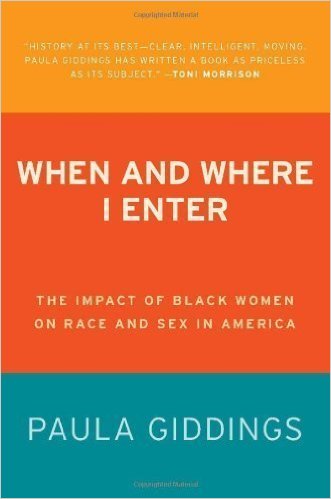
I had to learn to be cautious about complaining about the plights of being an African American woman. It is not that I don’t experience systemic problems that derive from the roots of slavery and racism in this country – by the way, Paula Giddings’ When and Where I Enter is a book that opens one’s eyes to Black women’s history from the moment African women stepped onto American soil to the 1980s. It teaches about the prolific Black women who helped make our culture what it is today:

It wasn’t only after reading that book and writing for Ms. Magazine that taught me about the different ways women navigate life around the world, but it simply helped me learn how blessed all of us are in America. Black women can get an education, we can speak what’s on our minds, we can share our stories, we can get published, drive cars and have access to massive amenities that most the people around the world could not fathom receiving. So, there is a blessing in grief when it comes to where I stand in life – but none of us, not one human being is able to escape death and loss. Continue reading

P / P Essay: The Blessing of a Sense of Humor

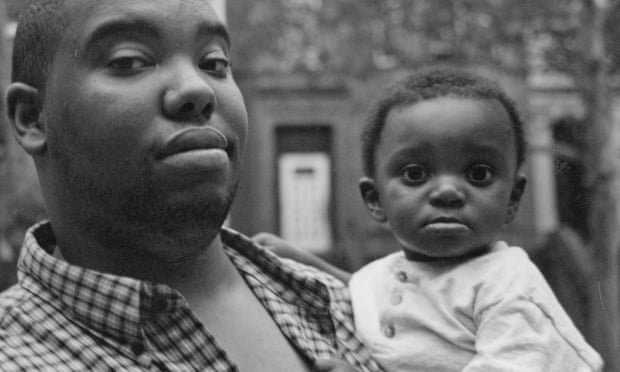
Coates with his son, Samori, in the summer of 2001. Photograph: Ta-Nehisi Coates via The Guardian

___________________________________

It’s been a tough few months and there’s nothing funny about being a woman of color who struggles with the external pressures and intimidation of life.

Nonetheless, I had my first funny dream in a long time this morning.

The last time I saw my best friend, she told me, “You used to be so funny, light-hearted and goofy,” (I don’t take being called “goofy” as an insult. I like to make my friends laugh.) She continued, “you used to have a light in your eyes and it’s not there anymore.”  At that moment, I heard her and I knew what she meant, but I figured back then, life has good days and bad ones – not to belittle anyone who has experienced any sort of loss or tragedy.

Trauma will do that but this morning, I had a sweet, funny dream. I don’t remember what the dream was about but I woke up remembering who I was, who I am, and the pain others have caused me, the intrusion, the insults seemed to roll off my back at 5 in the morning while I had to deal with people outside my window, taunting and enjoying the peril of my discomfort…before my first cup of coffee. Because of that dream, my heart was light as I changed out my filter, filled my coffee maker with espresso, and then fixed the curtain that keeps falling down in my office. My day to day felt a little nicer, and it came from me – not a compliment, not a phone call or a cool opportunity.

Get over yourself, Jordannah.

All I have is myself. If I get over that, me, what is the point of life? What would I do? The outside world, the world around me, Between the World and Me (shout out to Mr. Ta-Nehisi, another Baltimore born author who grew up understanding what I understand, and probably lives as an adult author knowing much more).

My very simple point is that my subconscious, without being direct, without giving me some deep message and booming male voice relaying some heavy prophesy or decree telling me about my future, simply made me laugh.

And I needed that. Continue reading

P / P Essay: Dear Elder Odetta

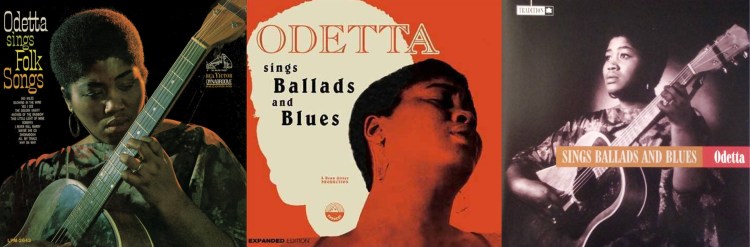
Photo Credit: Odetta: A powerful woman of the 60s

Dear Elder Odetta,

I need your guidance.

Much like the days when I needed James’, Angela’s, Toni’s and my grandmother’s guidance and strength. Today, I specifically need you. I need you and your guitar songs. My guitar was my best friend for so long. Now, I need an elder’s acoustic guitar.

Old spirituals and work songs that you sang and recorded course through my bloodline – my tiny blue veins running through my faint, seemingly thin skin. Right now, to me, my skin looks like paper. It looks like paper thin, pale African American skin. No, not that colorism paleness, but tiny blue veins residing under a soft layer of flesh that needs more sun. My veins intertwine with muscles, arteries and small bones and move my blood to my heart. 

My elder, my ancestor, Odetta – I ask for your wisdom and prayers. And if you can spare one song, even just a rhythm and one chorus, you can send it to me and we can write the song together. I’ll add a hook and a chorus, and you can write the bridge and final chorus? Oh, that would be a dream. It would be healing.

Elder Odetta, your wisdom, your prayer and a song is requested because I need your help. I recently asked elder (Romare) Bearden in my thoughts and in my writing a short time ago for help to learn how to survive through the hard times. Continue reading

P / P Master Class Three: Affordable Hacks When Investing In Your Writing Career

Now that we’ve gotten passed lesson one and two which covered Time Management and Surviving Rejection, I still believe before we get to actively searching for jobs, pitching stories and writing proposals, it’s good to make sure we know how to make small investments in our home office and career to have the tools needed to have a stable foundation for your career.

I am pretty sure I have written that I usually work from my home office. I work also on site when I am teaching or in meetings. I also have some newsroom experience. But whether you are looking for a staff position or a sustainable full time freelance/contract career, an office is an office. It’s great to be organized where ever you are.

.je

Photo Source: Source: The Writing Cooperative

Make sure your office is mobile.

It’s a great idea to invest in a backpack, a decent laptop bag or large purse so you can carry your laptop and other tools in order to be able to write and take notes wherever you go. You can work or write on a train or plan while traveling at a coffee shop or in offsite meetings.

Building your home office and library.

Once again, whether you want to have a full time freelance writing career or a staff position, I can promise you, you will be getting emails and edits back from your employers and editors after regular work hours. My advice is to have a designated place for your books and desk so you can work on projects from home.

Why having a collection of books is the most important thing you need as a writer or creative person.

Reading is the basis of success to writing, point blank. There’s no way around it. Having non-fiction books on history, writing, biographies of successful people, best seller books on business book and marketing, books on topics of your personal interest and studies gives you an important set of references besides just using Google. I know we are in the digital age and you may find yourself working on more digital platforms, but writing and creative work will always be an intellectual, vulnerable, fast paced career. Continue reading

P/ P Essay: Black History Month Begins Today

Today, Black History Month begins.

In our inner circles and connective conversations, particularly with Black men, the answer to the simple question, “Are you Martin or are you Malcolm?” will shape an African American’s life in relation to how they navigate systemic racism.

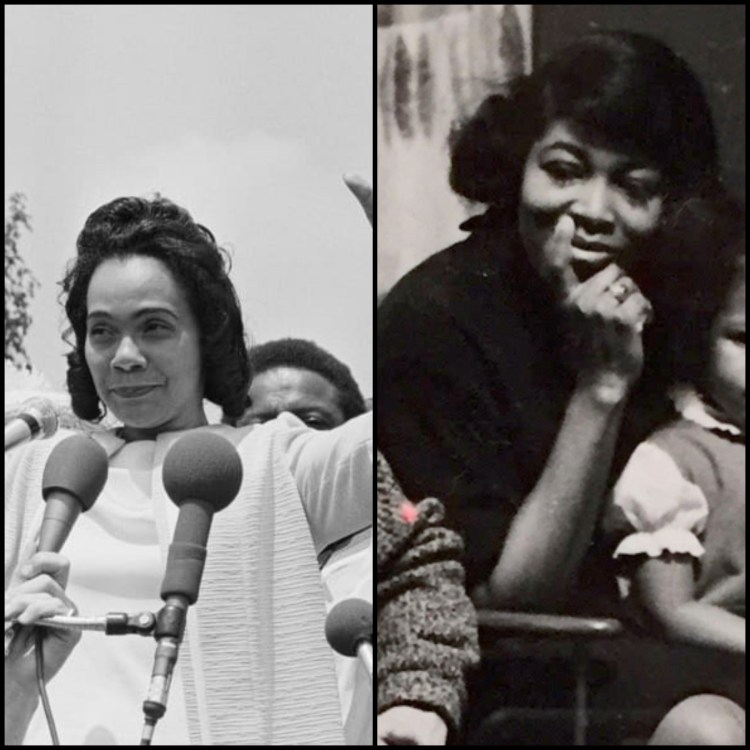
I personally like to think of myself as Coretta Scott King. Until writing this piece, I did not feel it appropriate to begin to associate parts of myself that connect with Betty Shabazz (Betty X). But it made me think, maybe I have attributes of both women within me. I learned a lot about her as Mrs. King was an active feminist, she was always available to me in that we had that connection, which I consider to be an important part of my identity.

I wouldn’t be surprised if an African American answered the Martin and Malcolm question with, “I’m a little of both.” But those who truly know themselves know if they are water (Martin) or Fire (Malcolm). We know ourselves pretty well as our natures are easy to access on a primal level. Continue reading

P / P Repost: Read Zora Neale Hurston’s Powerful letter to W.E.B Du Bois About Honoring the Ancestors

Written and posted by Because of Them We Can

Zora Neale Hurston was putting on for the culture long before the phrase came into existence. Raised in the culturally affirming environment of Eatonville, Florida (the nation’s first incorporated African American town), she was exposed to Black excellence on a daily basis.

She went on to attend Howard University and later become Barnard College’s first Black graduate. As one of the leading lights of the Harlem Renaissance, she used her voice to advocate for the rights and protection of African Americans – as well as challenge her peers.

In doing so, she wrote a letter to fellow luminary W.E.B. Du Bois, the Dean of American Negro Artists, asking him why there wasn’t a cemetery for influential African Americans and challenging him to establish one. See for yourself.


__________________________________

Continue reading

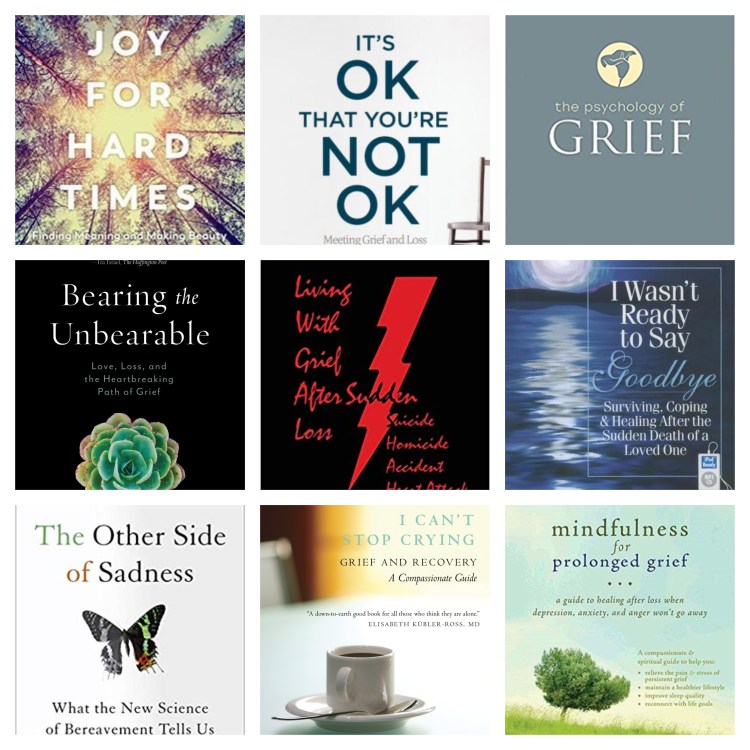
P / P Reading List: 10 Books To Help Those Who Are Healing Through Grief

The holiday season can be the hardest time of the year for those who have lost loved ones. I myself, have friends and family who are going through the grieving process and it inspired me to share some information about how to heal consciously, radically, transformationally and through love and patience. We are all living this life together as human beings. At any time, one of us can exit this Earth, leaving the people who love us sad, but able to keep us alive in their hearts and memories.

I hope you all have a happy holiday season and that you have inner peace, peace with your family and the self love to go on and grieve for as long as you need to. It can be a lifelong process. We at Publik / Private are here to encourage your healing in any way we can.

.je


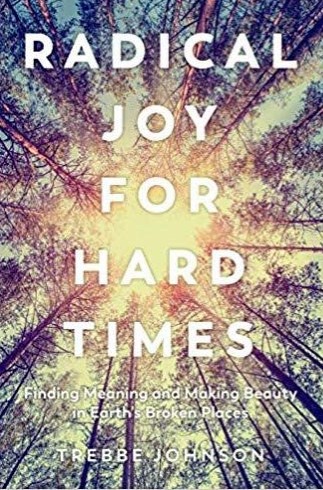
Radical Joy for Hard Times

by Trebbe Johnson . North Atlantic Books

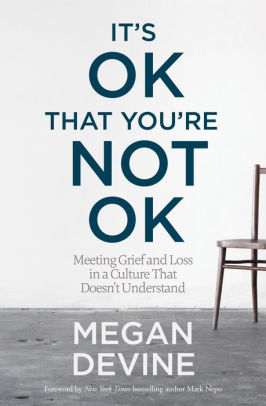
It’s OK That You’re Not OK: Meeting Grief and Loss in a Culture That Doesn’t Understand

by Megan Devine. Sounds True; Unabridged edition Continue reading

Publik / Private at Baltimore Book Festival 2017

Publik / Private will be hosting two panels at Baltimore Book Festival 2017

Black Existentialism Lends to Dystopian Afrofuturism
Friday, September 22, at 5:00pm
At the CityLit Stage

With so much emphasis on the Black body – police brutality, photographically dense explorations of the inner city, stories of reformed criminals, death and loss within plot lines of Empire inundating American culture, the exploration of Black consciousness, and the navigation of the Black perception of life has been nearly nonexistent in media.

Authors Jordannah Elizabeth, Jason Harris, and Olufunmike Woods (Olu Butterfly) will speak about Black consciousness and existentialism in writing and how it lends to dystopian stories and plot lines in Afrofuturism. The discussion will explore why Black consciousness, perception and relationship with the Western world should always be relevant in conversations in literature.

______________________________

Black Voices in Music Criticism Are Essential w/ Greg Tate
Sunday, September 24, at 4:45pm
At Red Emma’s Radical Book Fair Pavilion

The panel would consist of renowned authors and music critics/scholars, Greg Tate, Laina Dawes and Rashida Braggs, who will share their perspective on commentary on Black music criticism, how they were able to succeed and create space for themselves, Black music in mainstream and alternative white media and how their work navigates the segregation of Western Contemporary music history. Jordannah Elizabeth will serve as moderator.

“Many prominent Black music critics and editors tend to go nearly anonymous to their general readership. If you do choose to pursue this career path — which, to be very honest, is arduous and full of rejection — share your entire being with your readers: Use your image, your thoughts, and your craft to inspire and equip other Black writers and readers to embrace literary and cultural criticism. This will ensure that Black voices will be expected — not just yearned for — in white alternative and mainstream music media.” -jordannah elizabeth, Black Voices Are Essential In Music Criticism Continue reading