There is a particular kind of silence that only happens in a room where people are truly listening. Not polite silence. Not distracted quiet. The kind that hums — electric, anticipatory — because everyone present understands that something unrepeatable is happening in real time.
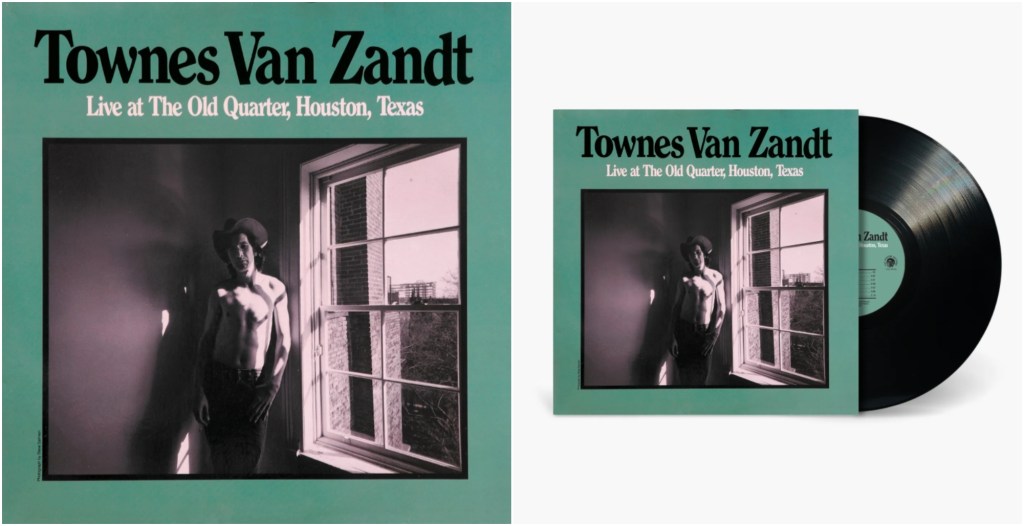
That’s what pulses through Live at the Old Quarter, Houston, Texas — the newly reissued archival document from Townes Van Zandt, released again into the world by Fat Possum Records.
Calling it “new” feels almost beside the point. What this record offers isn’t novelty. It offers presence.
Recorded over a series of July nights in 1973 inside a modest Houston listening room, the performances unfold without adornment: one man, one guitar, and an audience willing to lean in close. There are no lush arrangements to shield the songs, no studio gloss to smooth their edges. What we hear instead is the architecture of Townes’ songwriting laid bare — the skeletal beauty of melody carrying emotional weight that feels almost geological in depth.
The mythology of Townes Van Zandt has grown outsized in the decades since his passing. He is often framed as the doomed poet, the tragic romantic, the saint of beautiful sorrow. But this record complicates that caricature. Here, he is funny. He is wry. He lingers between songs, tossing off remarks with an understated dryness that disarms the heaviness of what follows. The darkness in his writing isn’t theatrical; it’s conversational: When he moves through songs like Pancho & Lefty, If I Needed You, or Waiting ’Round to Die, they don’t feel monumental — not yet. They feel intimate. As if they are still becoming. There’s a humility in the delivery that resists canonization. These aren’t museum pieces. They are living, breathing things shared in a room that smells like wood and sweat and Texas summer air.
What strikes me most is the patience of it all. The record does not rush to prove itself. It allows silence to hang. It allows a lyric to land and reverberate before the next chord arrives. In an era that compresses music into snippets and background ambience, this kind of duration feels radical. You are asked to stay. To sit inside the story. There’s also something politically resonant about this simplicity. No spectacle. No mediation. Just an artist trusting that words — honestly delivered — are enough. That faith in language, in narrative, in human attention, feels increasingly rare.
The reissue by Fat Possum doesn’t attempt to modernize or reframe the material. Thankfully. What it does instead is remind us that live performance, at its best, is a form of communal reckoning. You can hear the audience responding — laughter breaking tension, applause surfacing like waves. The room itself becomes an instrument.
And perhaps that is the enduring power of Live at the Old Quarter: it captures not just songs, but relationship. Artist and listener meeting without pretense. Townes does not sound like a legend here. He sounds like a man in a chair with a guitar, telling the truth as he understands it. The legend came later. What remains in these recordings is something far more valuable — the sacred ordinary of a night when the music was enough, and everyone in the room knew it.
 Publik / Private