Written By: Jordannah Elizabeth Graham-Mayer
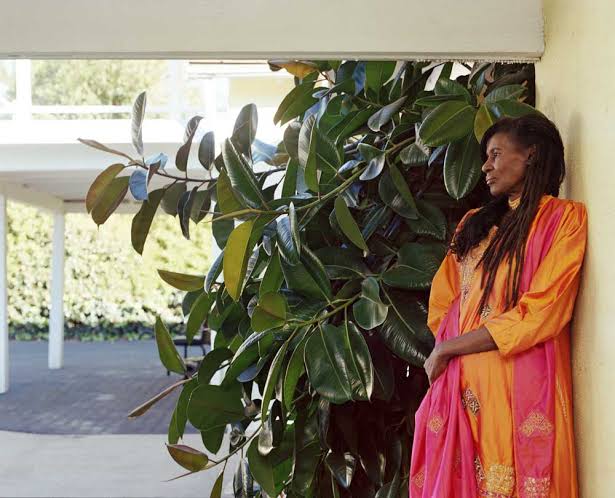
There is a habit in music criticism that reveals more about listeners than artists. Whenever a work feels startlingly contemporary decades after it was created, we call it ahead of its time. The phrase sounds generous, but it quietly assumes that history eventually catches genius by accident—that culture slowly grows sophisticated enough to understand what it once ignored.
Alice Coltrane deserves a different vocabulary.
The announcement that Matador Records will release the complete authorized editions of Turiya Sings, Divine Songs, Infinite Chants, and Glorious Chants is not simply another archival campaign. It is the public opening of a private musical world that was never intended to participate in the commercial rhythms of the recording industry. These recordings lived inside Sai Anantam Ashram, shared among devotees on cassettes that functioned less like albums than spiritual companions. For decades, they existed outside the mechanisms that usually produce canon: radio, charts, playlists, magazine covers, and endless retrospective rankings.
That absence matters.
Much has been written about Alice Coltrane as widow, collaborator, harpist, pianist, composer, yogini, guru, or spiritual jazz pioneer. Every description is accurate. None is sufficient. They tend to organize her life into chapters, as though one identity replaced another. The Ashram recordings refuse that narrative. They reveal continuity rather than transformation. The ecstatic searching of Journey in Satchidananda never disappeared; it simply became quieter, more devotional, less interested in performance than practice.
Listening now, one is struck by how little these recordings resemble the historical moment that produced them. Popular music in the 1980s increasingly celebrated digital perfection, commercial immediacy, and spectacle. Alice Coltrane was occupied with something entirely different. Her synthesizers do not announce technological progress. They dissolve into drones. Her voice is neither theatrical nor virtuosic. It is communal, repetitive, intentionally without ego. The songs ask listeners not to admire the performer but to surrender alongside her.
That may explain why these recordings feel unexpectedly contemporary.
In an era increasingly fascinated by ambient music, meditation playlists, healing frequencies, and music designed for attention rather than distraction, audiences have finally developed ears for work that Alice Coltrane completed decades ago. Yet reducing these recordings to wellness music would flatten their ambition. They are not sonic décor. They are acts of devotion. Their purpose is not relaxation but transcendence.
The distinction matters because Alice Coltrane understood something our algorithmic listening culture often forgets: music can alter consciousness without demanding constant attention. It can reshape the emotional architecture of a room. It can become ritual instead of entertainment.
That philosophy quietly influenced generations of musicians who often discovered her indirectly. Spiritual jazz has become one of the defining reference points of contemporary improvisation. Ambient composers borrow her harmonic patience. Electronic musicians sample her textures. Hip-hop producers return repeatedly to her catalog searching for moments that seem suspended outside ordinary time. The vocabulary of experimental music has gradually caught up with ideas Alice Coltrane explored while largely removed from the industry’s gaze.
Perhaps the most remarkable quality of the Ashram recordings is their confidence. They make no attempt to persuade skeptical listeners. There is no crossover instinct, no explanatory framework, no compromise designed to broaden an audience. Alice Coltrane assumes belief—not necessarily belief in a particular religion, but belief that music remains capable of carrying spiritual weight. That certainty feels almost radical today.
Matador’s decision to present the recordings complete, with their original mixes and artwork intact, is therefore more significant than another deluxe reissue campaign. Preservation is only part of the story. Context is the greater gift. These recordings are finally allowed to exist publicly on their own terms rather than as historical curiosities or excerpts folded into larger compilations.
There is a temptation, whenever archival recordings emerge, to ask whether they “hold up.” The question misunderstands the relationship between time and art. Great recordings do not survive history because they remain fashionable. They survive because they continue asking questions that culture has not finished answering.
Alice Coltrane’s Ashram music asks perhaps the most difficult question of all: What happens when music stops trying to represent the self and instead becomes a vehicle for dissolving it?
For decades, only a relatively small spiritual community lived with those answers. Now the rest of us are finally invited into the room.
The remarkable thing is not that the music still sounds new.
It is that it always did.
 Publik / Private