Written By: Jordannah Elizabeth Graham-Mayer
The Human League’s Don’t You Want Me has lived in the public imagination for more than four decades. Its bright synthesizers, crisp electronic drums and theatrical vocal arrangement made it one of the defining pop records of the early 1980s. Meshell Ndegeocello and Cat Power do not attempt to reproduce any of that stark glitz.
The original version is contagiously catchy. Beneath its immaculate synth-pop surface is a tense exchange between two former lovers who remember their relationship very differently. One person claims credit for the other’s transformation and success; the other refuses to remain inside that version of the story.
Ndegeocello and Chan Marshall deconstruct the jovialness of the composition, making the confrontation of the lyrical more broody, and possibly more appropriate the memory-based cross-purposes of the ex-paramour.
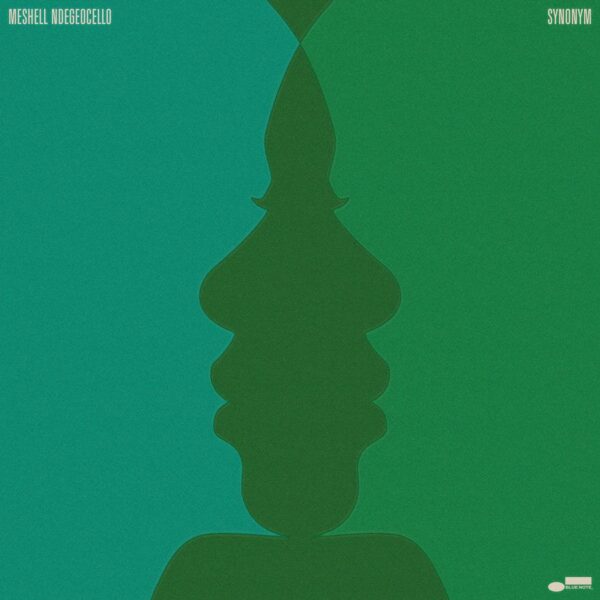
Synonym due out October 2nd due out via Blue Note Records
This being the second single from Ndegeocello’s forthcoming third full-length album for Blue Note Records, Synonym, “Don’t You Want Me” moves at the pace of a late-night conversation. The synthesizers and urgency of the original give way to a deep, patient dub-reggae groove. Ndegeocello’s bass sits low within the mix, giving the song its center of gravity, while the arrangement leaves considerable space around Chan Marshall’s voice. Moreover, the arrangement is slower and heavier, with a groove that feels less like a pop single and more like something drifting out of a based-latent subwoofer after midnight. The bass is not decoration—it is the architecture. The rhythm gives Marshall space to inhabit the song rather than perform it.
Ndegeocello does not need to change the lyrics to expose the tension. She changes the temperature of the song.
Marshall and Ndegeocello alternate verses, then come together on the pre-chorus and chorus. The contrast between their voices is part of the recording’s appeal. Marshall’s delivery retains the vulnerable, slightly improvised or retro style that has long defined Cat Power, while Ndegeocello brings a steady grounding with her presence. Neither voice dominates.
That balance, though, changes the emotional mechanics of the original. The song no longer feels like an argument that has to be won. It becomes a conversation between people who already know that the relationship has changed. The song remains recognizable, but almost everything surrounding its original identity has shifted. The tempo is different. The physical feeling is different. The gender dynamics are different. Most importantly, the emotional distance now draws you in at the center of the depth of the romantic conundrum.
This is where Ndegeocello’s approach to covers becomes particularly interesting. She is not interested in nostalgia for its own sake. Her previous covers treated well-known songs as material that could be reconsidered rather than simply reproduced. With Synonym, that instinct has become the organizing principle of the entire album. “Don’t You Want Me” makes that idea concrete along with the full body of work.
Ndegeocello’s music has always made room for those kinds of overlapping meanings. Her bass playing is melodic and physical, but her larger body of work has consistently treated music as a form of conversation—between genres, generations, political ideas and individual artists. On “Don’t You Want Me,” that conversation is molasses-quiet.
Ndegeocello is not asking what these songs sounded like when they first entered the world. She is asking what they can mean now—and what becomes possible when another artist gives them the freedom to change it.
“Don’t You Want Me” does not answer its own question.
It lets the question linger in the groove.

