Written By: Jordannah Elizabeth Graham-Mayer
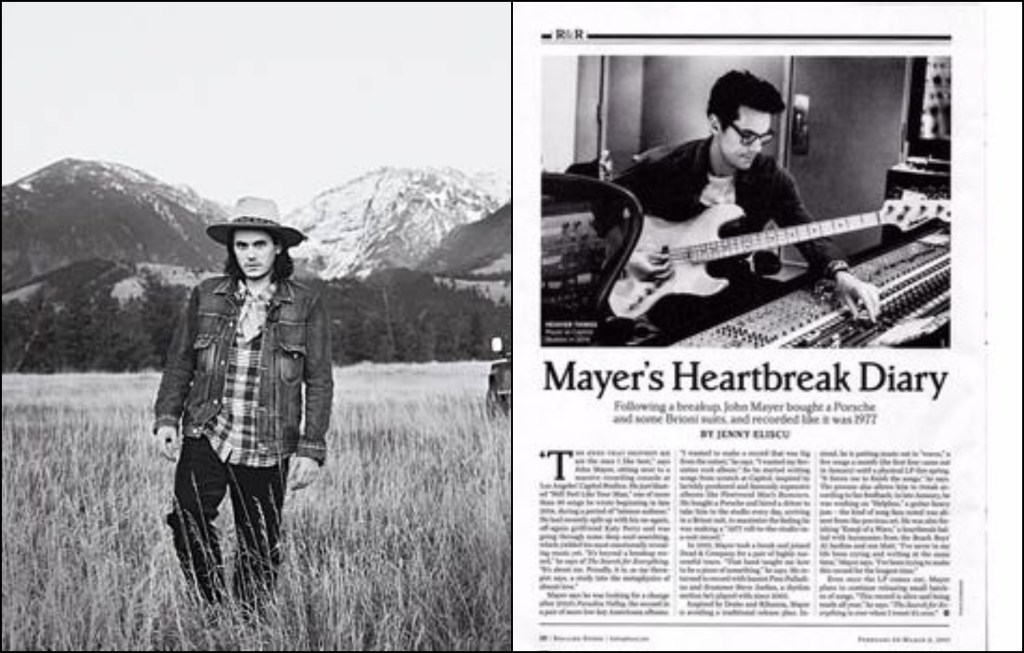
Writer’s Note: I was reading something on Google AI within the search engine and John and I are “unverified”. I do, quickly, feel odd because I’ve never heard of white celeb pairings being scrutinized for public records. I will say this, as a journalist, my maiden name is not “Graham”. I have, unfortunately, been married three times. Put the origins of Graham together as you will as long as it does not sully or outright lie about the validity and reality of my life, family and my understanding of the life I live and traverse every day.
My life is verified. John just drove past me this morning, his mom Maggie is here, things are happening, and I am having (I am honored) to think deeply about John’s Playboy interview as I researched last night, realizing he had had two drinks, which, as his close friends confirmed “made him change”. He turns into someone, and his inhibitions were where they were. I am not dismissing, I am a mother, and John, did the work and quit drinking.
I am concerned about the lack of forgiveness by certain women in Hollywood, and those who were offended by the interview. Is it my color? Or am I someone who tries to understand? Is it my choice to think, write and examine instead of being pressured by the accusation of “letting him get away with it”. Where was not an excuse, not a request for a pass; it was self-sabotage and relinquishing of control in order to obtain it and freedom. He can, just very well be a jerk, but I know he’s beautiful, and a wonderful subject, a journalist to consider what all has occurred to him, and victims of the machine of Hollywood, which can send someone to the edge of death and despair no one outside of the system can understand.
______________________________________
There is something profoundly disturbing about watching a human being become less recognizable to the public as the machinery surrounding their image becomes more recognizable.
John Mayer‘s public life offers an important opportunity to examine this process, particularly when considering the relationship between alcohol, masculinity, celebrity, psychological well-being and the entertainment industry’s treatment of personal vulnerability.
Mayer’s career illustrates the complicated relationship between artistic achievement and the construction of celebrity identity. His musical development has included songwriting, guitar performance, blues, pop, collaborative experimentation, and his participation in Dead & Company alongside members of the Grateful Dead. Yet his public identity has frequently been discussed through a different vocabulary, one centered on romantic relationships, controversial interviews, sexual commentary, and perceived personality flaws. These subjects have sometimes overshadowed the creative work that established his professional reputation in the first place. Understanding this imbalance requires looking beyond the individual headlines and examining the commercial systems that determine which aspects of an artist’s life receive the greatest attention. It also requires acknowledging that an artist can be accountable for his public statements without being permanently reduced to them.
Alcohol has occupied a complicated position in American entertainment culture for generations. Within music, film, television, and celebrity nightlife, drinking has frequently been presented as an ordinary extension of professional socializing. It appears in backstage photographs, interviews, after-parties, industry dinners, private celebrations, and stories about the personalities who inhabit the entertainment world. The problem is that this presentation can make excessive drinking seem like an unavoidable component of professional success. It can also make the decision to stop drinking appear less interesting than the circumstances surrounding a person’s last public drinking experience. What deserves greater attention is the relationship between alcohol, professional expectations, psychological well-being, and the conditions under which artists are expected to work.
John Mayer has spoken publicly about his decision to stop drinking, and his comments deserve to be examined with more care than a sensationalized interpretation allows. In a June 28, 2017 Rolling Stone interview with Patrick Doyle, Mayer explained that he had stopped drinking because he disliked the way alcohol affected his life. He described repeatedly attempting to establish a reasonable limit and feeling that he had exceeded it, while also stating explicitly that he had never considered himself to have a serious drinking problem. He characterized drinking as something that consistently left him feeling that he was not succeeding at life, regardless of how much he consumed. His comments are important because they provide his own description of his experience rather than a diagnosis imposed by someone else.
In November 2018, Mayer discussed the experience again in a Complex cover story with designer Jerry Lorenzo. He recalled attending Drake’s thirtieth-birthday celebration in October 2016 and described himself as considerably intoxicated that evening. He remembered making an unusual farewell statement to Drake before leaving the club, an incident that he later learned had amused Dave Chappelle and another person who witnessed it. Mayer also recalled experiencing a six-day hangover and subsequently asking himself how much of his personal potential he wanted to realize. His answer, as he described it, was that he wanted to pursue all of it rather than surrender part of his life to drinking.
There is something worth considering in that account beyond the celebrity anecdote. Mayer was describing a moment in which he evaluated his own priorities and recognized that his relationship with alcohol was not serving the life he wanted. He was not presenting a universal recovery formula or suggesting that everybody should approach sobriety in the same way. In fact, he emphasized that the decision was deeply personal and dependent upon individual psychology. His account also demonstrates why the terms problematic drinking, sobriety, and alcoholism should not be used interchangeably. The decision to stop drinking can be meaningful without requiring an individual to publicly accept a medical diagnosis.
The entertainment industry should also examine the environments in which alcohol consumption becomes socially normalized. Recording studios, after-parties, award celebrations, industry dinners, promotional events, and private gatherings can create expectations about participation that are not always compatible with an individual’s personal boundaries. For an artist whose professional identity is built around constant interaction, refusing an invitation or declining a drink can become a surprisingly complicated social decision. The expectation to remain accessible, entertaining, and agreeable can extend far beyond the stage. Whether the entertainment business has developed professional environments that genuinely respect sobriety is a question that deserves considerably more attention. An industry that profits from creativity should not require people to compromise their personal well-being to remain socially acceptable within it.
The relationship between celebrity, public humiliation, and psychological survival deserves equally serious consideration. In March 2015, John Mayer sat down with journalist Ronan Farrow for an interview presented through MSNBC and NBC’s Today. The conversation is particularly revealing because Mayer was attempting to explain what had happened to his public identity following a series of controversial interviews, including his 2010 Playboy appearance. He described having been out of touch, overly performative, and increasingly disconnected from the musician he wanted to be. He also described how his attempts to correct his public image eventually became another performance in which he was no longer communicating honestly.
One of the most striking moments occurred when Farrow asked Mayer about the publication of the Playboy interview and whether he believed it should have been printed. Mayer answered that he did believe it should have been published, but then described the emotional consequences of that period by saying that he would rather have killed himself than been killed. He immediately clarified that he was not describing a literal physical crash, explaining that his high-speed crash had been an intellectual one. The remark should not be converted into an unsupported claim about a suicide attempt, a diagnosis, or an intention to harm another person. Its significance lies in the extraordinary language he used to describe the experience of losing control over his public identity. The interview provides a rare opportunity to examine how a person can experience the destruction of a reputation as something that threatens the very foundation of his sense of self.
It is equally important to understand what Mayer did and did not say about the interview itself. He discussed the possibility that the Playboy editors could have intervened before publication, but when Farrow asked whether the interview should have been withheld, Mayer answered that it should have been printed. There is no substantiated claim in this conversation that Farrow sabotaged Mayer’s career. Farrow was asking questions, while Mayer was reflecting on his own conduct, the consequences of his decisions, and the experience of becoming a character in a public narrative. The distinction matters because the interview is much more interesting than a simplified story about a journalist damaging a musician’s reputation. It reveals an artist attempting to take responsibility for his own behavior while also confronting the psychological consequences of an unforgiving media environment.
Mayer’s description of himself as a recovered ego addict is another important part of the conversation. He explained that public approval could create a cycle of emotional highs and lows, with praise producing temporary satisfaction and negative commentary producing an equally powerful reaction. He discussed withdrawing from Twitter because repeatedly checking public opinion made it difficult to maintain emotional distance from the reactions surrounding him. He also acknowledged that the desire for approval did not disappear simply because he recognized its influence over him. His account raises a broader question about the psychological consequences of making public validation part of one’s professional identity. When an artist’s work, personality, relationships, and perceived desirability are continuously evaluated by strangers, the boundary between professional criticism and personal judgment can become increasingly difficult to maintain.
The implications extend beyond social media. An artist who reaches an extraordinary level of commercial success may become responsible for an extensive professional operation involving managers, agents, attorneys, publicists, assistants, musicians, production personnel, financial advisers, and business partners. There may also be touring schedules, recording commitments, licensing agreements, contractual obligations, and the expectations of audiences in multiple countries. These responsibilities exist alongside the ordinary requirements of maintaining a household, sustaining relationships, caring for family members, and preserving personal health. Wealth can provide access to resources, but it does not automatically provide psychological freedom or eliminate the complications of managing a large professional life. In some circumstances, greater visibility creates more demands upon a person’s time, attention, and emotional availability.
The accumulation of responsibility can create an unusual form of isolation. The person at the center of a successful enterprise may be surrounded by employees, advisers, collaborators, fans, and people seeking access, while having very few opportunities to experience an uncomplicated personal interaction. Many relationships become connected to professional interests, financial expectations, or the maintenance of a public image. An ordinary decision may carry implications for a team, a business, a tour, or a public narrative, even when the individual making that decision is simply trying to maintain a normal routine. The responsibility of managing such an expansive presence may not always be at the forefront of someone’s mind when that person is dealing with the immediate demands of everyday life. This tension between extraordinary public responsibility and ordinary human needs deserves greater recognition in discussions about celebrity culture.
Hollywood’s culture of power can become existential when an individual’s wealth, influence, and public visibility attract increasingly expansive demands from people and institutions around them. There are fans, audiences, professional teams, business partners, media organizations, cities, national markets, and international markets that may all have an interest in the same person’s public identity. The artist can become an economic resource, a cultural symbol, a source of employment, and a highly visible personality simultaneously. These roles create conflicting expectations that can be difficult to reconcile with the ordinary responsibilities of maintaining relationships, attending to personal needs, and living a life outside work. When an industry treats visibility as a permanent invitation to access, it becomes increasingly difficult to determine where professional responsibility ends and personal autonomy begins.
The entertainment industry has a long history of benefiting from the personal lives of the people whose work it sells. An artist’s personality can become part of a promotional strategy, while romantic relationships, emotional difficulties, public disagreements, and personal revelations become additional sources of attention. The commercial value of a public personality can sometimes exceed the commercial value of the work itself. This creates an environment in which an artist’s private life is treated as an extension of the product, even when the artist has not consented to that arrangement. The resulting tension between personal autonomy and commercial visibility is one of the central problems of contemporary celebrity culture. It also helps explain why an artist may feel pressure to remain publicly accessible even when that accessibility is damaging to personal relationships or creative independence.
The Hollywood Commission’s 2022–23 Entertainment Industry Survey provides important institutional evidence for examining these conditions. The survey collected 5,259 responses from entertainment workers across television and film, commercials, live theater, music, broadcast news, talent representation, public relations, and corporate settings. Its findings indicated that only 31 percent of respondents believed a powerful person who harassed someone with less authority would likely be held accountable. Approximately 56 percent believed the industry had made minimal or no progress in confronting abuses of power since the beginning of the #MeToo movement. Among respondents who chose not to report the most serious incident they observed, 41 percent said they did not believe anything would be done. These findings reveal a serious problem of institutional trust, although the survey’s voluntary online recruitment means its results should be understood as reported experiences and perceptions rather than a statistically representative census of every entertainment worker.
The survey’s methodology also deserves attention because the composition of the respondents provides important context. Television and film workers represented 78 percent of the sample, while music workers represented approximately one percent. The findings therefore offer a particularly useful examination of film and television workplace conditions, but should not automatically be treated as a precise measurement of every part of the music business. The Commission nevertheless identifies problems that cross professional boundaries, including bullying, retaliation, discrimination, sexual harassment, and unequal access to workplace protections. Its findings also show that independent productions frequently lack the reporting structures and resources available to larger studio operations. This distinction is important because entertainment workers do not all experience the industry through the same institutional protections or economic circumstances.
The survey provides additional insight into why workers sometimes remain silent. Among respondents who did not report the most serious incident they observed, 41 percent said they did not believe anything would be done, while 25 percent feared being labeled difficult to work with. Other respondents expressed concerns about confidentiality and whether an incident would be considered serious enough to justify a formal investigation. These findings are particularly troubling in an industry where future employment can depend upon relationships, recommendations, and access to influential individuals. A person who challenges inappropriate behavior may worry about losing opportunities that took years to establish. The economic vulnerability of independent workers can make those concerns even more significant.
What interests researchers and cultural critics about these findings is the relationship between institutional power and the construction of an individual’s public identity. An artist may be encouraged to share personal information when it supports publicity, but discouraged from establishing boundaries when those boundaries inconvenience someone with professional influence. A musician may be expected to discuss relationships while having very little control over how those discussions are subsequently represented. A performer may be celebrated for vulnerability while discovering that the same vulnerability becomes material for ridicule. This is not a healthy creative relationship between the entertainment business and the people responsible for producing its cultural value. It is a system that can reward personal exposure while providing inadequate protection against the consequences of that exposure.
Mayer’s 2018 comments about what he called the male contract offer another way to understand the relationship between celebrity, masculinity, and personal autonomy. During a Baltimore performance, he questioned the expectation that men should be sexually confident and capable of attracting any woman they encounter. He described the pressure placed on boys and men to perform an idealized form of masculinity that can become psychologically damaging when they cannot or do not wish to meet its expectations. His central point was that men do not possess universal sexual entitlement and should not be taught to regard sexual access as proof of their masculinity. The remarks were subsequently discussed in a November 2018 Billboard interview, which explored his thinking about the performance and the cultural expectations behind it.
The subject is particularly relevant because celebrity intensifies expectations that already exist within popular culture. Fans may develop genuine emotional connections to an artist’s music, but that connection does not establish a personal relationship with the individual who created it. The distinction becomes important when admiration turns into persistent intrusion, unwanted physical contact, stalking, or attempts to influence someone’s private relationships. Public visibility does not eliminate bodily autonomy or create an obligation to participate in every interaction that an audience desires. A musician’s success does not make his private life an unrestricted public resource. These principles should apply consistently to men and women, regardless of wealth, attractiveness, professional status, or the size of their audience.
A serious examination of Hollywood also requires attention to the relationship between race, gender, and credibility. The entertainment industry has historically distributed professional opportunities and cultural authority unevenly, and those inequalities have influenced whose experiences receive attention. The Hollywood Commission’s survey includes findings concerning bias, discrimination, and colorism, while also documenting the particular vulnerabilities of underrepresented workers. However, the racial composition of its voluntary sample should be considered when interpreting conclusions about the industry as a whole. A responsible discussion of inequality should examine documented institutional practices rather than assign collective responsibility to individuals because of their racial identity. Fairness requires consistent standards of evidence, regardless of who is speaking or whose experiences are being examined.
Mayer’s own public history also illustrates why accountability and personal development must be considered together. His 2010 Playboy interview generated substantial controversy, including criticism of his language about race and women, and he subsequently apologized for using a racial slur. Those remarks should not be erased or excused simply because later interviews reveal a more reflective individual. At the same time, his 2015 conversation with Farrow shows that he had spent considerable time examining his earlier behavior and the ways he had contributed to the public image that surrounded him. His 2017 discussion of sobriety and his 2018 remarks about masculinity add further dimensions to that public record. A person’s history should remain available for legitimate examination without becoming an unchanging definition of that person’s character.
This distinction is particularly important when artificial intelligence and search engines become involved in the interpretation of personal history. Search results frequently combine independent reporting, recycled commentary, incomplete biographies, promotional material, and user-generated information. An AI-generated summary may present these materials as though they represent a coherent and independently established account. Yet the underlying information may contain omissions, contradictions, or assumptions that were never tested against primary documents. The appearance of confidence is not the same as the presence of evidence. Responsible reporting requires identifying original sources, distinguishing first-person testimony from independent corroboration, and acknowledging when the available information does not establish a conclusion.
Marriage and personal identity illustrate this problem particularly well. People may use professional surnames, retain surnames from previous marriages, or have legal records that are not publicly accessible through ordinary internet searches. Some jurisdictions also provide for confidential marriage records, limiting access to the public. Consequently, an absent search result cannot establish that a marriage did not happen, just as a published personal account cannot independently establish every legal detail of a marriage. The responsible approach is to distinguish testimony, published reporting, and documentary verification without treating one category as a substitute for another. The same principle should guide the treatment of artists whose intimate histories are repeatedly reconstructed through celebrity reporting.
Mayer’s creative development provides an important counterpoint to the public discussion of his personal life. In his 2017 Rolling Stone interview, he discussed his experience joining Dead & Company and the significance of becoming part of a musical community after years of developing his own career. He described the experience as an opportunity to participate in something larger than himself, rather than continually measuring his professional value through awards, chart positions, and commercial recognition. He spoke about the importance of inclusion, collaboration, and learning to appreciate forms of achievement that could not be measured through conventional commercial indicators. These comments reveal an artist thinking about creative identity and the possibility of finding fulfillment outside the expectations of celebrity success.
There is a meaningful contrast between that account and the way celebrity culture often discusses musicians. The public is frequently encouraged to interpret artists through romantic histories, personality controversies, and perceived character flaws, while the actual work receives comparatively little attention. Mayer’s musicianship, songwriting, guitar playing, and participation in Dead & Company deserve to be considered as part of his professional history. Recognizing those achievements does not require ignoring his previous controversies or treating criticism as illegitimate. It simply means allowing an artist’s work and personal development to occupy more than one dimension of public understanding. A more mature media culture would be capable of discussing both the music and the human being responsible for making it.
The deeper problem is not simply that Hollywood produces gossip or that celebrity journalism occasionally gets personal histories wrong. The problem is that the entertainment economy can reward intrusion, discourage accountability, and make a person’s private experience commercially valuable without adequately protecting that person’s autonomy. The Hollywood Commission’s findings demonstrate that concerns about abuse of power, bullying, harassment, and retaliation remain significant among entertainment workers. These are not merely matters of public perception; they affect the working conditions of people who create, distribute, and support entertainment. Addressing them requires more than statements of concern or temporary public campaigns. It requires institutional changes that can be measured through the treatment of workers rather than the publicity surrounding an organization’s commitment to reform.
There are practical changes that deserve serious consideration. Production companies and entertainment organizations should establish independent reporting systems, transparent investigation procedures, and meaningful protections against retaliation. Independent artists and contractors need access to professional support that does not depend entirely upon the goodwill of a powerful employer or representative. Workplaces should also establish clear expectations about alcohol-related events, unwanted physical contact, privacy, and professional conduct. The Hollywood Commission itself recommends strengthening accountability, improving reporting systems, and developing more consistent workplace protections. These measures should apply across gender, race, professional rank, and economic standing.
Artists also need greater control over the boundaries between their work and their personal lives. A public interview should not become permission for endless speculation about someone’s private relationships. A discussion about sobriety should not become an invitation to diagnose someone, and a conversation about psychological distress should not be reduced to an entertaining celebrity quotation. A musician’s creative expression should not automatically be treated as a confession about every event in his personal life. The distinction between artistic interpretation and factual reporting is essential to preserving both creative freedom and responsible journalism. Without that distinction, the public begins to mistake access to an artist’s work for ownership of the artist himself.
The larger cultural question is how an individual can maintain a recognizable sense of self while living within a system that continually demands access, performance, and public availability. An artist can be responsible for employees, professional collaborators, family members, financial obligations, and audiences while simultaneously attempting to maintain the ordinary routines that make a life sustainable. Those responsibilities do not disappear when a person experiences exhaustion, uncertainty, grief, or the desire for privacy. Nor does financial success automatically provide protection from the psychological pressures of public scrutiny. The entertainment industry must begin to recognize that human well-being cannot be treated as an optional consideration after commercial objectives have been satisfied.
John Mayer’s public conversations about alcohol, the male contract, and his experience of media scrutiny provide a valuable framework for examining these larger questions. His 2015 interview with Ronan Farrow reveals an artist attempting to understand the consequences of becoming a public caricature. His later discussions of sobriety demonstrate the importance of personal choice and the ability to change one’s relationship with alcohol. His remarks about masculinity question the expectations placed upon men and the ways those expectations affect intimacy and self-perception. Considered alongside the Hollywood Commission’s institutional research, these experiences invite a more serious examination of how the entertainment industry treats the people whose work generates its cultural and financial value.
Ultimately, the issue is not whether the public should care about artists as human beings. It is whether the industry that profits from their work is willing to treat them as human beings in return. An artist should be able to create without surrendering every private experience to commercial interpretation. A person should be able to acknowledge a difficult period without being defined by it indefinitely. A public figure should be able to develop a more thoughtful understanding of himself without having every subsequent conversation measured against the most controversial version of his past. The entertainment industry has spent decades selling the idea of authenticity, but it has not always created the conditions necessary for authentic lives to exist.
The most meaningful cultural change begins when publicity is no longer mistaken for truth and professional influence is no longer mistaken for ownership of another person’s life. The industry can investigate misconduct without presuming that every individual within it is guilty of the same behavior. It can support survivors without abandoning evidence, fairness, and due process, and it can recognize the vulnerabilities of male artists without minimizing the experiences of women and other marginalized workers. It can discuss alcohol honestly without turning someone’s personal history into a spectacle. Most importantly, it can begin to understand that the people who create its most valuable cultural products are entitled to the same dignity, privacy, and opportunity for personal development as everyone else.
______________________________________
Bibliography / Research
| Reporting subject | Source |
| 2015 Ronan Farrow interview | MSNBC — John Mayer, Recovered Ego Addict (original broadcast) |
| Full interview transcript | March 6, 2015 transcript |
| Mayer’s 2012 reflection on his earlier interviews | NPR — Restoring an Image, and an Instrument |
| Alcohol and creative life | Rolling Stone — June 28, 2017 |
| Drake birthday and sobriety account | Complex — November 12, 2018 |
| Male contract and masculinity | Billboard — November 10, 2018 |
| Hollywood workplace conditions | Hollywood Commission — 2022–23 full survey |
| Reporting and retaliation statistics | Hollywood Commission — reporting and retaliation findings |
| Independent production vulnerabilities | Hollywood Commission — independent productions |
| 2010 Playboy controversy and apology | The Guardian — February 11, 2010 |

