Written by Jordannah Elizabeth Graham-Mayer
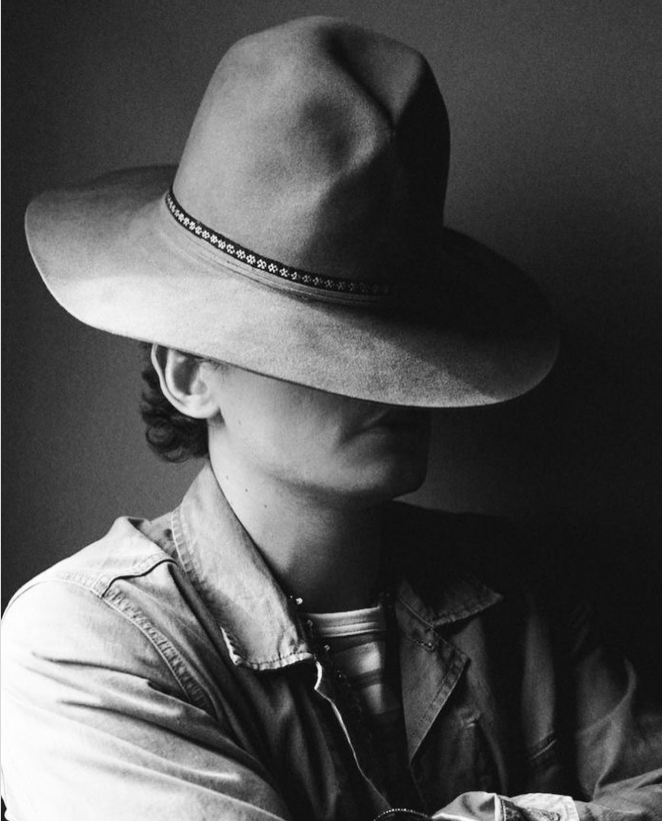
Harper Smith Photography
There are mornings when the house sounds like an unfinished song.
Not in the sense of something lacking, but in the way a melody keeps rearranging itself while you move through it—kettle boiling, phone lighting up, someone humming something they don’t realize they remember.
I’ve learned that marriage, especially one braided into music, doesn’t arrive as a finished composition. It behaves more like rehearsal. The same themes return, but never in the same key. Some days it’s major, bright and insistent. Other days it’s quieter, almost private, like a chord held too long on purpose just to see what it reveals.
John has always understood sound as weather. Not metaphorically—literally. He listens the way some people read rooms for exits. I watch him do it with silence too, the way he notices what isn’t being said, what is sitting just under the surface of a conversation waiting for its entrance cue.
I used to think intimacy was about access. About knowing everything.
Where things go in relation to each other. What gets foregrounded. What gets softened. What gets left in the background but still matters because without it the shape collapses.
There is a kind of memory that only music allows—one that doesn’t sit still long enough to become fixed. It moves every time you return to it. That’s what makes it honest.
Lately I’ve been thinking about harmony as a practice of patience.
Not agreement, not sameness—but the willingness of two distinct lines to remain themselves while still making something audible together. Some days that is effortless. Other days it requires a kind of attention that feels almost like listening with your whole body.
There are ordinary moments that carry more weight than they announce. Standing in the kitchen while someone rewrites a lyric in their head. Sitting across from each other while a new idea arrives uninvited and changes the air in the room. The long pauses between sentences that are not empty, just full of processing.
People imagine creative lives as dramatic. They picture arrival, revelation, applause, the returning to the work. The returning to each other. The way both require a similar kind of humility: you were not finished yesterday, and you are not finished today, and that is not a problem to solve.
There are songs we still discover in old corners of the house. A phrase from years ago that reappears differently now. A melody that makes more sense after time has passed through it. It’s strange how something can belong to the past and still feel like it’s asking a question in the present tense.
I’ve stopped trying to preserve moments as they were.
Instead, I’ve started listening for how they continue.
Because they do continue.
Not as repetition, but as variation.
And maybe that is the closest thing I know to permanence—not something frozen, but something capable of returning in new form without losing its origin.
In the middle of all this, there is still laughter that interrupts everything. There is still the ordinary choreography of two people moving through a shared life: misplacing things, finding them, forgetting what was being said mid-sentence and deciding it wasn’t as important as whatever just became more important instead.
Music teaches you that nothing repeats exactly, even when it sounds like it does.
Marriage does the same.
And so I stay close to the listening.
Not because I am trying to capture anything, but because I am trying to hear what is still becoming.
 Publik / Private