Written By Jordannah Elizabeth Graham-Mayer
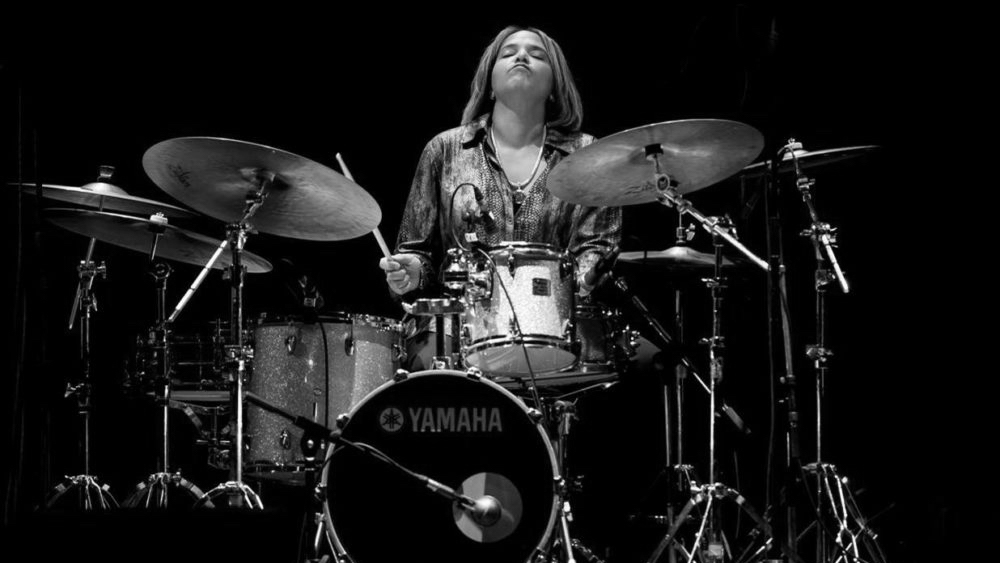
Terri Lyne Carrington – Image by J. Watson
What if listening itself could become a form of social practice? On Trip the Night Fantastic, every groove, improvisation, and collective gesture circles that question. The album does not ask listeners to choose sides so much as it asks them to remain present—to themselves, to one another and to the difficult realities that shape contemporary life.
For much of her career, Terri Lyne Carrington has occupied a rare position in American music. She is celebrated as a virtuoso drummer, revered as a composer and bandleader and respected as one of jazz’s most influential cultural thinkers. Yet to describe her simply as a musician misses something essential. Carrington’s work has increasingly become an exercise in institution-building, historical revision and social imagination.
Whether through The Mosaic Project, the New Standards initiative, or her leadership in advancing gender equity within jazz education, she has consistently challenged the boundaries of who gets heard, who gets remembered and whose stories are permitted to shape the future of the music.
With Trip the Night Fantastic, Carrington and Social Science extend that inquiry beyond the jazz world and into the broader terrain of public life.
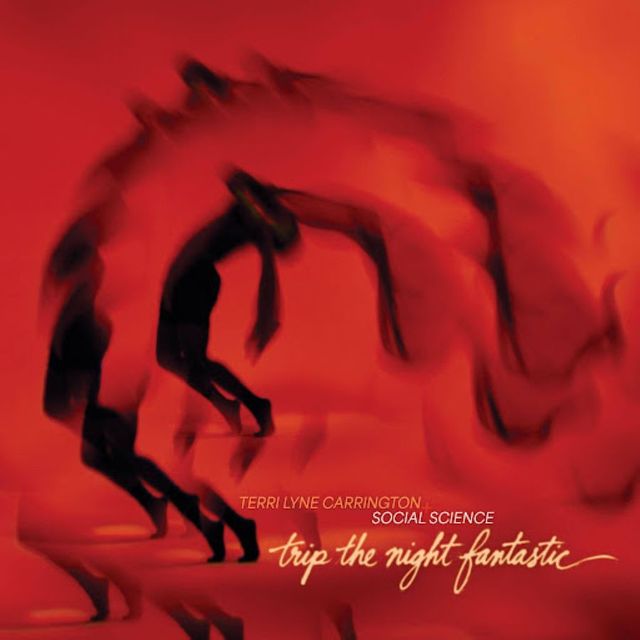
Due out July 31 via Candid Records
The album arrives during a period marked by exhaustion. Political polarization has become its own form of entertainment. Social media rewards certainty over curiosity. Entire communities continue to fight for basic recognition while environmental instability, economic precarity, and cultural fragmentation loom over daily existence. Under such conditions, the language of hope can feel naïve, even suspect.
Carrington understands this.
What makes Trip the Night Fantastic so compelling is that it does not traffic in optimism. It traffics in possibility.
The distinction matters. Optimism assumes a favorable outcome. Possibility acknowledges uncertainty while refusing surrender.
Throughout the album, Carrington assembles a sprawling collective of artists—among them Michael Mayo, Ledisi, Brandee Younger, Lizz Wright, Arooj Aftab, Moor Mother, Fatoumata Diawara, and Kassa Overall—to explore questions of identity, autonomy, solidarity, environmental stewardship, and communal responsibility. These themes are woven throughout the project not as abstract talking points but as lived experiences. The songs do not merely comment on social issues; they inhabit them. The result is music that feels deeply invested in the emotional realities that exist beneath political discourse.
What immediately distinguishes the album is its refusal to separate pleasure from politics.
For generations, Black music has functioned as both celebration and critique, often simultaneously. From the spirituals to the blues, from funk to hip-hop, joy has never existed apart from struggle. It has emerged because of it. Carrington understands this lineage intimately. The record’s rhythmic foundation frequently draws listeners toward movement, yet beneath the grooves lies an undercurrent of inquiry. Dancing becomes less an escape than a method of engagement.
The title itself reflects this tension.
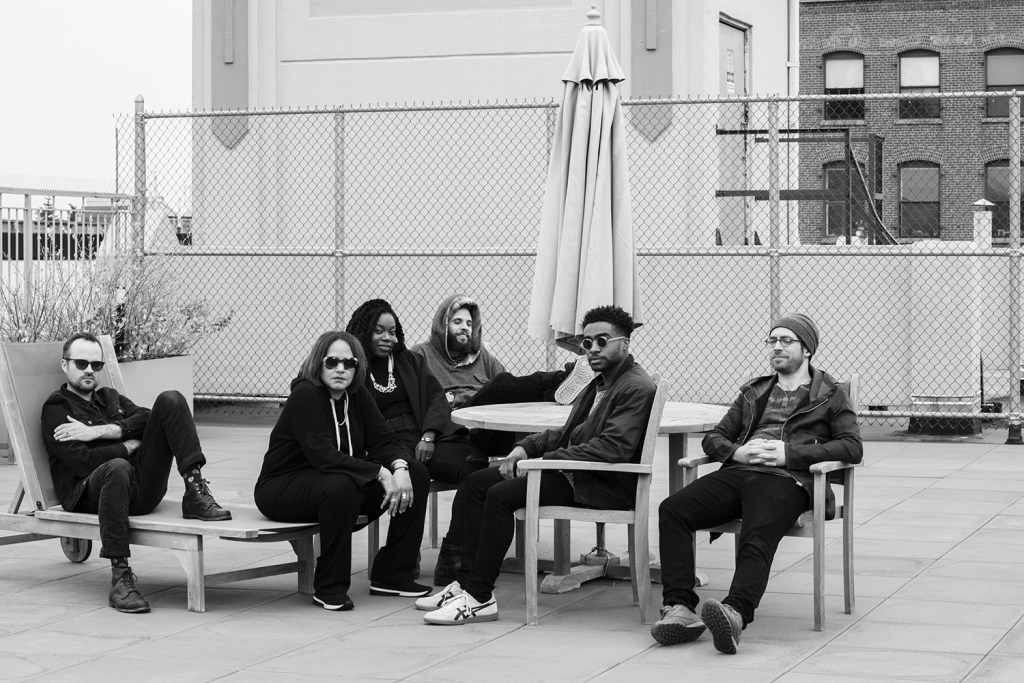
Borrowing from the familiar phrase “trip the light fantastic,” Carrington replaces light with night, subtly shifting the emotional terrain. The alteration acknowledges darkness without granting it authority. The album is not interested in denial. It is interested in navigation. The question is not whether difficult times exist. The question is how communities continue to create meaning within them, and one of the record’s most striking achievements is its commitment to collaboration as both artistic strategy and political philosophy. Social Science—comprised of Carrington, Aaron Parks, Matthew Stevens, and Morgan Guerin—operates less like a traditional band than a creative ecosystem. Ideas circulate freely. Individual virtuosity consistently serves collective expression.
Listening becomes visible.
This dynamic is particularly evident in the album’s quieter moments.
On “Take Time,” the ensemble demonstrates remarkable restraint. The composition unfolds gradually, resisting the urgency that dominates so much contemporary culture. Nothing feels rushed. The arrangement breathes. Musical ideas are allowed to develop organically rather than being forced toward immediate resolution.
The effect is profound.
In an era defined by acceleration, “Take Time” feels almost subversive. It asks listeners to abandon the habits of consumption and enter a state of attention. Carrington’s drumming is especially masterful here—not because of technical display, but because of its emotional intelligence. Every rhythmic decision seems calibrated toward creating space rather than occupying it. The music becomes an invitation to dwell inside ambiguity.
That invitation lies at the heart of the album.
Elsewhere, songs such as “Identity Song” and “Autonomy Song” address questions of self-determination, bodily autonomy, and social acceptance. Yet even when tackling politically charged subjects, Carrington avoids the trap of didacticism. The songs rarely feel like arguments. They feel like conversations. Rather than instructing listeners what to think, the music creates conditions under which empathy might emerge.
This is where Trip the Night Fantastic becomes particularly powerful.
Many contemporary protest works are driven by outrage. Outrage can be necessary, but it is often fleeting. Carrington is after something more durable. She is interested in cultivating relationships—between musicians, between communities, between listeners and the worlds they inhabit. Her vision of social change begins not with confrontation but with recognition.
Recognition of complexity.
Recognition of interdependence.
Recognition of shared vulnerability.
The album’s expansive roster of contributors reinforces this philosophy. Voices move in and out of the project like participants in an ongoing dialogue. No single perspective dominates. Instead, the music accumulates meaning through interaction. The result feels less like a collection of songs than a temporary community assembled in sound.
What ultimately gives Trip the Night Fantastic its potency is its understanding that imagination is itself a political act.
We are often told what is broken. We are less frequently invited to imagine what repair might sound like.
Carrington offers one answer.
Not through slogans. Not through certainty. Not through easy resolutions.
Through listening.
By the album’s conclusion, one is left with the sense that Carrington’s most radical gesture is not her critique of contemporary society, but her belief that people remain capable of transformation. She trusts collaboration in an age of individualism. She trusts nuance in an age of polarization. She trusts care in an age that frequently mistakes cruelty for honesty.
That trust animates every corner of Trip the Night Fantastic.
The album does not pretend that the darkness has passed. It simply refuses to allow darkness the final word.
And in doing so, Terri Lyne Carrington has created something increasingly rare: a work of art that confronts reality without becoming captive to it, a record that understands hope not as sentiment, but as practice. The music asks us to listen more deeply—not only to the musicians gathered within it, but to the people moving through the world alongside us.
In 2026, that may be among the most radical invitations an artist can offer.

